Updated October 2026
Hooking up an appliance in Philadelphia comes down to three things: a supply line with its own shutoff, a drain that cannot siphon or back up, and connections that will not kink or split. We run new water lines where none exist, fit washer boxes in the wall, and connect dishwasher drains with a high loop or air gap.
Water in, water out, and a valve you can reach
Most appliance leaks start at a connection that was rushed: a plastic ice maker line pinched behind the fridge, a washer hose that burst on an old rubber line, or a dishwasher drain run downhill into the disposal with no loop. We use braided stainless or copper lines, put a shutoff where you can get to it and route drains so they cannot siphon.
We hook up appliances from makers such as Bosch, Whirlpool, GE, LG and Samsung. Gas connections for a new dryer or range are a separate job, covered under gas line installation.
What affects the price of an appliance hookup
Reconnecting to existing lines is a small job. Running new water or drain to a new location is a bigger one.
- Existing or new linesSwapping an appliance on good existing connections is far quicker than running new pipe.
- Distance to water and drainFridges and washers far from existing plumbing need longer runs through floors or ceilings.
- Valve conditionOld multi-turn valves at the washer or under the sink often get replaced.
- Drain setupAdding an air gap, standpipe or new trap adds parts and time.
- Floor and accessUpper-floor laundry and finished ceilings make running lines harder.
Dishwasher Connections
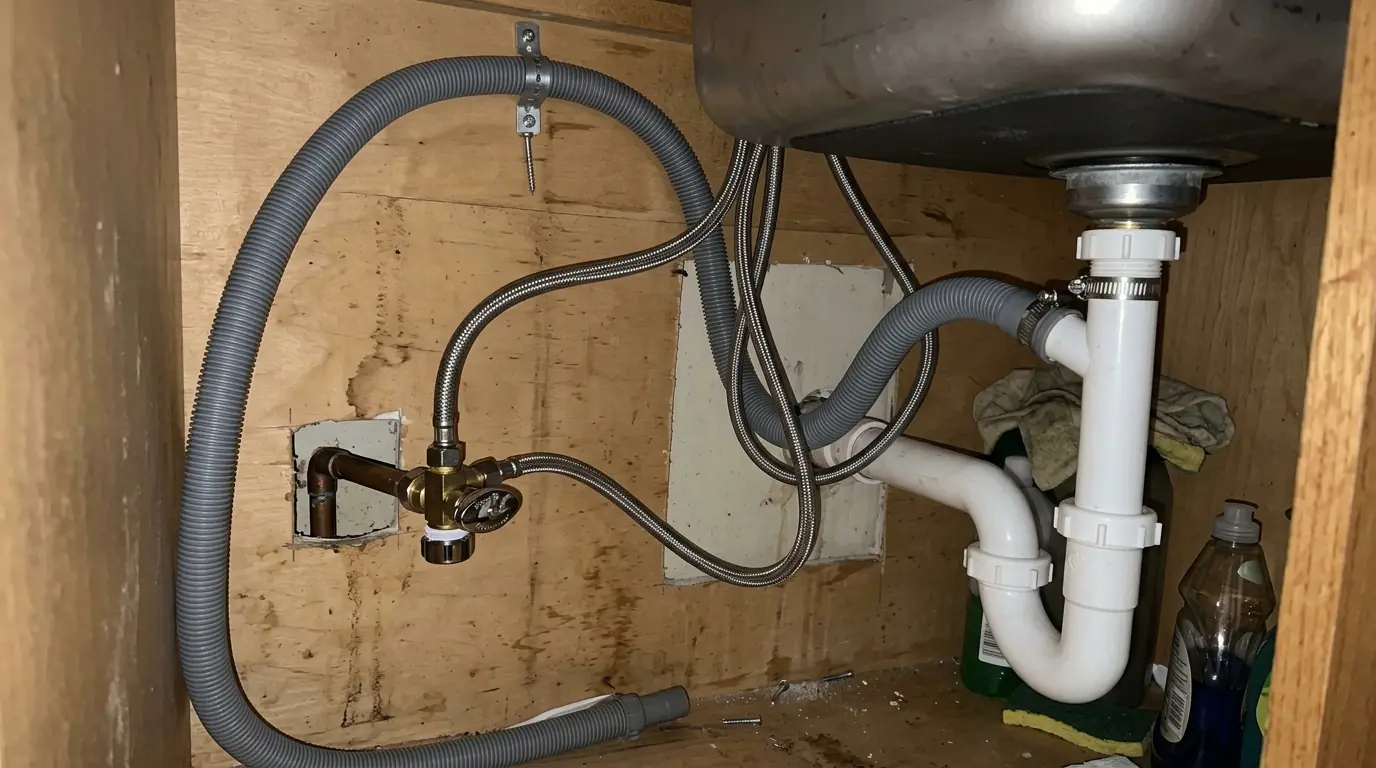
Replacing a dishwasher usually means reusing the hot line and drain, but the old connections often deserve replacing too. A crusty compression fitting on the hot supply, a drain hose that sags to the floor, or a dishwasher that smells because dirty sink water flows back in are common findings. We fit a dual-outlet stop or tee under the sink so the dishwasher has its own shutoff, run a braided supply to the inlet valve, and loop the drain hose high under the counter or connect it through an air gap where required. Whether the drain goes to the disposal or a branch tailpiece depends on how the sink is set up.
Refrigerator Water Lines
Ice makers and water dispensers need a small cold supply, and the cheapest way to provide it, a saddle valve clamped on a pipe with a plastic tube, is the one most likely to leak. We tap the cold line with a proper tee and a quarter-turn stop, run copper or braided line to the back of the fridge, and leave a service loop so the fridge can be pulled out for cleaning without straining the connection. Where the fridge is far from the sink, the line often runs through the basement ceiling and up through the floor. An inline filter can be added where the fridge has none.
Washer Boxes
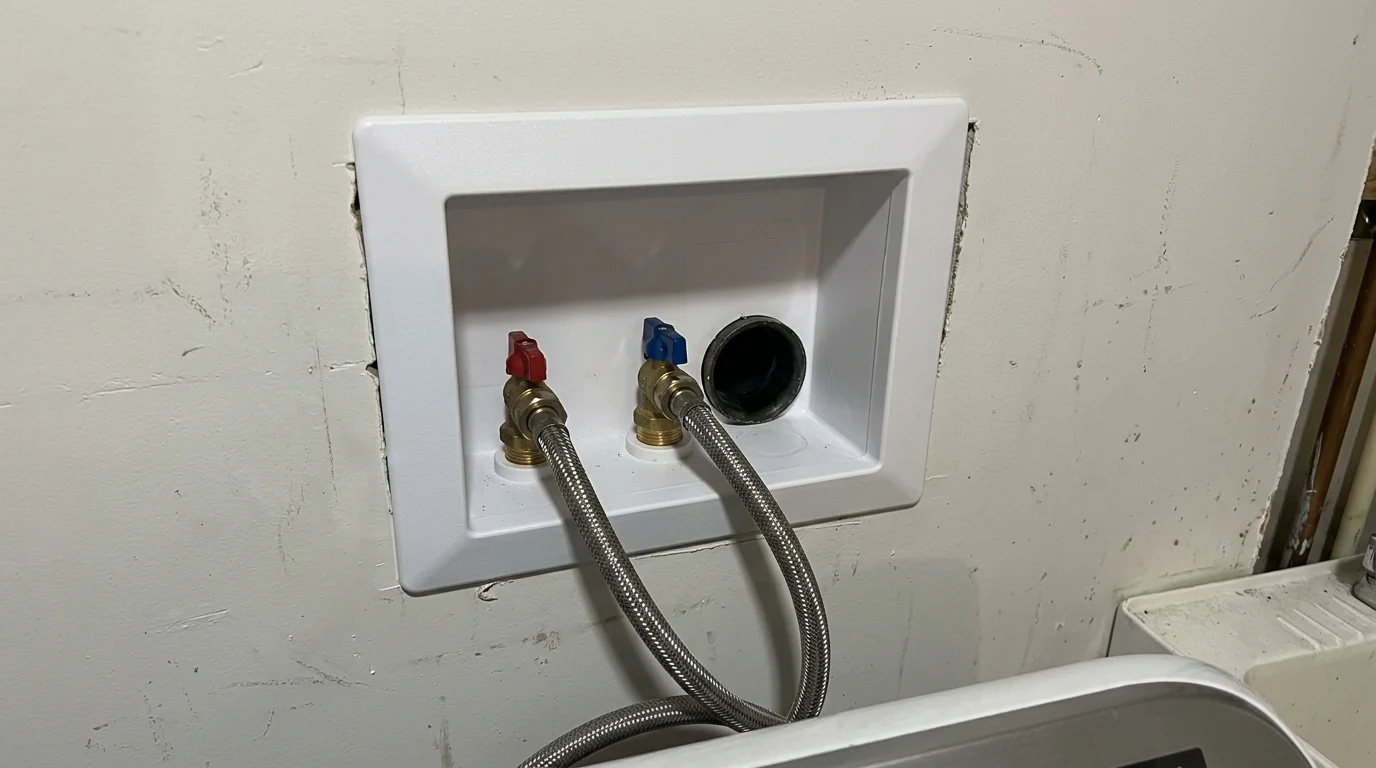
A washing machine needs hot and cold supplies and a standpipe drain tall enough that the washer cannot siphon. In many older basements the washer is fed by hose bibs on exposed pipe and empties into a laundry tub. A recessed washer box puts both valves and the drain into one panel in the wall, and a single-lever box shuts both supplies at once. We size the standpipe and trap to the washer's discharge, and on upper floors we add a drain pan under the machine, piped to a drain where possible. Moving laundry upstairs needs a new drain and vent, which is permit work.
What we do on an appliance hookup
Each connection gets the same treatment, whichever appliance it is.
- Check the spot for water, drain and space
- Add or replace the shutoff valve
- Run copper, PEX or braided supply line
- Connect the drain with a loop, air gap or standpipe
- Level the appliance and check hose routing
- Run a full cycle or fill and watch every joint
- Take away the old hoses and fittings
Which hookups owners can handle
Some appliance connections are simple. Others are where leaks behind appliances usually begin.
| Task | Safe to do yourself | Call a plumber |
|---|---|---|
| Swap rubber washer hoses for braided ones | Yes, with both valves shut and new washers in the fittings. | If the valves will not close or drip. |
| Connect a dishwasher to an existing stop | Possible if the stop and drain are already right. | If there is no shutoff, no loop or a disposal knockout to handle. |
| Clamp a saddle valve on for an ice maker | No. Saddle valves are a common leak source. | Always. We fit a proper tee and stop. |
| Cut into a supply line for a new washer spot | No. That is soldering or crimping work with the house water off. | Always. |
Hooking up an appliance the careful way
Check the spot
We confirm water, drain and space before the appliance is slid in.
Valve first
A shutoff goes in, or the existing one is tested, so the appliance can be isolated.
Supply and drain
Lines run and connected; drains looped, air-gapped or set in a standpipe.
Fit and level
Appliance set in place without crushing hoses, leveled so doors and drains work.
Run and inspect
A cycle or fill test with the access panel off where possible, watching every joint.
Cold walls and appliance lines in Philadelphia
In Philadelphia, pipes are at greater risk of freezing and bursting when temperatures stay below 32 degrees for more than 72 hours, especially when water sits unused overnight. Appliance lines fit that description. A washer box on an outside wall or an ice maker line run through an unheated space holds still water all night. When we plan a hookup here, we keep new lines off outside walls where we can and insulate the runs we cannot avoid.
Questions about appliance hookups in Philadelphia
Yes. In many homes the easiest path is up through the floor from a cold line in the basement ceiling. We fit a shutoff where the line starts so it can be isolated.
It depends on local code and the setup. A high loop under the counter keeps sink water from flowing back in many cases, and some installations call for a counter-mounted air gap.
The standpipe may be too short or narrow, or partly clogged further down. Lint is a common cause in older drains, and a drain clearing usually solves it.
Yes, especially if they are bulging, cracked or of unknown age. Braided stainless hoses are an inexpensive upgrade and far less likely to burst.
Often, yes. It needs hot and cold supplies, a drain with a trap and vent, and ideally a pan under the washer. It is permit work, which we handle.