Updated October 2026
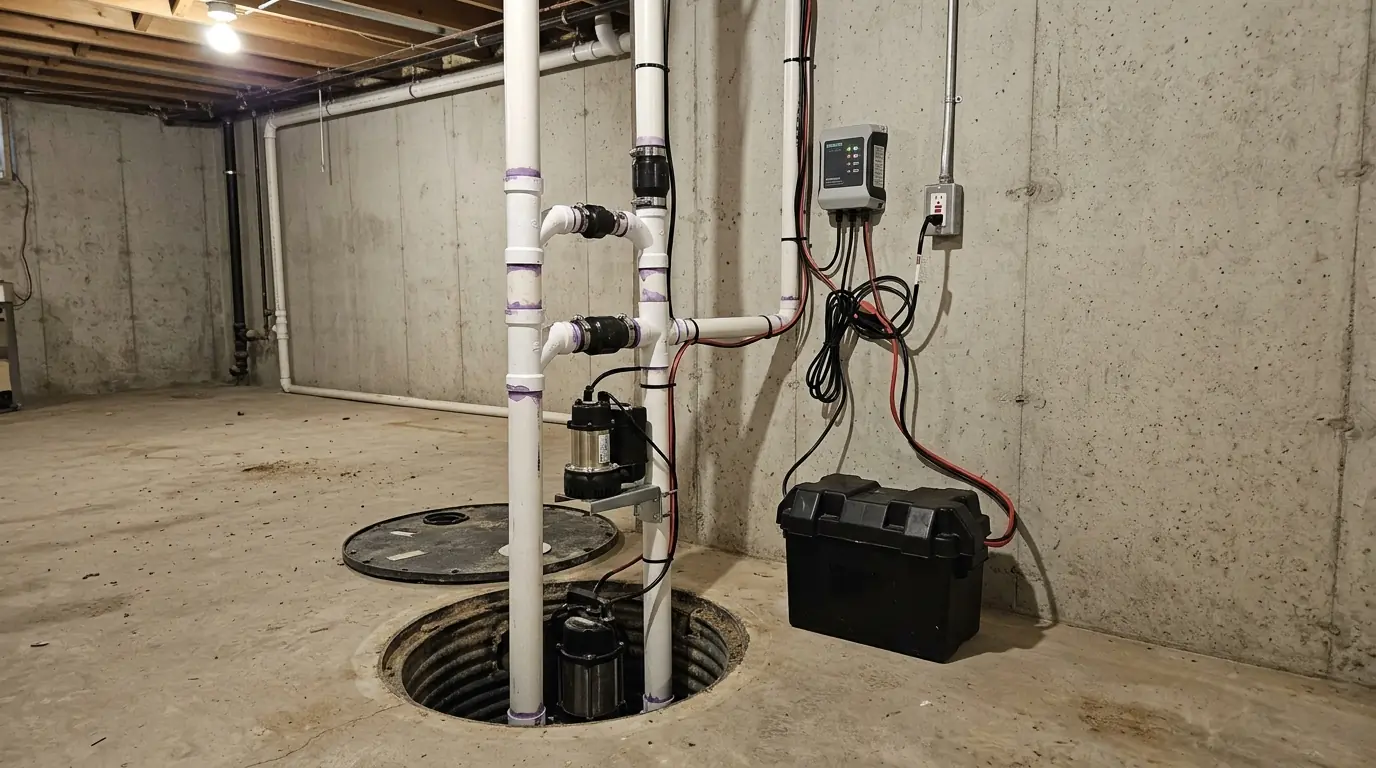
For Philadelphia basements that depend on a sump pump, a backup pump covers the moment the main one stops, usually a power outage during the same storm that is filling the pit. A battery backup runs a second pump from a charged battery, and a water-powered backup uses pressure from the supply line. Both sit in the existing pit with a separate check valve.
Why a second pump is worth the space
A sump pump fails in two common ways: the power goes out, or the pump itself quits. Both tend to happen during the heavy rain that fills the pit fastest. A backup pump sits beside or above the main one and starts only when water rises past the point where the main should have handled it.
Most owners choose a battery unit, since it works in any house. A water-powered backup uses supply pressure to pull water out of the pit, which means no battery to replace but more water used while it runs. Either way, the main pump is checked first, because a backup does not cure a failing primary. If yours is struggling, start with sump pump repair.
What goes into a backup pump install
We set the backup up to work on its own, without leaning on anything the main pump uses.
- Pit checked for room for a second pump and float
- Backup float set higher than the main so it runs only when needed
- Separate check valve on the backup, tied into the discharge
- Battery box and charger mounted off the floor where possible
- Or a supply line with backflow protection for a water-powered unit
- High-water alarm placed where it can be heard upstairs
- Outage simulated by cutting power to the main pump
Battery Backup Systems
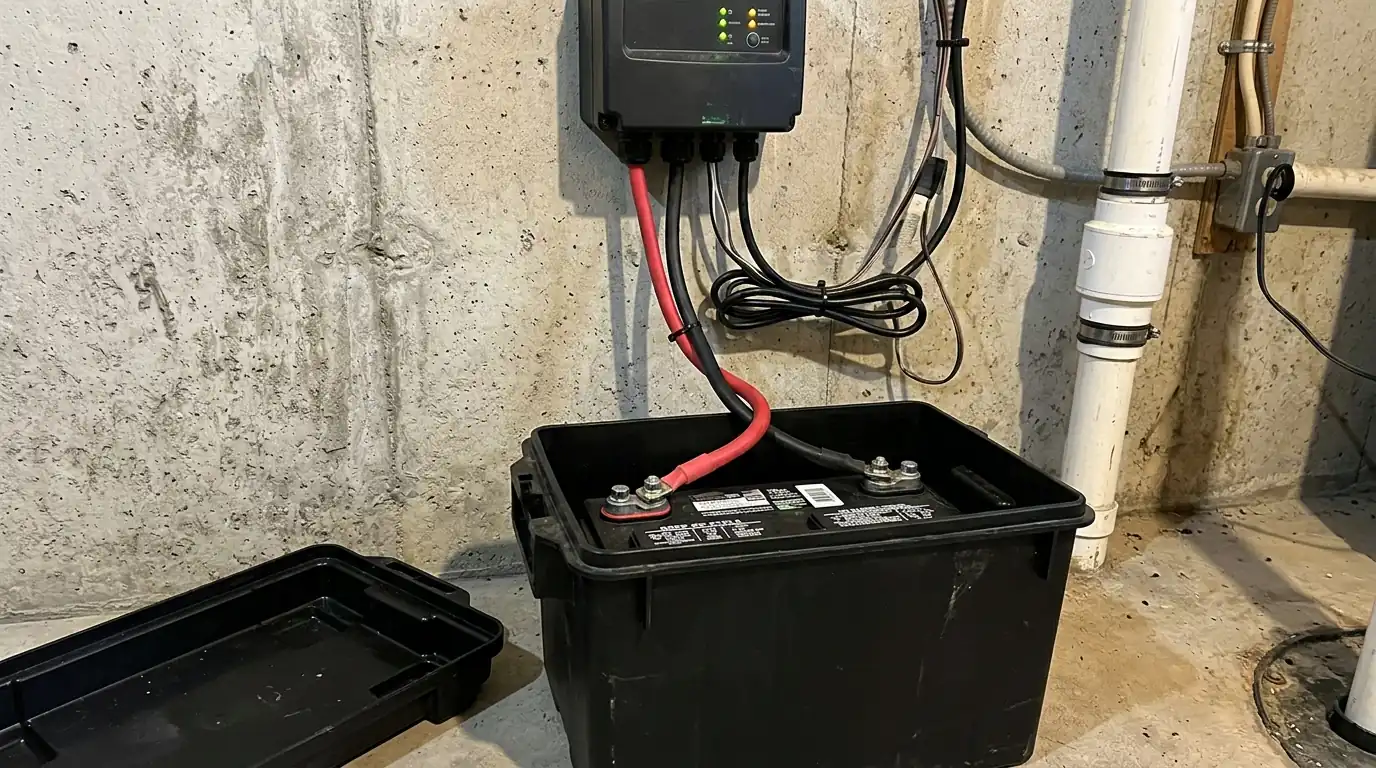
A battery system pairs a small DC pump with a charger and a deep-cycle battery in a sealed box. It starts when its own float rises above the main pump's float, which tells you the main pump has failed or fallen behind. We set the backup on a stand or bracket in the pit, tie its discharge in through a separate check valve, and mount the charger where it stays dry. What decides the setup is how much water your pit takes in during a storm and how long you want the battery to carry the load.
Water-Powered Backups
A water-powered backup uses the household water supply to create suction that draws water out of the pit, with no battery and no electricity. It keeps running as long as the supply holds pressure, which suits long outages. It does use clean water while it works, and it needs proper backflow protection so pit water can never be pulled into the drinking water. We check your water pressure and the route from the supply line to the pit before recommending one, since weak pressure limits how much it can move.
Alarm and Battery Checks
A backup that nobody checks is not much of a backup. Batteries lose capacity with age, chargers fail quietly, and alarms get unplugged because they chirped once in the middle of the night. We test the system by cutting power to the main pump and raising the water, load test the battery, clean the backup float and confirm the alarm sounds somewhere you will hear it. Once a year, before the wet season, is a sensible schedule, and the battery gets replaced when it no longer carries a full test.
How a backup pump goes in
Test the main pump
We confirm the primary pump and its check valve work before adding anything.
Plan the layout
Battery or water-powered is chosen from the pit, the space and your water pressure.
Set and plumb the backup
The backup goes in with its own float and check valve, joined into the discharge.
Power or supply it
The charger and battery are mounted, or the supply line and backflow device installed.
Simulate an outage
Main pump unplugged, pit filled, backup watched through full cycles.
What decides the cost of adding a backup
The type of backup and how easily it fits your existing pit set most of the cost. We check both on site before quoting.
- Battery or water-poweredEach uses different equipment and different installation work.
- Battery capacityA larger battery runs longer in an outage and costs more.
- Pit sizeA narrow pit may need enlarging to fit a second pump and float.
- Supply line runWater-powered units need a line brought to the pit with backflow protection.
- Main pump conditionIf the primary needs replacing, doing both together saves a visit.
Storms, outages and Northeast Philadelphia basements
The storms that flood basements are often the same ones that knock out power. In Northeast Philadelphia, residents have pointed to flooded basements and sealed street drains as heavier rain overwhelms a sewer and stormwater system built a century ago, when the Delaware River sat about a foot lower than it does today. A main pump without a backup leaves a basement depending on the grid at the worst possible moment. A second pump takes that single point of failure out of the picture.
Battery or water-powered backup
Both keep a pit draining in an outage. They trade off differently.
| Point | Battery backup | Water-powered backup |
|---|---|---|
| What runs it | A charged deep-cycle battery | Pressure from the household water line |
| How long it can run | Until the battery is drained | As long as water pressure holds |
| Upkeep | Battery checks and eventual replacement | Yearly test of the valve and backflow device |
| Uses water | No | Yes, while it is running |
| Fits when | There is room beside the pit for the battery box | A supply line can reach the pit |
Questions about battery backup sump pump in Philadelphia
It depends on the battery size and how often the pit fills. A pit with heavy inflow drains a battery much faster than one that cycles now and then.
A generator can run the main pump in an outage, but only if someone is home to start it. A battery backup starts by itself.
No. It handles groundwater in the pit. Sewage coming up the floor drain needs a backwater valve.
Ideally the charger sits on a different circuit from the main pump, so one tripped breaker cannot take out both.
Load test it yearly. When it no longer runs the pump through a full test, replace it before the wet season.