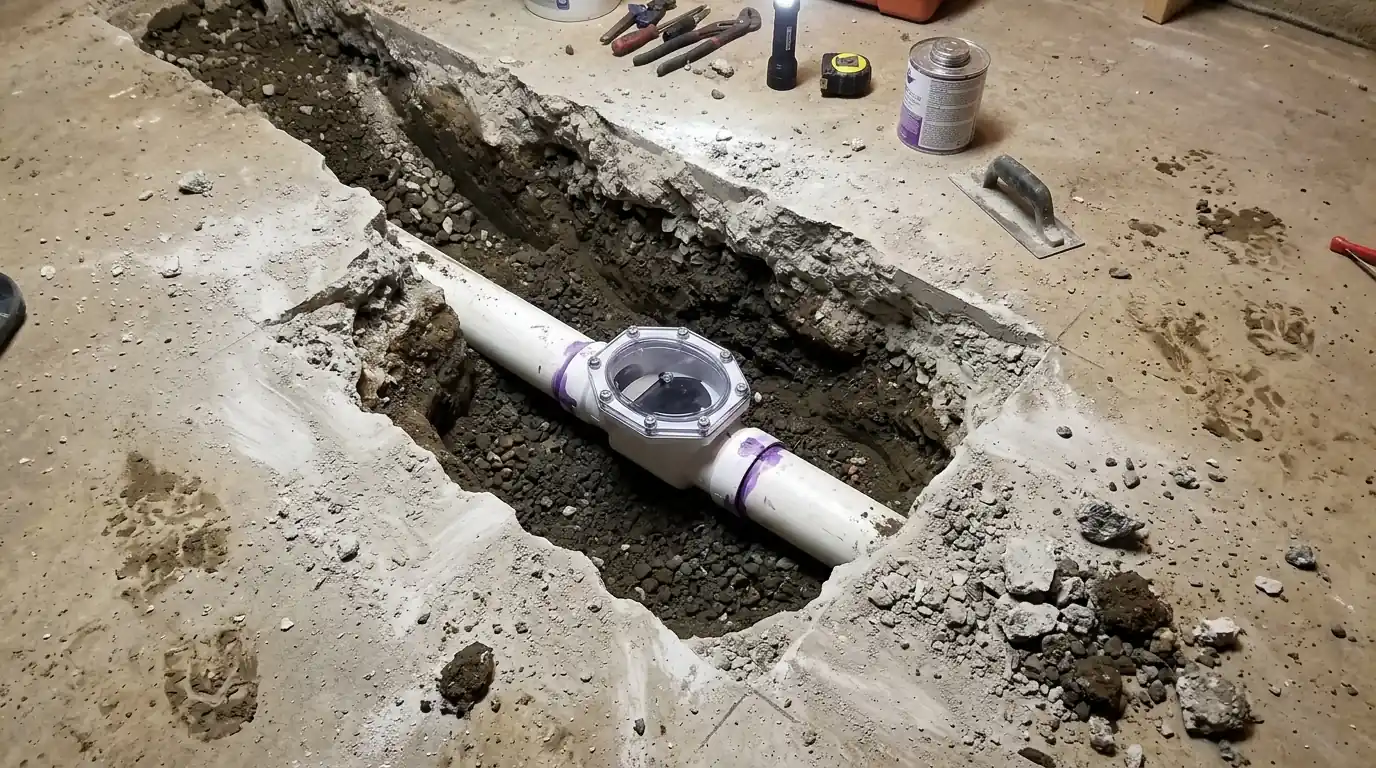
Updated October 2026
In much of Philadelphia, stormwater and sewage share one pipe, and a heavy rain can fill the sewer until it pushes back up basement drains. A backwater valve is a one-way flap installed on your drain line that closes when water flows the wrong way. It protects the fixtures below street level while the storm passes, then reopens on its own.
How a backwater valve keeps sewage out
When a storm overloads the sewer in the street, the water in it has to go somewhere. If your basement floor drain sits lower than the street, the easiest exit is up into your house. A backwater valve has a flap that lets water leave freely but swings shut the moment flow reverses.
Placement decides how well it works. On many homes we put it on the branch serving only the basement fixtures, so sinks and toilets upstairs still drain while the valve is closed. On others it goes on the main just inside the front wall, and the household holds off on water during a storm. If the line is broken or blocked, that gets fixed first, often with main line cleaning or a lateral repair.
Backwater valve, sump pump, or both
These two get confused. They handle different water, and some basements need both. Our side-by-side guide goes deeper.
| Question | Backwater valve | Sump pump |
|---|---|---|
| What water it stops | Sewage pushing back from the street sewer | Groundwater rising under the floor |
| Where it goes | On the drain line leaving the house | In a pit in the basement floor |
| Needs power | No | Yes, unless it has a backup |
| Upkeep | Clean the flap and seat | Test the float and check valve |
What moves the price of a backwater valve
Most of the cost is in reaching the drain under the floor and setting the valve in the right spot. If you qualify for the city program, start there. If not, or the line needs repair first, we price it before any concrete is cut.
- Depth of the drainA line just under the slab is quicker to reach than one buried deep.
- Floor finishTile, carpet or a finished room over the drain adds removal and protection.
- Line conditionCracked or blocked pipe has to be repaired before a valve will work.
- Valve type and accessA larger valve with a full access box costs more but is easier to service.
- PermitA permit and inspection add a fee when the job requires one.
Basement Floor Drain Backups
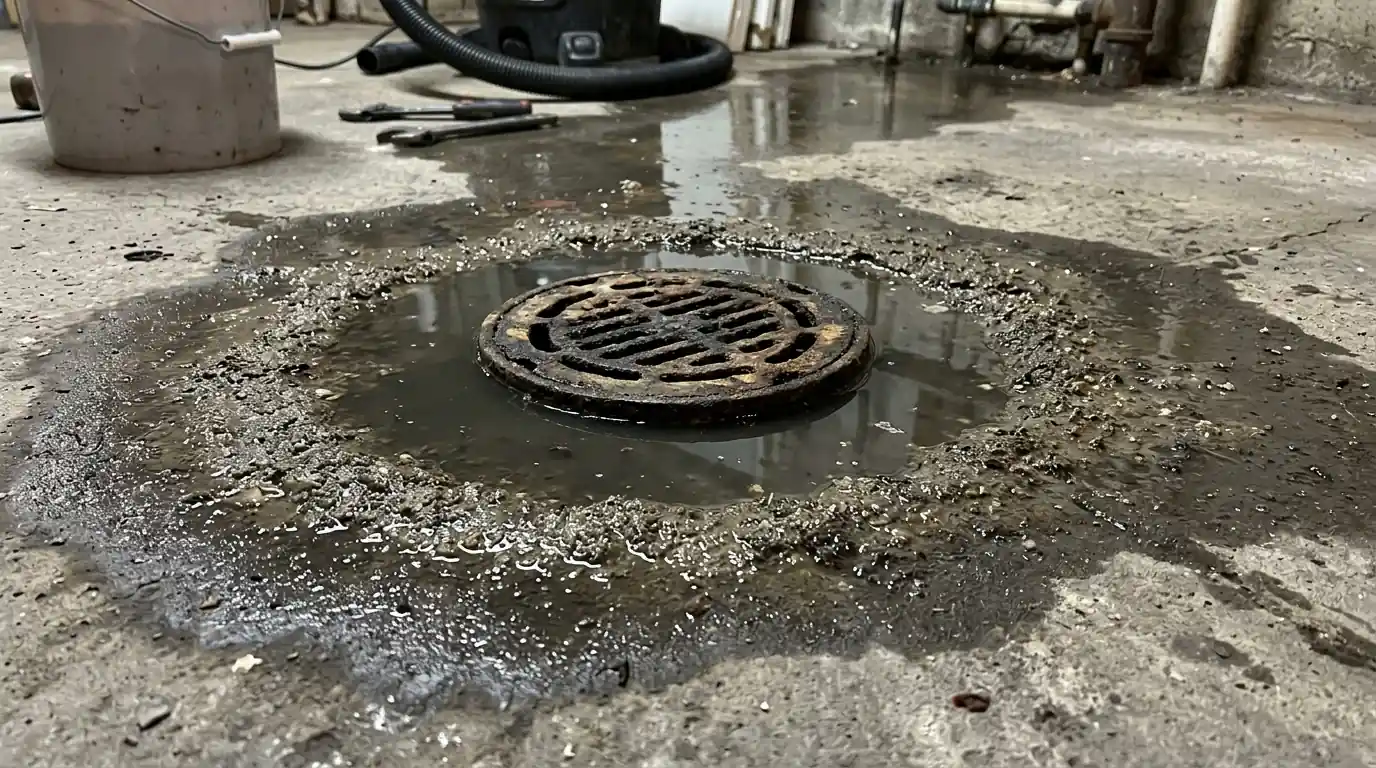
The floor drain is usually the lowest opening in the house, so it is the first place sewage shows up when the sewer surcharges. You see dark water rising during heavy rain, then a ring of grit once it drains away. A plug or standpipe in the drain helps a little, but strong pressure pushes past it. A valve on the drain line stops the backflow before it reaches the opening at all. What decides the layout is whether the floor drain shares a line with upstairs fixtures, and a camera run answers that before the floor is cut.
Basement Toilets and Showers
A finished basement with a toilet, shower or laundry has more openings for sewage to come through, and more to lose when it does. These fixtures either drain by gravity into the main below the floor or pump up through a sewage ejector. Gravity fixtures need a backwater valve on their branch. Pumped fixtures rely on a check valve on the discharge and a sealed basin. We look at how each one connects before deciding where the protection goes, so no opening is left unguarded.
Valve Maintenance
A backwater valve is only as good as its flap. Paper, grease and grit can hold it partly open, and an old gasket stops sealing, so it fails on the night it is needed. The warning signs are a sluggish basement drain or water still getting in during a storm. We open the access cover, clean the flap and seat, make sure it swings freely and replace the gasket or flap when it is worn. A yearly look before the stormy season keeps it ready, and so does a check after any backup.
What goes into a proper backwater valve install
The valve itself is simple. Putting it in the right place is the real work.
- Camera run to see which pipes carry the basement fixtures
- Check that upper floors drain past the valve, not through it
- Slab cut and dug out where the valve goes
- Valve cut in level with its arrow pointing downstream
- Access box or cover set so the flap can be cleaned
- Permit pulled when the job requires one
- Water test before the floor is patched
Installing a backwater valve, start to finish
Camera the line
We see the pipe condition and which fixtures share which drain.
Choose the spot
The valve goes where it guards basement fixtures without trapping upstairs drains.
Open the floor
The slab is cut and dug out to expose the drain at the right point.
Set the valve
It goes in level, arrow downstream, joined with proper couplings.
Test and close up
Water runs through, the flap is checked and the floor is patched around the access box.
Combined sewers and Philadelphia basement backups
About 60 percent of Philadelphia is served by combined sewers, where stormwater and sewage travel in the same pipe, and that shared pipe is what fills in a downpour. The water department's Basement Backup Protection Program offers free backwater valve installation to eligible owners whose basements take backups through basement fixtures in heavy rain. To qualify, the water bill must be current, violations addressed and the plumbing reachable, and broken pipes have to be repaired first, through a HELP loan or a private plumber. That repair work is something we do.
Questions about backwater valve installation in Philadelphia
No. It stops sewage coming back through the drains. Groundwater seeping through walls or the floor needs a sump pump or drainage work.
That depends on where it is installed. On the main line, water run upstairs has nowhere to go, so hold off during a storm. A valve on the basement branch avoids that.
The city sets the rules, including a current water bill and reachable plumbing. Check with the water department first; we can fix the pipe problems that stand in the way.
Once a year, and after any backup. Debris caught in the flap is the most common reason a valve fails.
A float plug helps in mild backups, but strong pressure can push past it. A valve on the line is far more reliable.