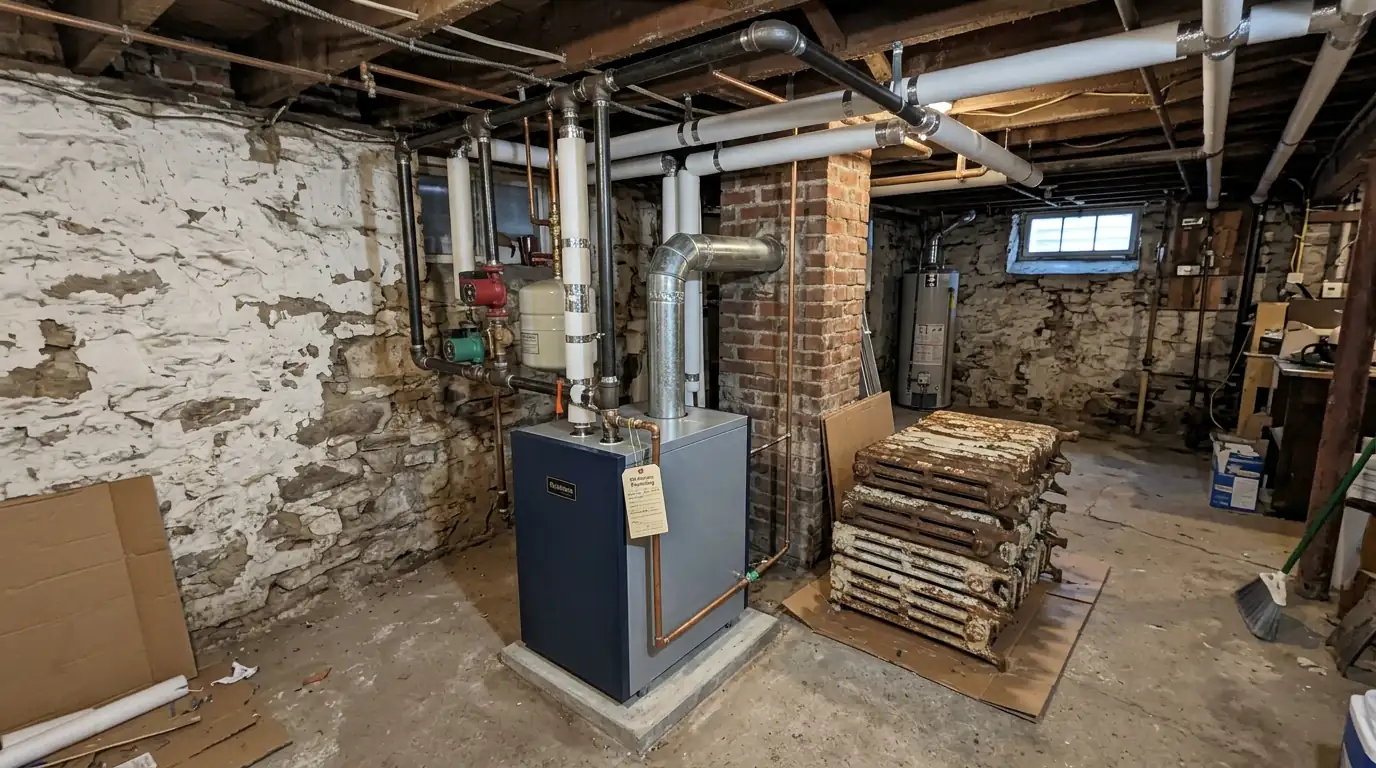
Updated October 2026
Replacing a boiler in a Philadelphia home starts with measuring the radiators, not copying the old boiler's rating. Steam systems are sized to the total radiation; hot water systems to the heat loss of the house. The right size, correct near-boiler piping and proper venting decide whether the new boiler heats evenly and runs efficiently for years.
Why sizing decides how a new boiler performs
A boiler that is too big short cycles, wastes fuel and wears out early. One too small never catches up on cold nights. On steam systems the size has to match the radiators, because the boiler must fill every one of them with steam. On hot water systems it should match the heat the house loses.
Old boilers are often oversized, so we never simply copy the nameplate. We measure the radiators, look at the piping and talk through how the house heats now. Weil-McLain, Burnham and Peerless are among the boilers we install. If you are unsure, a boiler repair visit can tell you whether the old one has more seasons left.
Steam, high-efficiency or combi: matching the boiler to the house
The existing system narrows the choice. A steam house stays steam unless the whole system is converted.
| Option | Fits | Keep in mind |
|---|---|---|
| Steam boiler | Homes with steam radiators and pipes | Must match the radiators; near-boiler piping matters |
| High-efficiency hot water | Hot water radiators or baseboard | Needs plastic venting and a condensate drain |
| Combi boiler | Hot water heat plus domestic hot water from one unit | Frees space; hot water flow has limits |
What goes into the price of a new boiler
Boiler replacement is priced after the survey, because the house and the existing system drive most of the cost.
- Boiler type and sizeSteam, high-efficiency hot water and combi boilers differ in price, and size moves it too.
- Near-boiler pipingSteam boilers often need new headers and risers built to the maker's specifications.
- VentingA chimney liner or new wall vent can add significantly to the job.
- RemovalOld cast iron boilers are heavy and often have to be broken down to get them out.
- Controls and extrasLow water cutoffs, outdoor reset, expansion tanks and zone controls add to the total.
Steam Boiler Replacement
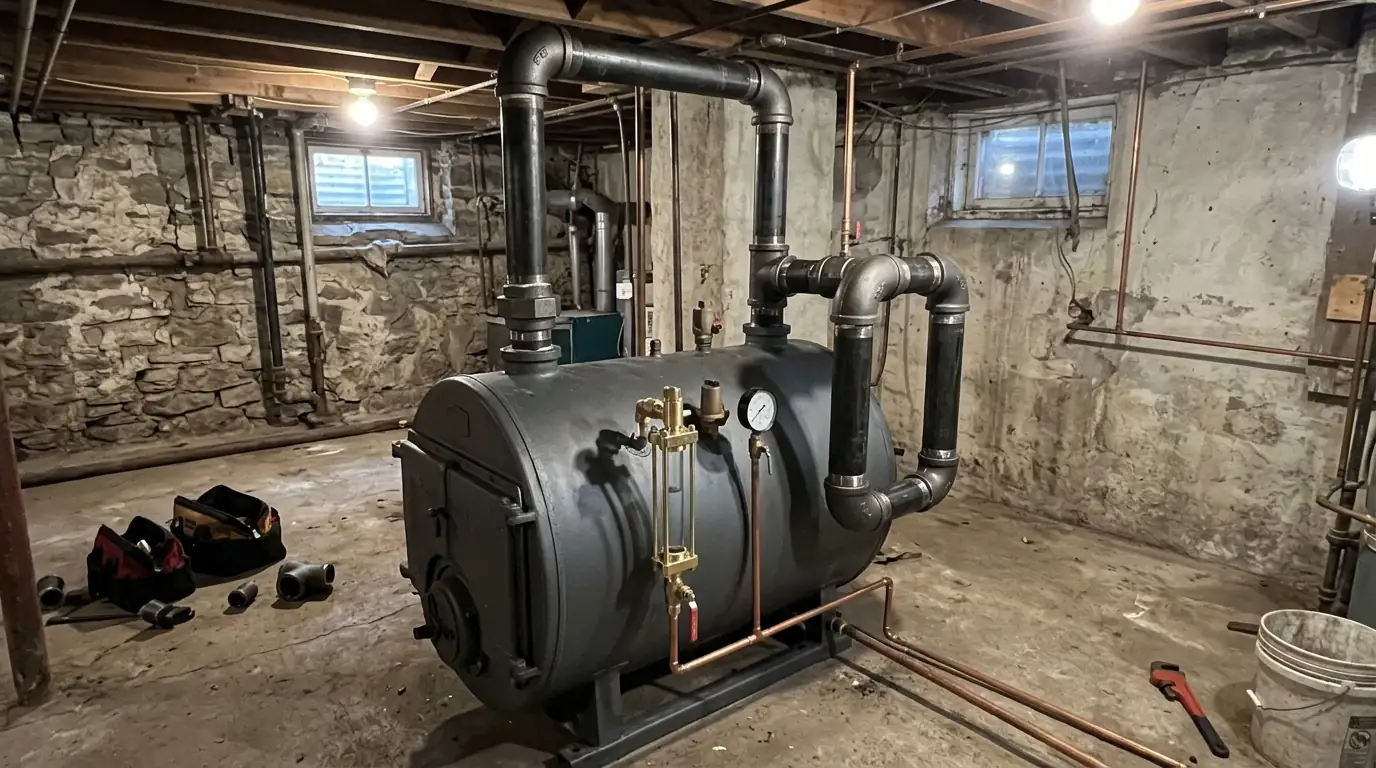
Replacing a steam boiler is as much about the piping as the boiler. Each maker specifies the near-boiler piping, the riser height, the header and the equalizer, and a new boiler hooked up the way the old one was can throw water up into the mains and bang. We size the new boiler to the total radiation, build the header to the instructions and fit a new low water cutoff, pressure control and gauge glass. Where main vents have failed we replace them, along with any dead radiator vents, since a new boiler cannot heat evenly if air cannot leave the pipes.
High-Efficiency Boilers
Condensing boilers squeeze more heat from the gas by cooling the exhaust until water condenses out of it. That only works when the water coming back from the radiators is cool enough, so they suit radiator and baseboard systems where the water temperature can drop on mild days. They vent with plastic pipe through a wall or a chimney liner and need a condensate drain. We set the outdoor reset control so the boiler runs cooler when the weather allows, which is where the savings come from. Big cast iron radiators hold a lot of surface, so they often heat well on cooler water.
Combi Boilers
A combi boiler heats the house and makes hot water on demand from one wall-hung unit. It frees the floor a separate boiler and water heater took up and leaves one less appliance to maintain. The trade-off is hot water flow: a combi serves one shower well and two at once less well, so it suits smaller households and homes with fewer bathrooms. We look at how you use hot water before recommending one. The install includes new venting, a condensate line and a gas line sized for the burner, which on some homes means a larger line from the meter.
Included when we replace a boiler
A boiler swap touches gas, water, venting and wiring, and the price covers all of them.
- Radiator survey or heat loss estimate
- Old boiler drained, broken down and removed
- New boiler set and leveled
- Near-boiler piping built to the maker's instructions
- Venting into a lined chimney or out through the wall
- Gas connection and pressure test
- Safety controls plus an expansion tank or low water cutoff
- Start-up, combustion check and system bleeding
How a boiler replacement comes together
Survey the system
We measure radiators, check the piping and chimney and confirm the gas line size.
Plan and permit
We choose the boiler and venting and pull the permit when the job needs one.
Remove the old boiler
The system is drained and the old boiler broken down and carried out.
Install and pipe
The new boiler is set, piped, vented and wired with new safety controls.
Fire and balance
We fill and bleed the system, check combustion and confirm heat at every radiator.
How long the heat is off during a swap
The house is without heat from the moment the old boiler is drained until the new one is fired and the system refilled. We plan around that, and in cold weather we talk with you about timing and temporary heat before work starts.
Steam replacements with a lot of near-boiler piping, or jobs that need a chimney liner, take longer than a straight hot water swap.
Replacing boilers in Philadelphia's older housing
With units built in 1939 or earlier making up 41 percent of housing in Philadelphia County, many of the boilers we replace are the latest in a long line serving the same radiators. Those radiators and pipes tend to outlast several boilers, which is why the system around the boiler matters so much. We always check the chimney the old boiler vented into, since a newer, more efficient boiler often needs a liner or a different vent route.
Questions about boiler replacement in Philadelphia
Leaking cast iron sections, a cracked heat exchanger or repeated repairs on an old boiler point toward replacement. We show you what we find.
It can be done, but it often means replacing much of the piping and some radiators. Most owners replace steam with steam.
Often, yes. Large radiators can heat the house with cooler water, which lets a condensing boiler run efficiently.
Many new boilers vent through a wall or need a liner in an old masonry chimney. We check the chimney during the survey.
Yes, it makes domestic hot water as well as heat. If you would rather keep a separate tank, see water heater replacement.