Updated October 2026
Backflow testing in Philadelphia applies to buildings that are required to have a backflow preventer, and those devices must be tested on the schedule their water authority sets. The test confirms the check valves hold and the relief valve opens when it should, so water inside the building cannot run back into the public supply. We test, repair failed parts and install new assemblies.
Why some buildings carry a backflow device
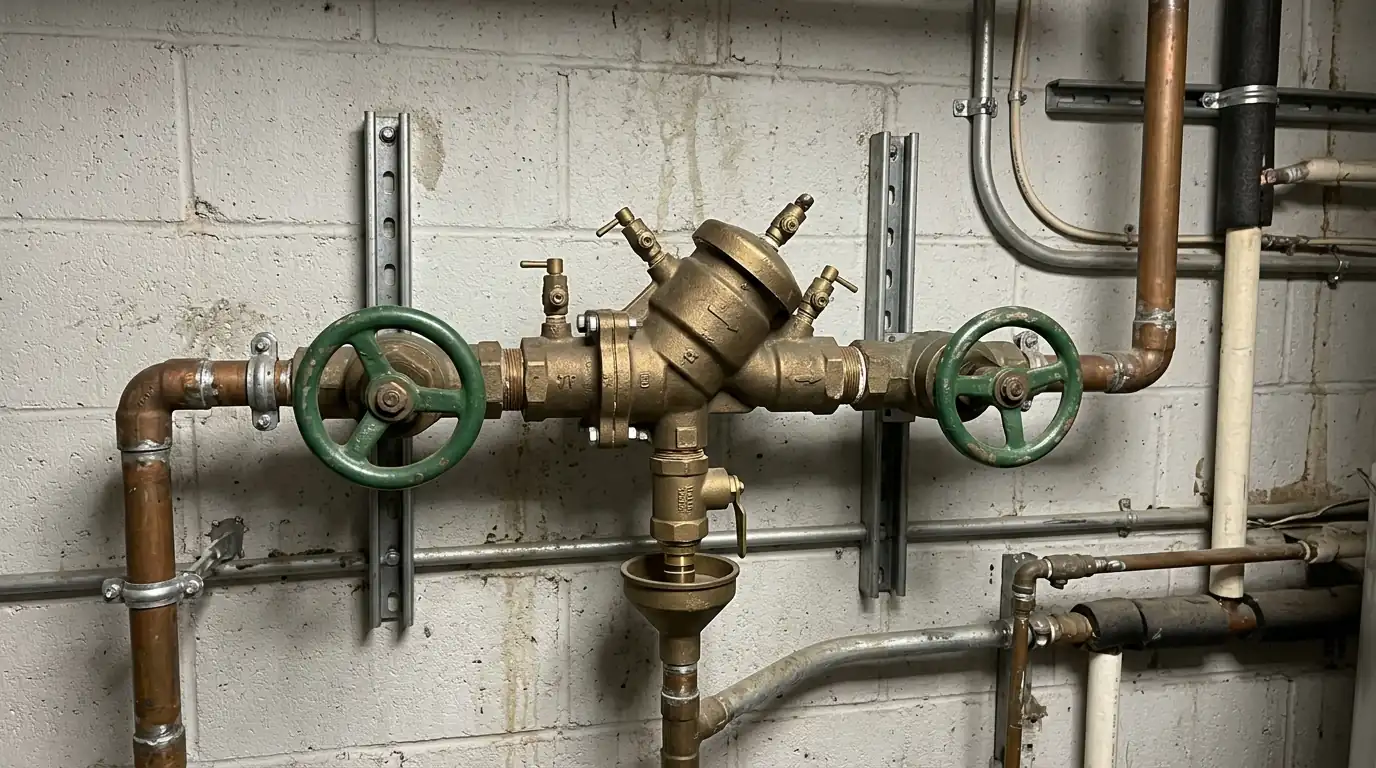
A backflow preventer keeps water inside a building from flowing backward into the public supply. That can happen when pressure in the street main drops, or when the building's own system pushes harder than the main. Treated boiler water, irrigation lines, restaurant equipment and some commercial processes all hold water nobody wants back in the main.
Whether a building needs a device, and which type, is decided by the water authority and the plumbing code, not by us. Buildings that are required to have one must have it tested on the schedule their water authority sets. We handle the test, any repair and the report, in homes with irrigation or boiler connections and in commercial buildings.
What gets checked on every test
A backflow test is a set of gauge readings on the assembly, not a quick look.
- Shutoff valves on both sides close fully
- Test cocks open cleanly and do not leak
- First check valve holds tight
- Second check valve holds tight
- Relief valve opens at the right point on reduced pressure assemblies
- Body, strainer and drain path inspected
- Readings entered on the report your water authority requires
- Water restored and the assembly back in service
Annual Device Testing
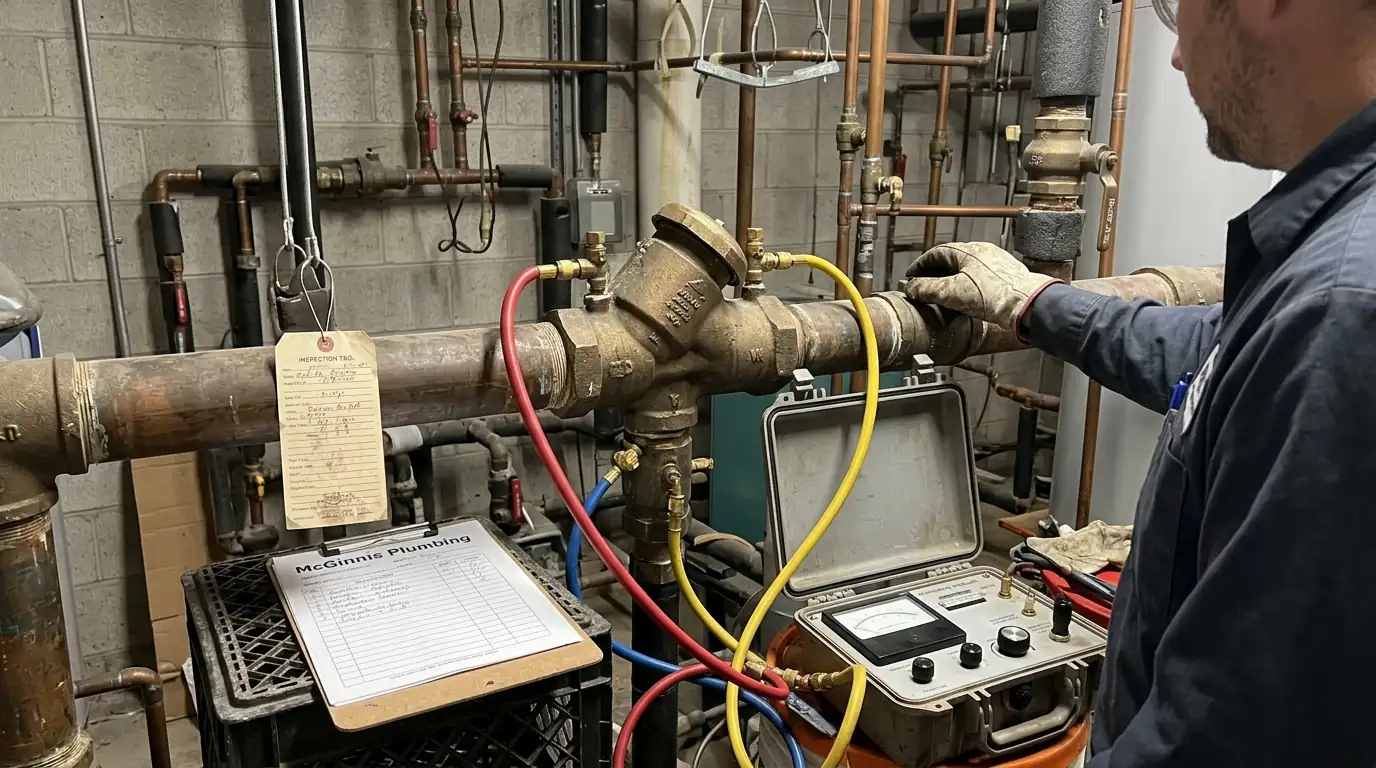
Routine tests are why most owners call. A notice arrives, the due date is close, and nobody has touched the device since the last one. We shut the assembly down, connect a test kit to the test cocks, and read each check valve and, on reduced pressure units, the point where the relief valve opens. If everything passes, the readings go on the report and the water comes back on. If a check leaks or the relief valve opens late, we tell you which part failed and whether a repair kit or a new assembly makes more sense. Staying on your authority's schedule keeps the building in good standing.
Backflow Preventer Repair
An assembly that fails its test, dumps water from the relief port or drips at the test cocks usually needs new rubber, not a new body. Check discs, seats, springs and relief valve diaphragms wear out and catch debris. We isolate the assembly, open it, clean the internals and fit the repair kit made for that make and model, then retest to confirm it passes. When the body is cracked, parts are no longer made, or the device sits where it cannot be reached safely, replacement is the better choice. Water on that line is off while the assembly is open.
New Device Installation
New devices go in when a building adds a connection that needs protection, when an old assembly cannot be rebuilt, or when a notice says the existing one is the wrong type. The type is set by the hazard on that line, and we match it to what the water authority requires. Placement matters as much as the device: it needs room to be tested, somewhere for relief water to drain and protection from freezing. We pull the permit when the job needs one, install the assembly with its shutoffs and test cocks, and run the first test so it starts with passing readings.
Signs a backflow preventer needs work
Water dumping from the relief port
A steady discharge from a reduced pressure assembly means a check valve is not sealing.
Drips that never stop
Small constant leaks at the relief valve or test cocks point to worn rubber parts.
Weak flow past the device
Debris caught in the checks or the strainer is restricting the line.
Damage after a freeze
A cracked body or split test cock on an exposed unit has to be repaired before it is used again.
A backflow test visit, step by step
Identify the assembly
We note the make, model, size and type before shutting anything down.
Plan the shutdown
Water on the protected line is off during the test, so we time it with you.
Run the test
A test kit on the test cocks reads each check valve and the relief valve.
Repair if it fails
Worn parts are replaced and the assembly is tested again.
Report and restore
Readings go on the report and the water is turned back on.
What a test or repair costs depends on
A passing test is a short visit. A failing device turns it into a repair or a replacement, and that is where most of the cost difference comes from.
- Device type and sizeReduced pressure assemblies have more parts to test and rebuild than double check valves.
- Pass or failA passing device needs only the test; a failure adds a repair kit and a retest.
- AccessAssemblies above a ceiling or in a cramped pit take longer to work on safely.
- Parts availabilityOlder models with discontinued parts may need a full replacement.
Backflow devices sit on the owner's side of the line
In Philadelphia the property owner is responsible for the water service line that connects the building to the main in the street. A backflow assembly sits on that owner's side, usually just past the meter or on the branch it protects, so testing it, repairing it and replacing it all fall to the building owner rather than the city. When a test notice arrives, it is the owner who arranges the test and keeps the device working. For buildings required to have one, keeping current with the water authority's schedule is simply part of owning the property.
Questions about backflow testing in Philadelphia
Many houses have no testable assembly at all. Those that do usually have one on an irrigation line, a boiler feed or a sprinkler connection. If a test notice came to you, your water authority has one on record for the property.
As often as your water authority requires. The authority sets the schedule, and the notice you receive shows the due date.
We tell you which part failed and whether the assembly can be rebuilt. Most failures are fixed with a repair kit for that model, followed by a retest.
Yes, on the line the device protects. It stays off for the test and any repair, so we book a time that suits the building.
We complete the report with the readings. How it is submitted depends on the authority, and we follow its process so you are not left chasing a form.