Updated October 2026
In a Philadelphia rowhome, when every basement drain backs up at the same moment, the house trap at the front wall is the first place to look. It is a U-shaped fitting that holds a water seal against sewer gas, and paper, grease and roots collect in its bend. Most blockages clear from the cleanout; cracked or capless traps get replaced.
Signs the house trap is the problem
Every basement drain backs up at once
Water rising in the floor drain, laundry tub and basement toilet together means the blockage sits downstream of all of them.
Sewer smell near the front wall
A dry trap, a missing cleanout cap or a cracked hub lets sewer gas into the basement.
Water seeping around a cleanout cap
A cap that weeps during heavy use is either loose, cracked or holding back a clog.
What the house trap does and why it fails
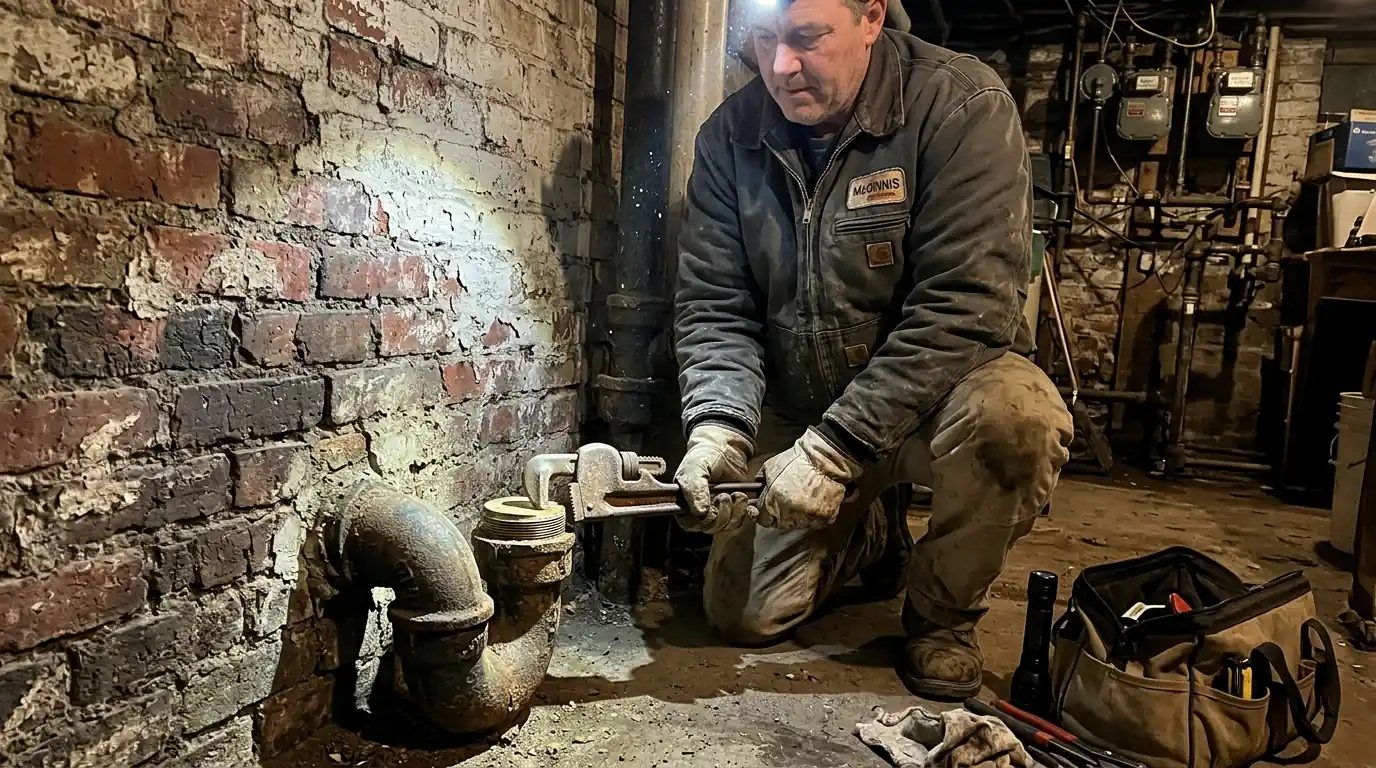
Older Philadelphia homes carry a house trap, sometimes called a running trap, where the main drain leaves the basement through the front wall. It is a deep U-bend with two cleanout caps on top and a fresh air vent that runs up toward the sidewalk. The water it holds keeps sewer gas in the street sewer and out of your basement.
We start by opening the cleanout on the street side of the trap. If water rushes out, the clog is beyond the trap in the sewer lateral; if the street side is dry, the trap itself is blocked. That one test decides whether you need a trap repair or a main line cleaning.
Lost or Broken Cleanout Caps
A missing or cracked cleanout cap lets sewer gas into the basement, and during a backup it lets sewage out onto the floor. Old brass caps often seize into cast iron hubs and break when someone forces them. We remove what is left of the old cap, clean the hub threads or fit an expansion plug where the threads are gone, and seal it so it can be opened again the next time the line needs cleaning.
Cracked Cast Iron Traps
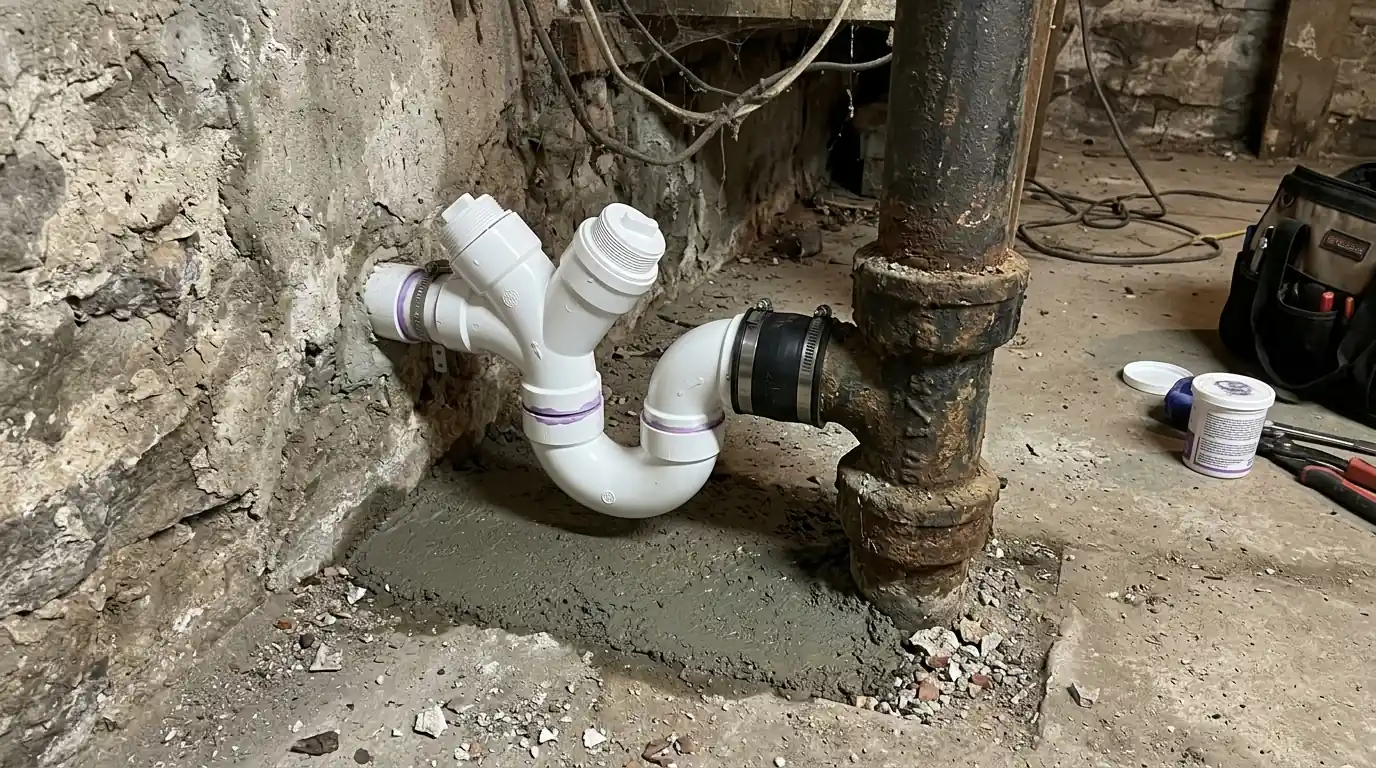
Cast iron traps rot from the inside along the bottom of the bend, where water always sits. A crack shows up as a damp patch near the front wall that never dries, or a sewer smell that returns after the caps are tightened. Patching rarely holds. We cut the trap out, fit a new trap and cleanouts in the material code allows for your line, and join it to the old pipe with shielded couplings.
Fresh Air Vent Problems
The fresh air inlet runs from beside the trap up to a vent near the sidewalk. When a repaving job crushes it, leaves pack it or a past owner caps it, the trap loses its air and drains slow down across the house. A blocked vent can also push sewer smell out at the sidewalk. We trace the vent to the street, clear or replace the run and fit a cap that keeps debris out without sealing it.
What happens on a house trap call
Find out which side is blocked
We open the street-side cleanout first. Water there means the blockage is past the trap; dry means the trap itself.
Clear the bend
A cable sized for the trap goes through the bend. We pull back what we find so you can see what caused it.
Inspect the trap and caps
With the line moving, we check the hubs, caps and bottom of the bend for cracks and rot.
Repair or replace
Caps, plugs or the full trap are replaced as needed, with permits pulled where the city requires them.
Flow test and clean up
We run water from the upper floors, confirm the trap holds its seal and clean the basement floor.
House traps in Philadelphia neighborhoods
House traps are common in older Philadelphia homes, and in Northeast Philadelphia the picture is often more complicated than one trap. When PWD investigated two Northeast blocks, 48 of 80 homes had lateral or vent problems, and each home there had two laterals and vents, one storm and one sanitary. That is why we check which line a trap serves before we clear it. The trap, the vent and the lateral to the street are the owner's to maintain, so a clear diagnosis saves money.
What drives the price of a house trap repair
Most of the cost comes down to whether the trap just needs clearing or has to be cut out and replaced. We confirm which it is and give you the price before any work starts.
- Clear or replaceClearing a blocked trap from the cleanout is a far smaller job than cutting out a cracked cast iron trap.
- Access at the front wallFinished basements, built-in shelving or a trap buried under concrete add time before the work can start.
- Condition of the pipe on each sideRotted pipe beyond the trap may need a longer section replaced so the new fittings have sound pipe to grip.
- Permit and inspectionChanging the main drain usually needs a city permit and inspection, which adds a fee and scheduling time.
What you can do yourself and what to leave alone
Some trap problems are safe for an owner to check. Others put sewage on the floor if they go wrong.
| Task | Safe to do yourself | Call a plumber |
|---|---|---|
| Check that both cleanout caps are present | Yes. Look, do not loosen them during a backup. | If a cap is missing, cracked or seized. |
| Pour water into a dry trap that smells | Yes. A bucket of water restores the seal. | If the smell returns within days. |
| Open a cleanout during a backup | No. Pressure behind the cap can flood the basement. | Always. We open it with a plan for where the water goes. |
Questions about house trap repair in Philadelphia
Many older homes do, usually at the front basement wall where the main drain leaves the house. Newer construction and some renovated homes have no trap. If you are not sure, we can locate it on the first visit.
In Philadelphia the house trap, the drain inside the house and the sewer lateral out to the main all belong to the property owner. PWD is responsible for the sewer main in the street. Our lateral guide explains the line in detail.
The most common causes are a trap that has dried out, a missing or cracked cleanout cap, or a crack in the trap itself. Pouring water into floor drains restores the seal; if the smell keeps coming back, the trap needs a look.
Clearing it stops the backup. Whether it stays clear depends on why it blocked. If roots or a broken lateral are behind it, a camera inspection shows that before it happens again.
Opening the street-side cleanout tells you. Water rushing out means the blockage is past the trap in the lateral; a dry street side means the trap itself is blocked.