Updated October 2026
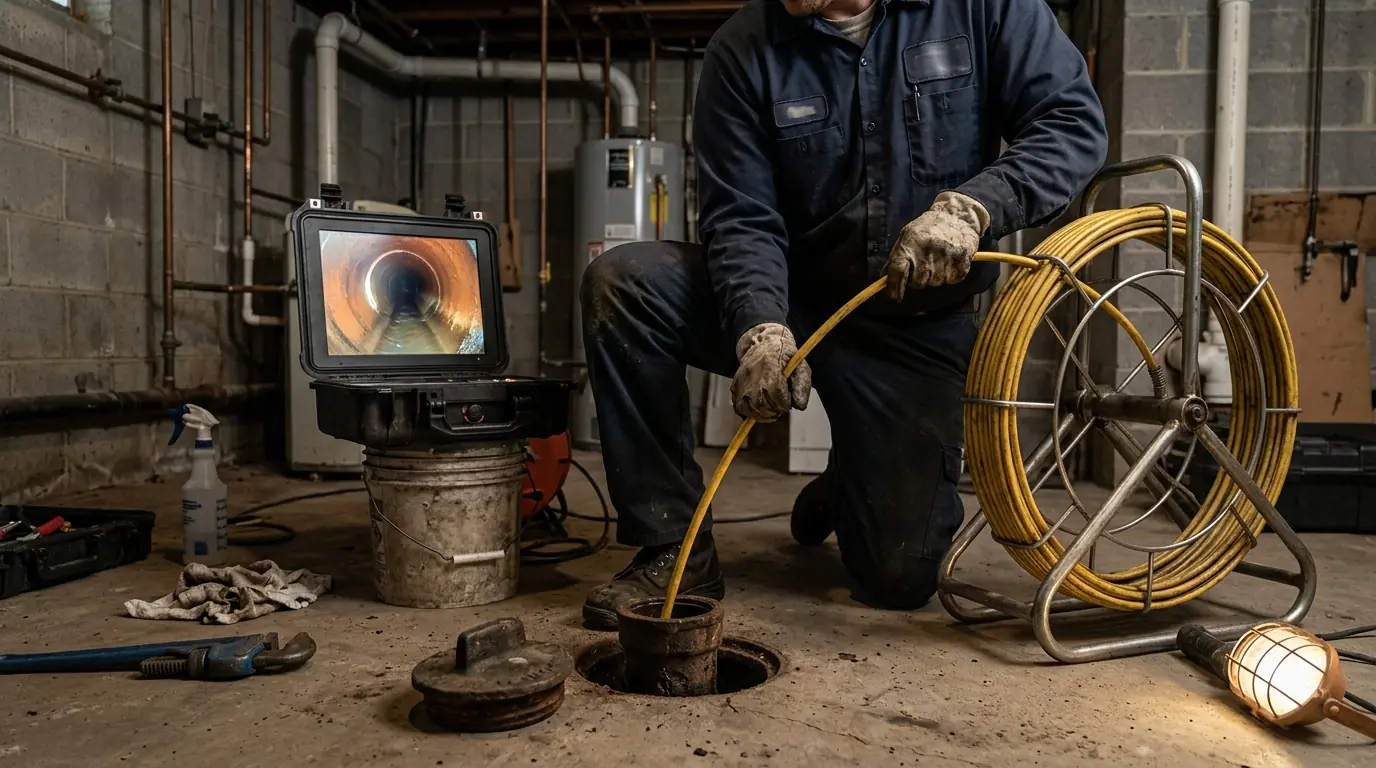
A sewer camera inspection in Philadelphia records the inside of the pipe from your basement out to the city main. It shows roots, cracks, sags, offset joints and grease, and a locator pinpoints each one at the surface with its depth. Buyers use it before closing, and owners use it to decide between another cleaning and a real repair.
What the camera shows that a cable cannot
A cable tells a plumber that something is in the way and roughly how far out it is. A camera shows what it is. Roots at a joint, terra cotta that has cracked into pieces, a belly holding water, a joint offset by settling soil and a pipe flattened under a driveway all look different on screen, and each calls for a different fix.
We feed a self-leveling camera head on a push rod through the nearest access and record as we go. A transmitter in the head lets us trace its position from above, so a defect at a given distance becomes a spot on the sidewalk or lawn with a depth reading. That turns a guess into a measured plan for repairing the lateral or leaving it alone.
What you get from a camera inspection
Video only helps if it is clear and you can find each problem again later, so the visit covers more than pushing a camera.
- Access through the house trap, a cleanout or a pulled toilet
- Cleaning first when standing water or buildup would hide the pipe
- Footage of the full run from the house to the main
- Distance counter on screen for every defect
- Locator reading at the surface with depth
- Pipe material and joint type noted along the way
- A walk through the video with you on site
- A copy of the recording to keep
Before You Buy a Home
A sewer lateral is out of sight during most home inspections, yet in Philadelphia it belongs to the owner once the deed changes hands. Buyers often learn about a broken line the first time the basement floods. A camera inspection before closing shows the pipe material, any roots, breaks or sags, and where each one sits. The house decides how much to film: an older home on a long lateral deserves the full run to the main, while a newer home with a short run may only need the first sections. Either way you leave with the video.
Repeat Backups
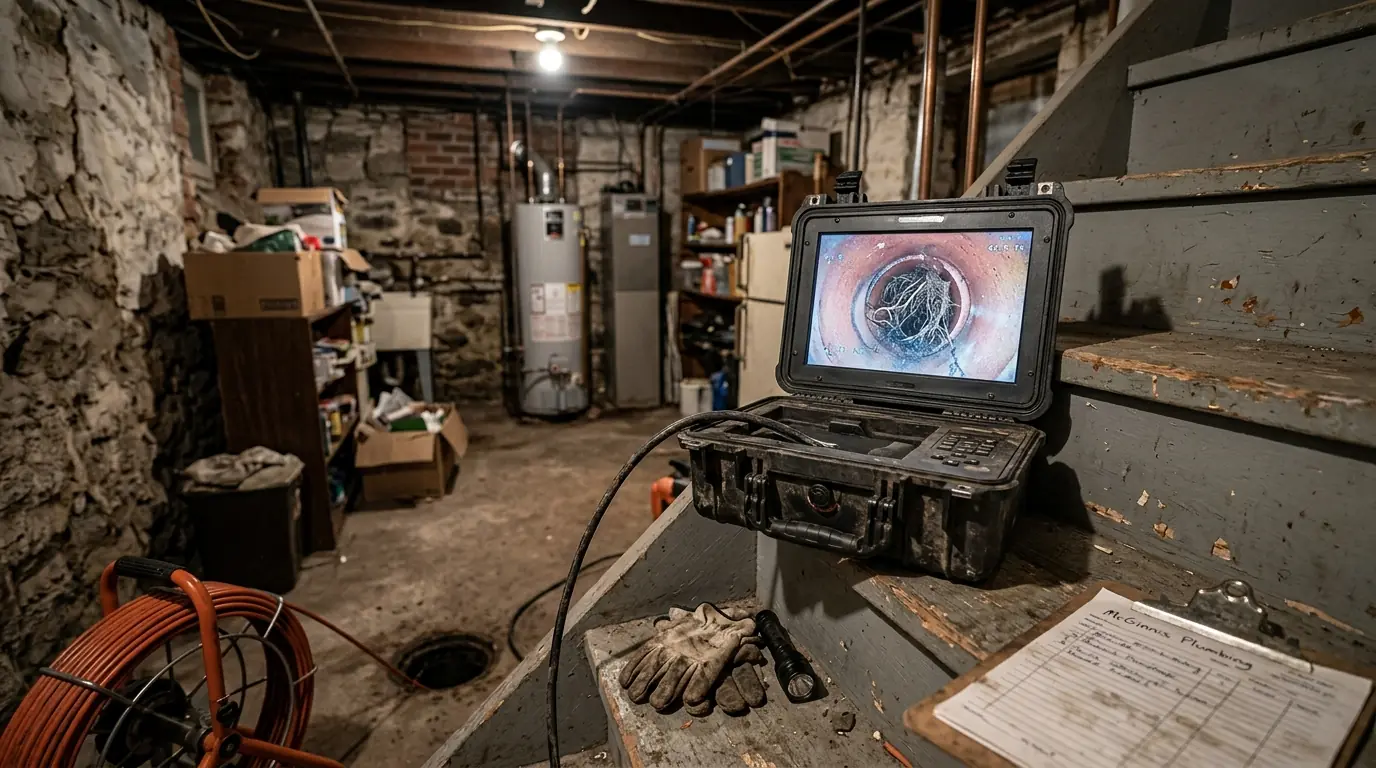
When the same main clogs every few months, cleaning it again treats the symptom. The pattern itself says something is catching debris at one spot: a root-filled joint, a belly where paper settles, or a break where soil falls in. We clear the line if it is blocked, then camera it to find that spot. The footage decides the next step. A single defect near the house may be a small repair; trouble at many joints points to lining or replacing the line, and the video lets you compare quotes on the same facts.
Locating a Break
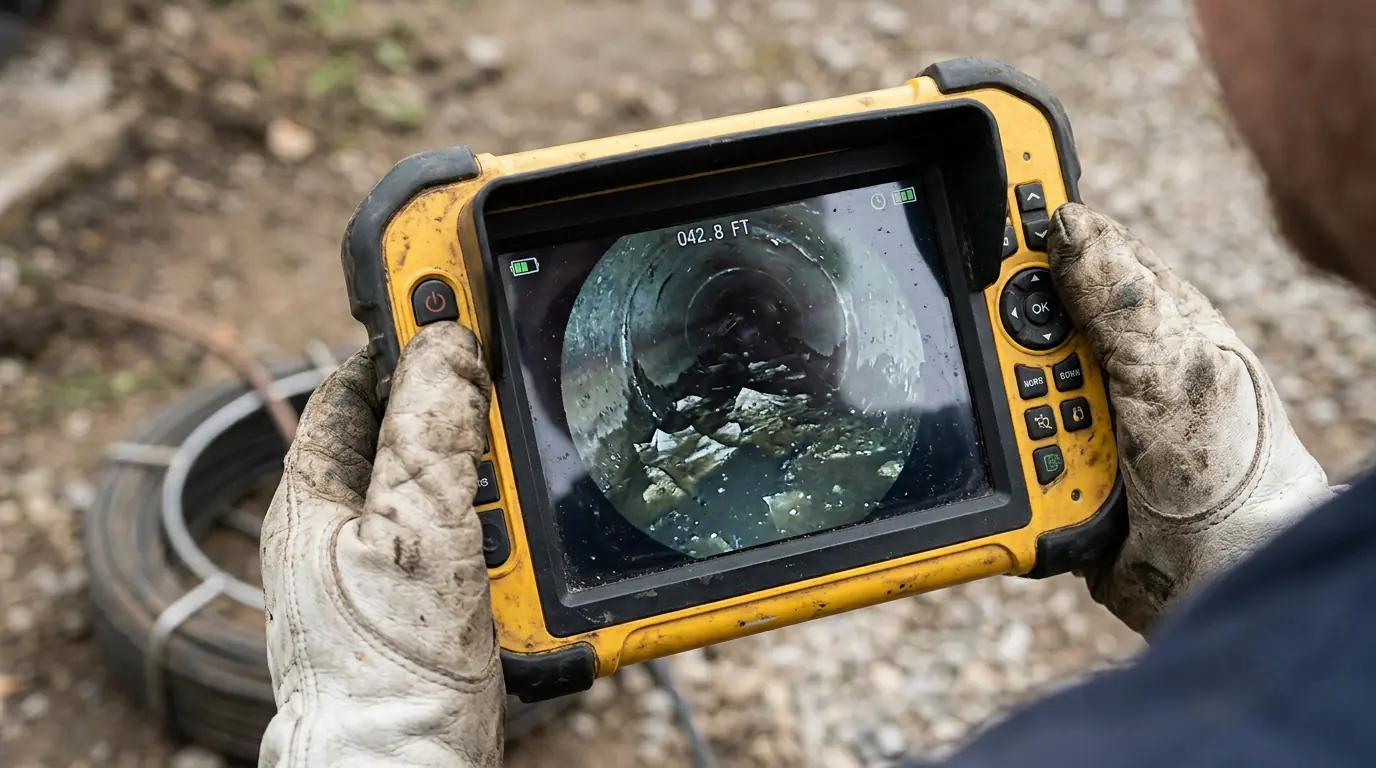
A soft spot in the yard, a sidewalk slab that keeps sinking, or a backup with dirt in the water all suggest a break. Digging to hunt for it wastes money and concrete. We run the camera until the image shows the break or a void around the pipe, read the distance, then trace the transmitter from above and mark the spot with its depth. That mark decides whether a repair can be made from one small excavation, or whether the break lies under the street or a neighbor, which changes the plan entirely.
How an inspection is run
Find the best access
We choose the opening that gives the camera the straightest path toward the street.
Clear the view if needed
Standing water or heavy buildup is cleared so the pipe itself can be seen.
Record the run
The camera travels out to the city main, with the distance counter on every frame.
Locate and mark
Each defect is traced from above and marked with its depth.
Go over it with you
We walk through the footage, explain each finding and hand over the recording.
What affects the cost of a camera inspection
An inspection on a flowing line with easy access is a short visit. These are the things that change that.
- Access to the lineAn open cleanout is quicker than pulling a toilet or working through a tight house trap.
- Whether the line must be cleared firstA backed-up or heavily coated line needs cleaning before the camera can see anything.
- Length of the runA long lateral out to the main takes more push rod and more footage.
- Locating at the surfaceMarking each defect with depth takes extra time and pays off when a repair is likely.
- Two laterals instead of oneHomes with separate storm and sanitary lines may need both filmed.
Who owns the line the camera is looking at
In Philadelphia the property owner is responsible for the sewer laterals that connect the house to the main in the street, so a defect on camera is a cost that comes with the house. In parts of Northeast Philadelphia that can mean two lines rather than one. A PWD study of two blocks there found separate storm and sanitary laterals at every home, and trouble with a lateral or vent at 48 of the 80 houses. We confirm which line we are filming before calling anything a defect.
Camera now, or clear the line first?
On a backed-up line, the order matters. This is how we decide.
| Situation | Camera first | Clear first, then camera |
|---|---|---|
| Line flowing, you are buying | Yes, the pipe is seen as it sits | Only if buildup hides the joints |
| Line backed up right now | Not possible under standing sewage | Yes, open it, then inspect |
| Heavy grease or scale | Shows the coating, not the pipe under it | Clearer view of cracks and wall wear |
| Suspected break | Shows where flow stops | Shows the full break and what lies past it |
Questions about sewer camera inspection in Philadelphia
For an older home, we think it is worth it. The lateral becomes your responsibility at closing, and a standard home inspection usually does not include it. The video gives you facts to bring to the negotiation.
Yes. You get a copy of the recording, which you can share with a buyer, seller, insurer or another plumber.
Not well. Murky water hides cracks and joints, so a blocked or bellied line is usually cleared before it is filmed.
A small transmitter in the camera head sends a signal that a handheld locator picks up at the surface. It gives the spot and an approximate depth, so digging starts in the right place.
That is useful too. It means a backup was likely a one-time blockage and points you toward ordinary drain care rather than a dig.