Updated October 2026
Installing a sink in Philadelphia means more than dropping a basin into a hole. The drain has to meet the trap arm at the right height, the trap needs a vent so it keeps its seal, and the supply stops need to work. We set kitchen, bathroom and laundry sinks, fit a new trap and supply lines, and connect disposals or dishwashers that share the drain.
Getting the drain and trap right under a new sink
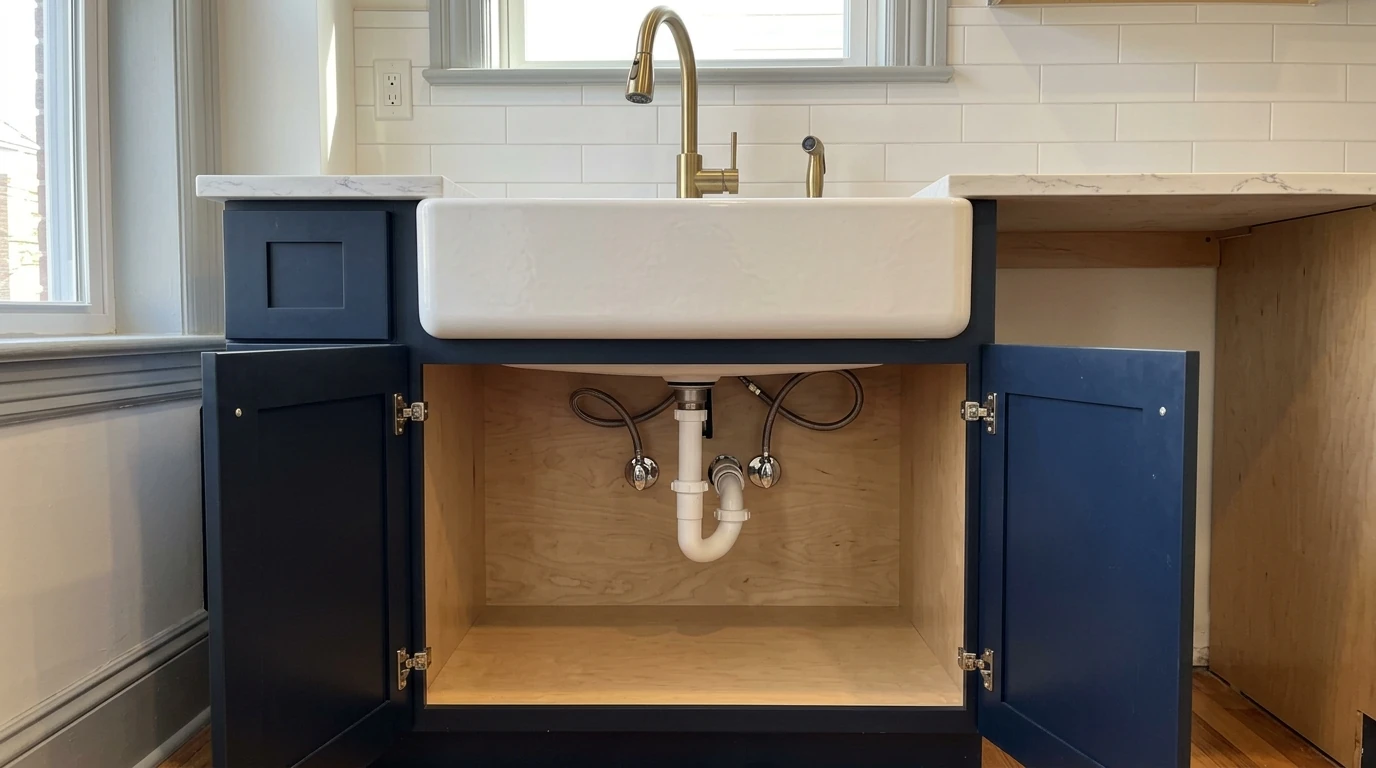
The bowl is the part people see. The part that decides whether a sink works is underneath: the height of the drain stub in the wall, the trap, and the vent that keeps the trap from siphoning dry. A new deep sink or a vanity with a different drain position often means the trap arm has to move.
We install sinks from makers such as Kohler, Elkay, Blanco and American Standard, and plumb undermount sinks once the counter installer has mounted them. When a dishwasher or disposal shares the drain, those get hooked up on the same visit; our pages on dishwasher connections and disposal work cover the details.
Undermount, drop-in or farmhouse sink?
Each style plumbs differently, and each puts different demands on the counter and cabinet.
| Question | Undermount | Drop-in | Farmhouse |
|---|---|---|---|
| How it mounts | Clipped under a stone or solid counter | Rim rests on top of the counter | Front apron replaces the cabinet face |
| Counter it needs | Stone, quartz or solid surface | Any, including laminate | A base cabinet built for it |
| Drain height | Lower, so check the wall stub | Usually fits the old trap | Deep bowl often means lowering the trap arm |
| Changing it later | Needs counter work | Lifts out easily | Needs cabinet work |
What sets the price of a sink install
Most of the price is in what the drain and supplies need, not the basin itself.
- Sink typeA drop-in vanity basin goes in faster than an undermount kitchen sink with a disposal and dishwasher.
- Drain positionMoving the trap arm up or down in the wall adds opening and patching.
- Old drain materialGalvanized or cast iron stubs need transition fittings, and rotted ones need a new section.
- Extra connectionsDisposals, dishwashers, filters and instant hot taps each add work under the sink.
Kitchen Sinks
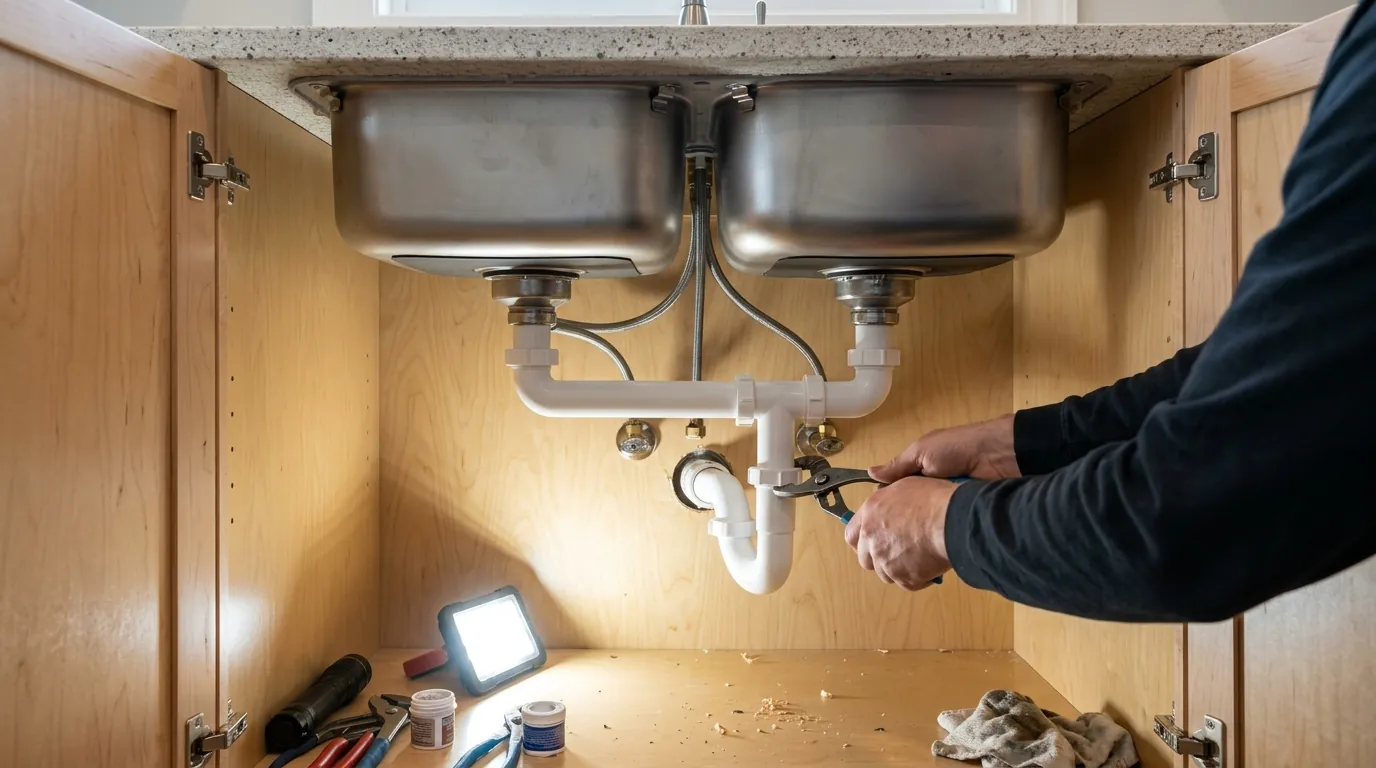
Kitchen sinks usually get replaced during a counter job, or when an enameled cast iron basin is chipped to the iron or a thin stainless one has dented and stained. We set the new sink, fit basket strainers and build a continuous waste across both bowls to a single trap. A dishwasher drain needs a high loop or air gap. Deep single bowls are popular, and they are the main reason we lower a trap arm, since a bowl that sits lower than the wall stub cannot drain properly. Bowl depth and the drain height in the wall decide how much rework is involved.
Bathroom Vanities
A vanity usually gets replaced because the old cabinet swelled at the base from years of small leaks, or because the room is being updated. We mount the faucet and pop-up drain on the top before it is set, which makes for a cleaner seal, then line the tailpiece up with the trap arm in the wall. New vanities rarely put the drain exactly where the old one was, so the trap is rebuilt to suit. Pedestal sinks need blocking in the wall to carry the basin. The cabinet style and the position of the wall stub decide the layout under the sink.
Utility and Laundry Tubs
Plastic laundry tubs crack at the legs and bowl, and old concrete tubs eventually leak at the drain. We set a new tub level, fasten it to the wall so a washer discharge hose cannot rock it, and fit a trap and a faucet with a threaded spout for a hose. Where the basement drain sits above the floor or the tub is below the sewer line, gravity will not carry the water away, and a laundry tray pump or a small ejector is needed. The drain location, and whether a washer empties into the tub, decide how the tub is plumbed.
What every sink install includes
The same items get done whether the sink is a vanity basin or a double-bowl kitchen sink.
- Disconnect and remove the old sink and trap
- Check the drain stub and vent connection in the wall
- Set the sink and seal it to the counter or wall
- Mount the faucet, strainer or pop-up drain
- Build a new trap and tailpiece to the drain
- Replace or test the supply stops
- Fit new braided supply lines
- Fill, drain and check every joint for leaks
Putting in a new sink
Check fit first
We compare the new sink and faucet to the counter, cabinet and drain position before anything comes out.
Remove the old sink
Stops closed, supplies and trap disconnected, old sink lifted and the opening cleaned.
Pre-assemble on the bench
Faucet, strainers or pop-up go on the sink before it is set, where they are easier to seal.
Set and connect
Sink set and sealed, trap built to the wall stub, supplies connected to the stops.
Fill both bowls and drain them
We watch every slip joint and supply nut as the water runs out together.
Sinks in Bucks County towns and Philadelphia homes
More than 40 percent of current housing in Bucks County was built in 1980 or later, so in places like Bensalem, Levittown and Warminster many sink swaps happen in newer kitchens and baths. Those jobs tend to be simpler, provided the new bowl suits the existing drain height. Closer in, older Philadelphia homes more often hide a galvanized or cast iron drain stub behind the cabinet, and we plan for a transition fitting before the new trap goes on.
Questions about sink installation in Philadelphia
No. The fabricator sets the counter, and we handle the sink, faucet, drain and supplies once it is in.
Usually, yes. If the new vanity's drain sits higher, lower or off to one side, we rework the trap so it lines up without forcing it.
Gurgling often means the trap is being siphoned because the vent is blocked or missing. We check venting whenever we set a new sink.
If it is worn or does not match the new sink's holes, yes. A faucet is far easier to mount before the sink goes in, and our faucet service covers both new and repaired faucets.
A tub needs its own trap and a proper connection to the drain system. Letting it spill into an open floor drain is a common shortcut that leads to smells and backups.