Updated October 2026
Most boiler repairs in Philadelphia fall into two camps: steam boilers with water level, pressure control or venting trouble, and hot water boilers with circulator, pressure or air problems. Both share burner and ignition faults. A repair visit finds which part has failed, fixes it and checks the safety controls before the boiler goes back into service.
When a boiler is asking for help
No heat at all
The burner will not light, or it lights and shuts off. Ignition, the gas valve or a safety control is usually involved.
Banging pipes on a steam system
Water hammer means condensate is trapped in a pipe that lost its pitch, or the boiler water level is too high.
Pressure gauge in the red
On a hot water boiler, high pressure points to a failed fill valve or expansion tank.
Water on the floor around the boiler
Leaks at the relief valve, a pump, a fitting or the boiler sections all need a look.
Some radiators cold, others hot
Air in a hot water loop or a dead steam vent leaves rooms cold.
Two kinds of boiler, two sets of problems
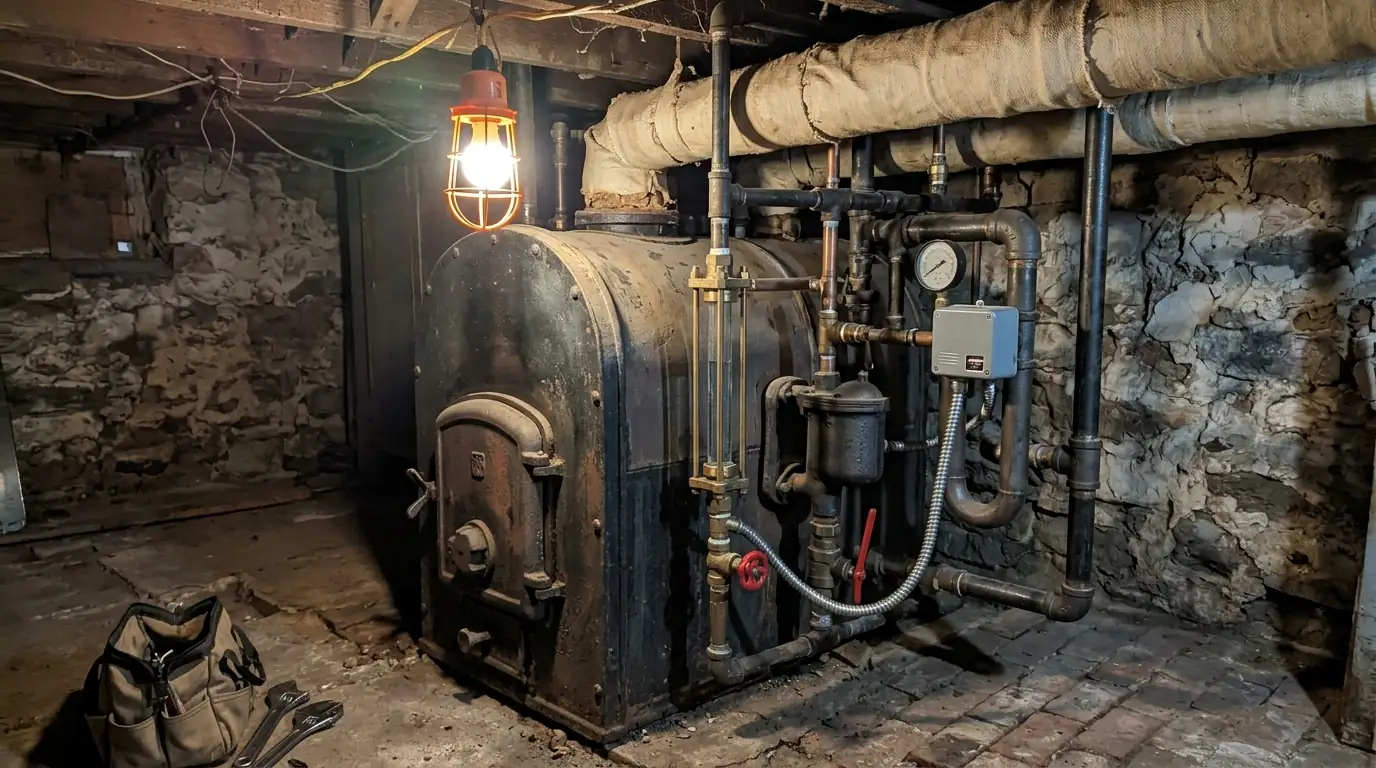
Boiler-heated homes in Philadelphia run one of two systems. A steam boiler boils water and sends steam up to the radiators, where it condenses and runs back down. A hot water boiler heats water and pumps it around a loop of radiators or baseboard. They share a burner and gas controls, but the parts that fail around them differ.
Every boiler call starts with confirming which system you have and checking the safety controls. Gas boilers from makers such as Weil-McLain, Burnham and Peerless are common in the city, and we work on most of them. If the trouble is out at a radiator rather than the boiler, our radiator and baseboard repair covers that side.
Steam Boilers
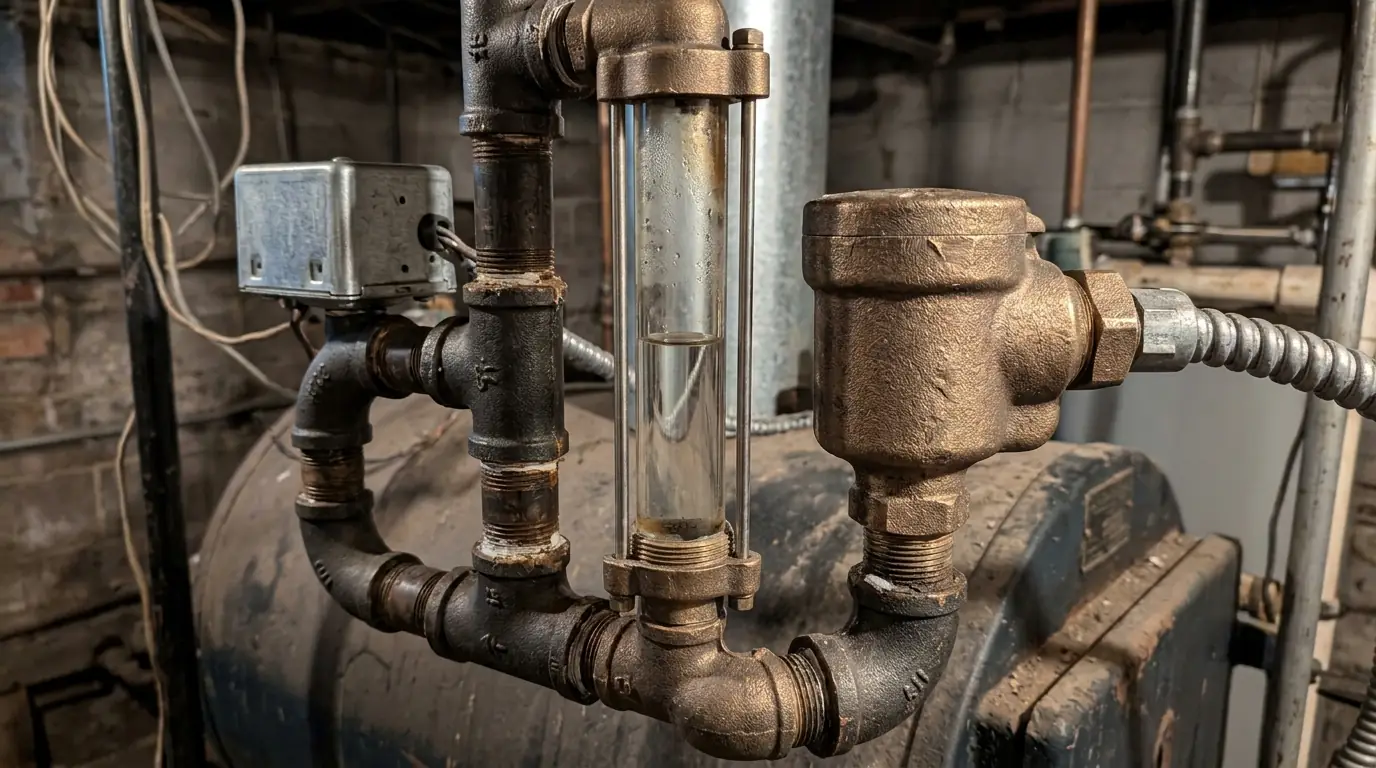
Steam boilers live and die by the water level. When the sight glass shows low water, the low water cutoff shuts the burner off to protect the boiler, and a cutoff clogged with sludge can fail to do that at all. Too much water causes banging and wet steam. We flush and test the low water cutoff, clean the gauge glass, set the pressure control to the low pressure a house system needs and inspect the main vents. Short cycling, surging water in the glass and long waits for heat are common complaints, and they usually trace back to dirty water, failed vents or a wrong pressure setting.
Hot Water Boilers
A hot water boiler is a sealed, pressurized loop. It needs the right fill pressure, an expansion tank to absorb the water growing as it heats, and air removed from the system. When the expansion tank waterlogs, pressure jumps each time the boiler fires and the relief valve drips. When the fill valve fails, pressure drops and the upper floors go cold. We check the pressure cold and hot, recharge or replace the expansion tank, test the fill and relief valves and bleed air from the loop. Burner and ignition faults get the same testing as on a steam boiler.
Circulator Pumps
The circulator pump moves hot water from the boiler out to the radiators. When it fails, the boiler stays hot and the house goes cold. Sometimes the motor hums but the impeller has seized; sometimes the coupling between motor and pump snaps on an older three-piece pump; sometimes the relay that switches it on has died. We check for power at the pump, feel the supply and return pipes for flow and listen to the motor. Replacing a pump usually means closing the isolation flanges, swapping the cartridge or the whole pump and bleeding the air out before restarting.
How long you may be without heat
Many boiler repairs are part swaps that can be finished on the first visit when the part is a common one. Controls and pumps for older or less common boilers sometimes have to be ordered, and the heat stays off until they arrive.
When a boiler cannot safely run in the meantime, we shut it down properly and talk through options, including replacing the boiler if a repair no longer makes sense.
What a boiler repair visit covers
Identify the system
Steam or hot water, and which controls and pumps it uses.
Check the safeties
Low water cutoff, high limit, relief valve and flue are checked before anything else.
Find the fault
We test the ignition, gas valve, controls and pump in turn until the failure shows itself.
Repair and restart
The failed part is replaced and the boiler run through a full call for heat.
Check the house
We confirm heat at the radiators and that the boiler cycles normally.
Boiler heat in older Philadelphia homes
Boiler heat is still common in older Philadelphia homes, and with just over 40 percent of the city's housing built before 1940, there is a lot of it. In many of those houses the original radiators are still in place, now fed by a newer gas boiler. Systems like that were designed around steam or gravity hot water and converted later, so a repair often means working out what a past owner changed before we touch the burner.
What a boiler repair costs, and why it varies
You get the price after diagnosis. The part and the age of the boiler drive most of it.
- Which part failedThermocouples and igniters are smaller jobs; gas valves, control boards and circulators cost more.
- Steam or hot waterSteam work often centers on controls and vents; hot water work on pumps and expansion tanks.
- Parts availabilityCommon parts are easy to source; parts for older or unusual boilers can take longer to find.
- Condition of the systemSludge, leaks or corroded piping found during the repair may need attention too.
Questions about boiler repair in Philadelphia
Banging is usually water trapped in a pipe that has lost its slope, or a boiler water level set too high. Checking the level and the pitch of the pipes comes first.
A steam boiler that needs frequent topping up is losing water somewhere, through a leaking vent, a return line or the boiler itself. That is worth finding before it damages the boiler.
A rise into the red as the boiler fires usually points to a waterlogged expansion tank. A failing fill valve can do it too.
On a hot water system, the circulator pump or a stuck zone valve is the likely cause. On steam, failed air vents can keep steam out of the radiators.
A small drip at a fitting can often wait for a booked repair. A leak from the boiler sections, or a relief valve that keeps discharging, needs prompt attention, and do not keep refilling a boiler that is losing water fast.