Updated October 2026
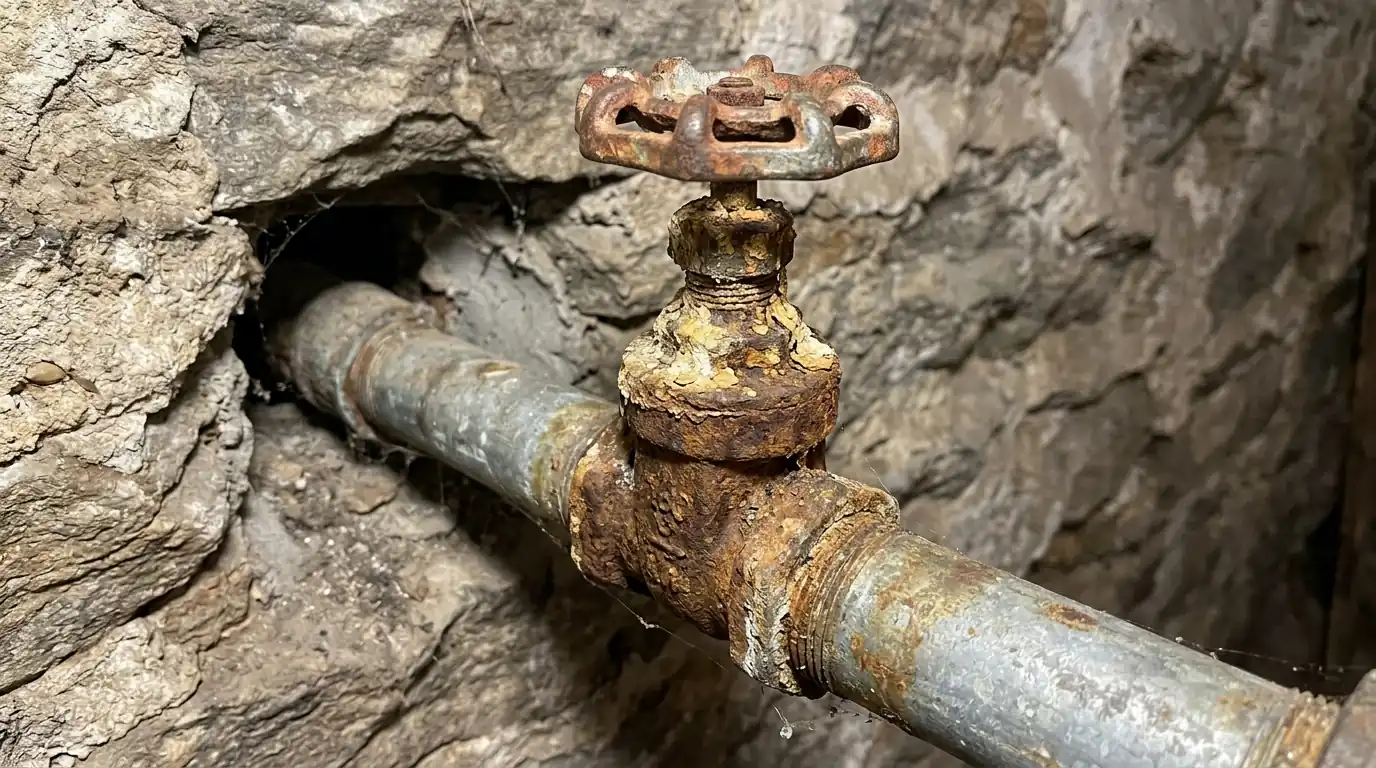
Old shutoff valves in Philadelphia homes are often gate valves with a round handle that has not turned in years. When they finally have to close, the stem snaps or the gate never seals. Replacing them with quarter-turn ball valves means you can stop the water in one motion during an emergency. The main valve beside the meter matters most.
Why old shutoff valves fail when you need them
A shutoff valve does nothing for years and then has one job in an emergency. Gate valves, the type with a round wheel handle, collect scale and rust on the stem, and the gate inside wears. When you try to close one, the handle spins, the stem breaks or water keeps running past. Fixture stops under sinks and toilets fail the same way.
We replace them before they are needed in a hurry. A ball valve opens and closes with a lever, shows its position at a glance and seals tight. Replacing the main means stopping water upstream of it, so we plan that work, test the new valve and show you where it is. If one fails during a flood, our emergency plumbers swap it on the spot.
Gate valve or ball valve
Many older houses still have gate valves at the meter and under fixtures. Here is why we replace them with ball valves.
| Point | Old gate valve | Quarter-turn ball valve |
|---|---|---|
| How it closes | Many turns of a round handle | One quarter turn of a lever |
| After years unused | Stem seizes or snaps | Usually still turns freely |
| Open or closed at a glance | Hard to tell | Lever position shows it |
| Seal when closed | Worn gate often lets water by | Ball seals tight |
What decides the cost of a new shutoff
Valve replacements are usually small jobs. The cost moves with which valve it is and what the pipe around it looks like.
- Which valveA main valve needs water stopped upstream; a fixture stop only needs the house main closed.
- Pipe connectionSweated copper, threaded galvanized and press fittings each take different work.
- Pipe conditionCorroded or short stubs may need extending before the valve goes on.
- How many valvesReplacing several stops in one visit costs less than one at a time.
Main Valve at the Meter
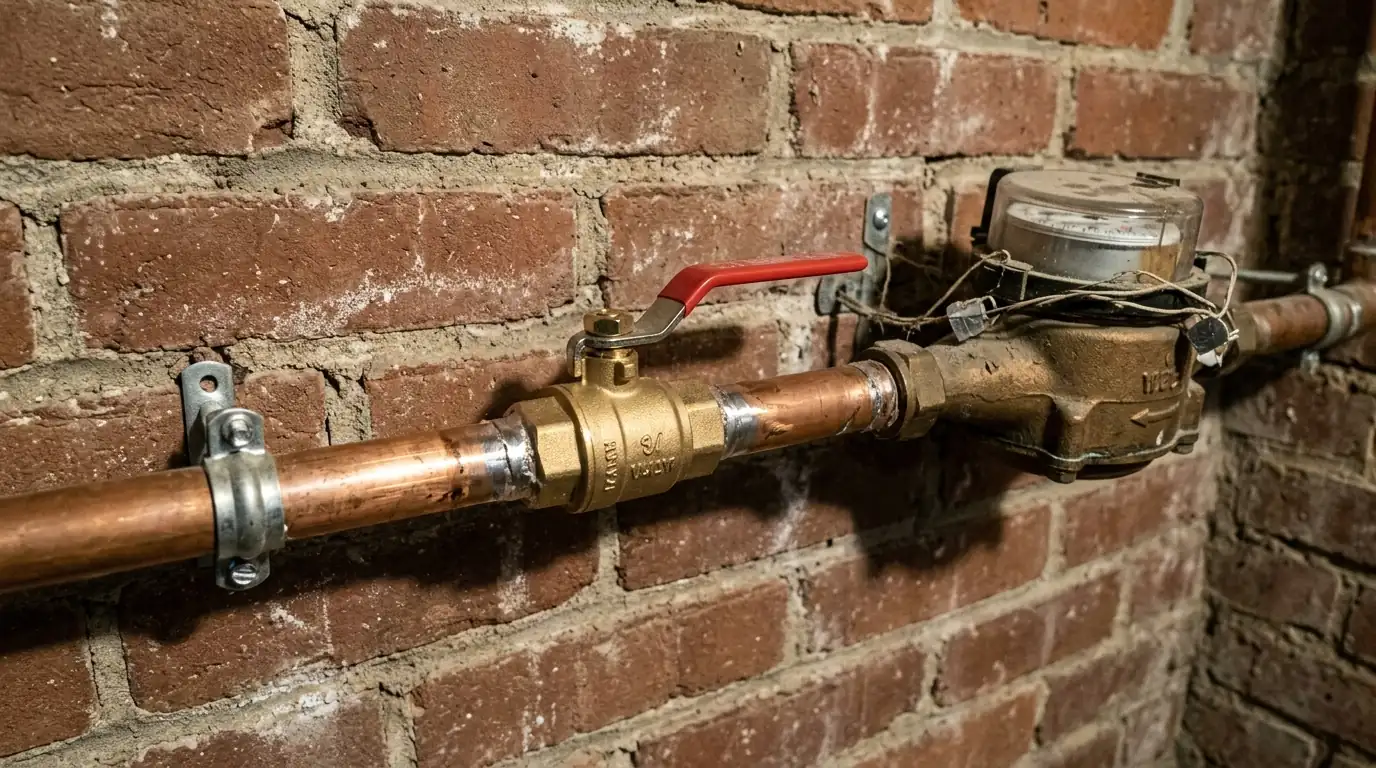
The main valve sits where the service line enters the house, usually at the front basement wall beside the meter, and in many older homes it is a gate valve nobody has closed in decades. Signs it needs replacing: a handle that will not turn, a weep at the stem packing, or water still running after it is shut. The job means stopping the water upstream at the curb stop, cutting out the old valve and fitting a full-port ball valve so the house keeps full flow. If the service line is lead or galvanized, we flag it while the water is off.
Fixture Stop Valves
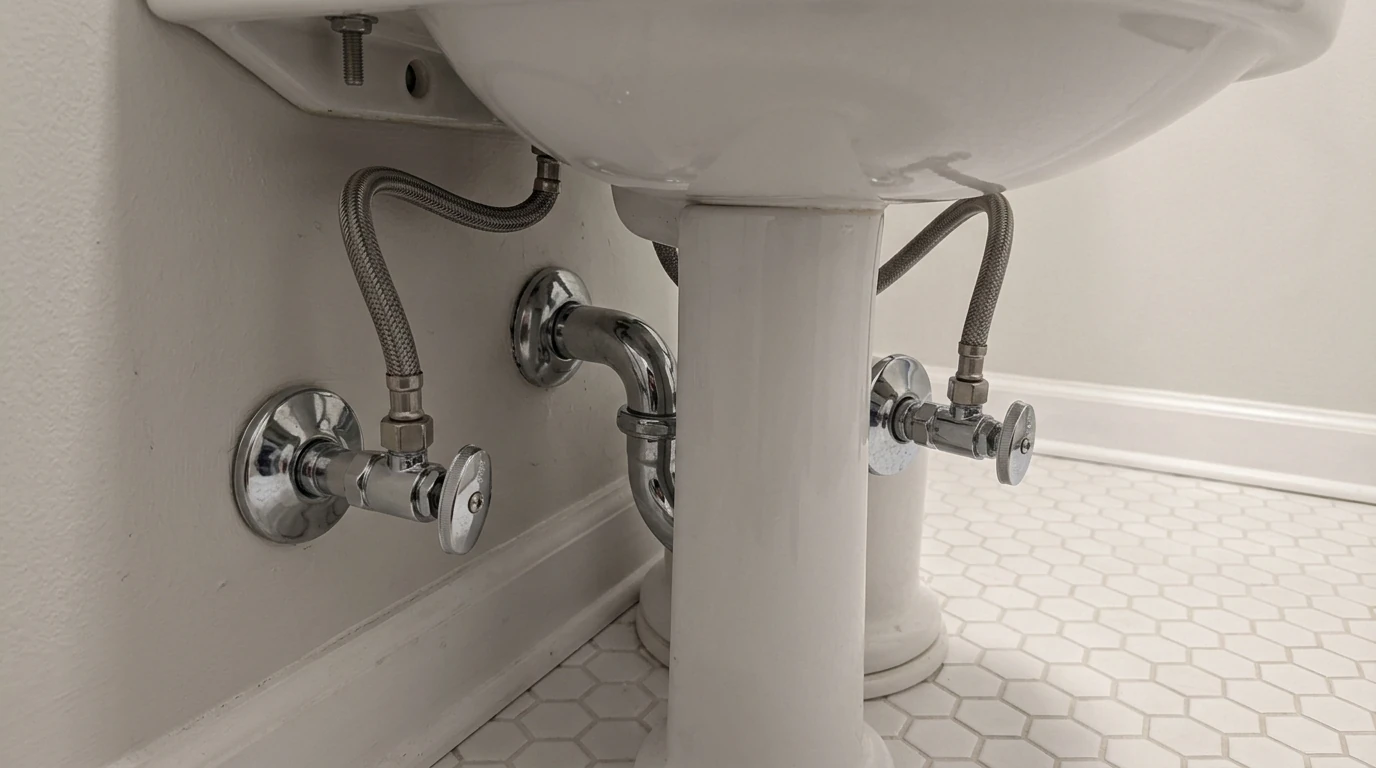
Every sink, toilet and dishwasher should have its own stop, so one leak does not mean shutting the whole house. Old multi-turn stops seize, drip at the stem when turned, or leak at the compression nut, and some fixtures never had one at all. We replace stops with quarter-turn valves, swap the braided supply lines while we are there, and add stops where they are missing. What decides the job is the pipe stub coming out of the wall. If it is short or corroded, we extend or replace it so the new stop grips something solid.
Water Heater Cold Valve
The cold supply valve above the water heater is the first thing a plumber reaches for when the tank leaks or needs service. If it will not close, draining or swapping the heater means shutting down the whole house. Gate valves in this spot often seize or leak at the stem after years of heat cycling. We replace it with a ball valve, check the connectors and dielectric fittings on the tank, and make sure the handle is easy to reach. It is a quick add during water heater replacement and worth doing on its own.
What a valve replacement visit includes
We do more than swap the part. The pipe on either side of an old valve needs attention too.
- Water stopped at the curb stop or the next valve upstream
- Line drained and the old valve removed without twisting the pipe
- Pipe ends cleaned or cut back to sound material
- Full-port quarter-turn ball valve installed
- Worn supply lines replaced at fixture stops
- Water restored slowly and air bled from the lines
- New valve tested closed under full pressure
- A walk-through of where the main is and how it works
How we change a shutoff valve
Stop water upstream
We close the next valve upstream, or the curb stop for the main, and drain the line.
Remove the old valve
It is cut or unthreaded out while the pipe is braced so nothing twists in the wall.
Prepare the pipe
Ends are cleaned or cut back to sound material.
Set the new valve
A ball valve goes in by solder, press, threads or compression, matched to the pipe.
Test it closed
With water restored, we close the new valve and confirm nothing gets past it.
Shutoff valves in Philadelphia's older homes
In Philadelphia the property owner is responsible for the water service line running from the street to the house, and the main valve at the end of that line is the owner's to keep working. In a city where just over 40 percent of homes were built before 1940, that valve is often an original gate type, or an early replacement that has not been closed in decades. Testing it once a year, or replacing it before it seizes, is cheap protection against a long wait for the water to stop.
Questions about shutoff valve replacement in Philadelphia
Close it and reopen it once a year. If it is stiff, leaks at the stem or does not stop the water, plan a replacement before an emergency forces one.
Not unless they are seized or leaking. If one has failed, though, the others are the same age and often follow soon after.
If you are comfortable shutting the main and the stub is clean copper, a compression stop is a reasonable owner job. Old galvanized or short stubs are better left to a plumber.
A full-port ball valve has an opening as large as the pipe, so it does not choke the flow into the house. We use full-port valves on the main.
No. The main valve is at the house end of the line. A leak between the street and the valve needs a repair or service line replacement.