Updated October 2026
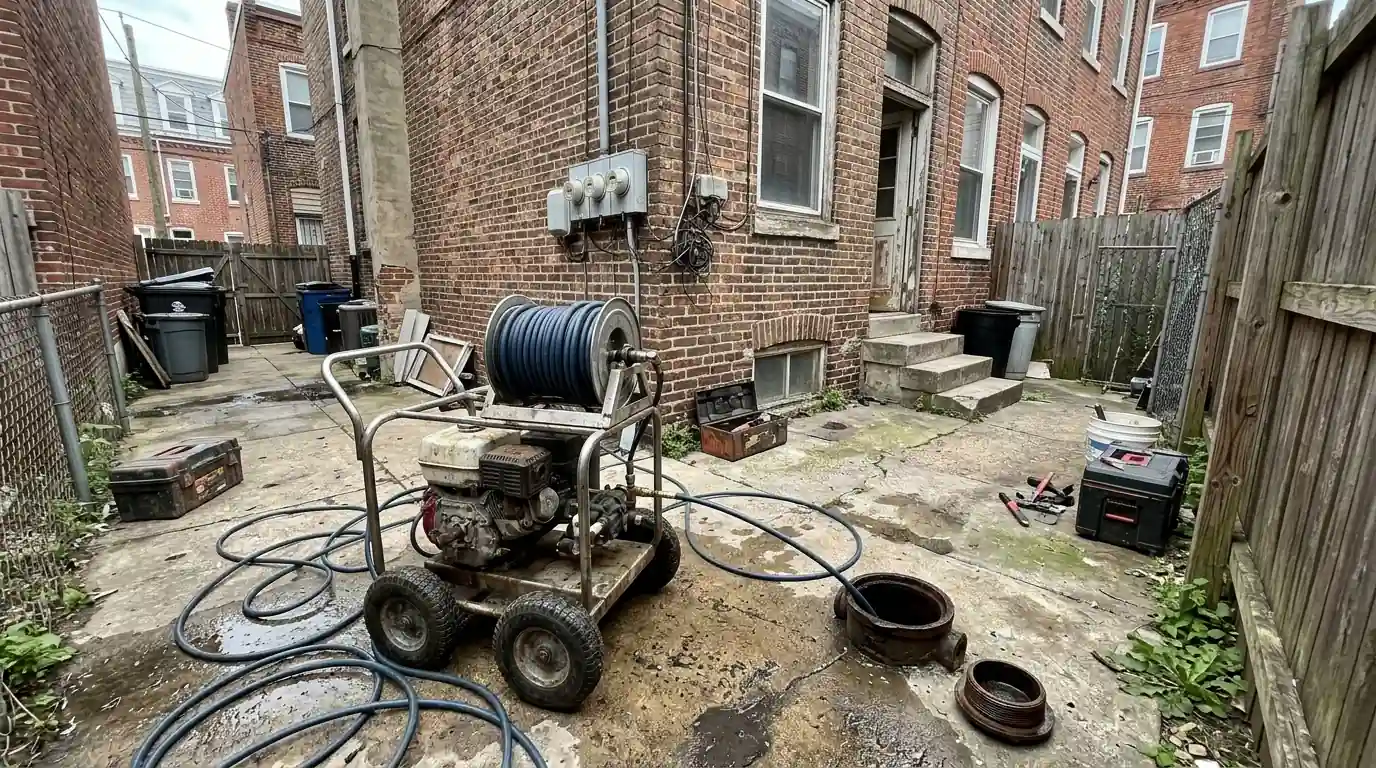
Hydro jetting in Philadelphia drain and sewer lines uses a high-pressure hose and a rear-facing nozzle to scour the full inside of the pipe. It suits lines that keep clogging with grease, scale or fine roots, where a cable only bores a hole through the middle. We camera the line first, because weak or broken pipe should not be jetted.
Why a clean pipe wall matters
A drain cable is a good emergency tool. It spins through the blockage and gets water moving. But it leaves most of the grease, scale or root hair stuck to the walls, and the next clog has a head start. Jetting sends water through rear-facing jets that drive the hose forward while scrubbing the pipe all the way around.
We do not jet blind. A camera inspection comes first, because high pressure in a cracked clay lateral or cast iron worn thin can make things worse. If the line is sound, jetting usually buys a long stretch of clear running. If it is not, the footage points toward a lateral repair instead.
Cable or jetter: which one your line needs
Both tools have a place. The choice depends on what is in the pipe and what shape the pipe is in.
| Question | Drain cable | Hydro jetting |
|---|---|---|
| What it does | Bores through the clog with a spinning head | Scours the full pipe wall with water |
| Best for | Wipes, paper, a toy, one blockage | Grease, scale, soft root regrowth |
| Leaves behind | Most of the coating on the wall | A clean wall the camera can read |
| Pipe it suits | Most pipe, even fragile runs | Sound pipe; worn runs get a lower setting or none |
| When we suggest it | Emergency backups and first visits | Repeat clogs and lines seen on camera |
What goes into a hydro jetting price
Jetting takes more setup than cabling, so a visit costs more. On a line that keeps clogging, it can cost less than paying for one cabling after another.
- Length and size of the lineA long lateral or a large commercial drain takes more hose time than a short kitchen branch.
- What is in the pipeHardened grease and thick scale need more passes than soft buildup.
- AccessA clear outside cleanout is faster than working through a roof vent or a pulled fixture.
- Camera before and afterBoth runs are part of doing it right and are built into the plan we give you.
- Working around business hoursRestaurants often need the work done after closing, which affects scheduling.
Restaurant Grease Lines
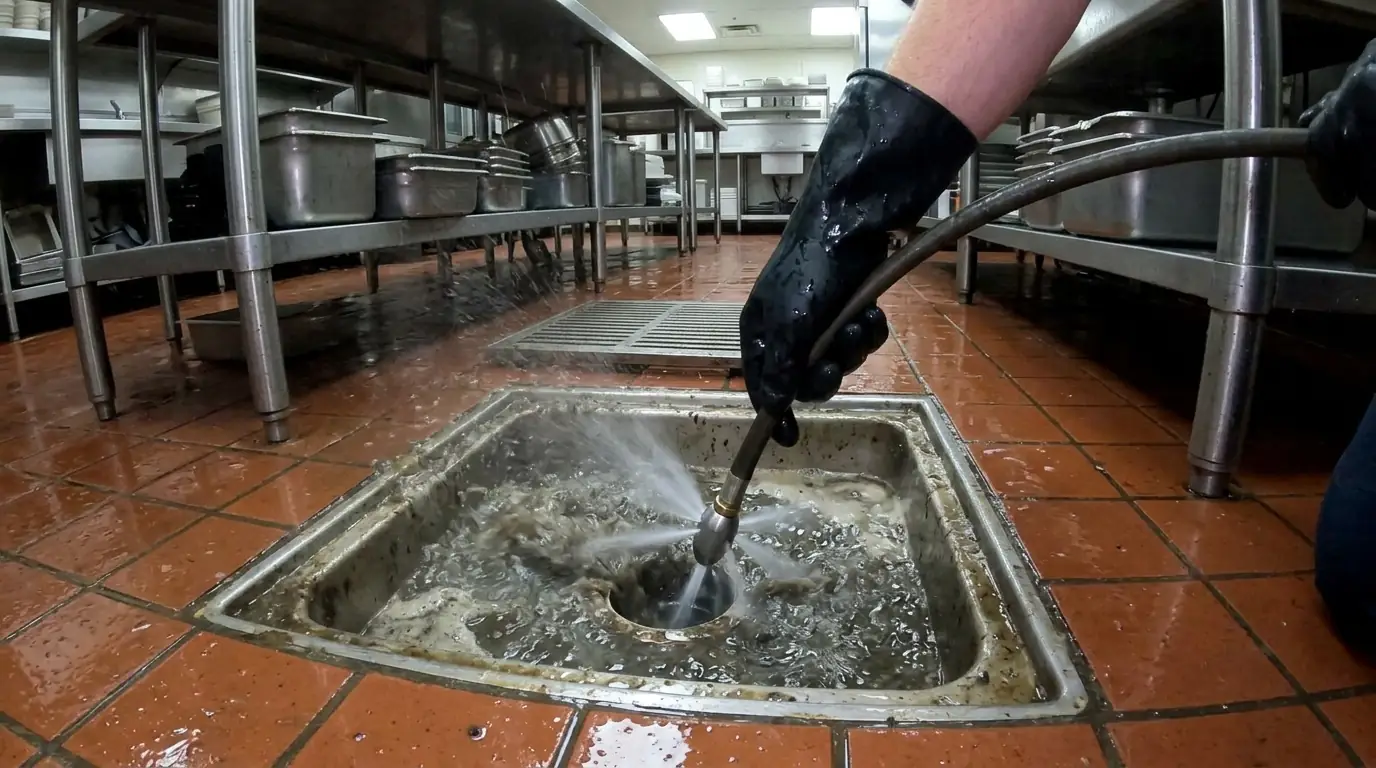
Kitchens that cook all day send warm grease into the line, and it sets once it cools a few feet downstream. The first warning is a floor sink that drains slowly during the dinner rush, then a backup that shuts down the dish station. Cabling punches a hole that closes again within weeks. We jet the kitchen branch and the line out toward the interceptor with a nozzle built to cut fat. How often a line needs it depends on the menu, the volume and whether the grease trap is sized and pumped properly.
Scale in Cast Iron
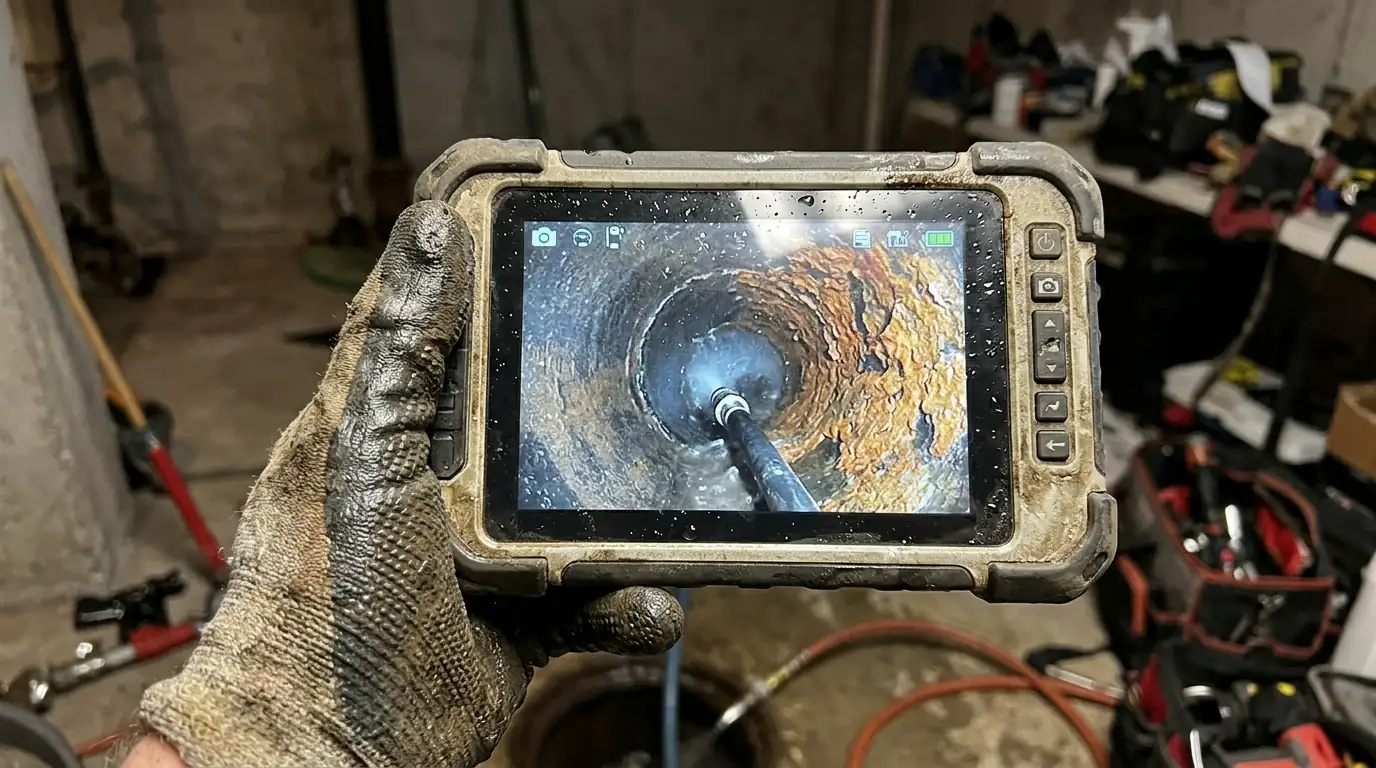
Old cast iron drains grow a rough crust of rust and mineral scale on the inside, called tuberculation. The pipe can look fine from outside while its opening has narrowed badly, and paper snags on every ridge. Owners notice drains that slow down again soon after a cabling. A descaling nozzle removes much of that crust and brings back the flow. What decides whether jetting is right is the wall thickness the camera shows. Heavy scale on sound pipe cleans up well; scale hiding a cracked or channeled bottom means that section should be replaced.
Root Regrowth
After roots are cut with a cable, short stubs and fine hair stay in the joint and regrow fast. The line clogs again in the same spot, and the camera shows a fringe at each joint. Jetting with a root nozzle shears that fringe back to the pipe wall more completely than a blade can. It does not seal the joint, so it buys time rather than ending the problem. We use it to keep a line running while you plan a repair, or on a line with light roots at only one or two joints.
What a jetting visit covers
Jetting is planned work, so we set it up properly instead of rushing it.
- Camera look at the line before any water goes in
- Access opened at a cleanout, house trap or roof vent
- Nozzle chosen for grease, scale or roots
- Pressure set to the pipe material and its condition
- Passes worked upstream and back to pull debris toward the main
- Second camera run to show the cleaned pipe
- Cleanout caps refitted and the work area cleaned
How we jet a line without damaging it
Camera first
We look at the pipe material, the joints and anything that would not stand up to pressure.
Choose the entry point
Jetting usually starts at the lowest access and works upstream so debris flows out to the main.
Set nozzle and pressure
Grease, scale and roots each get a different nozzle, and older pipe gets a gentler setting.
Make the passes
The hose works up and back in sections until the water runs clean.
Camera again
You see the before and after footage side by side.
Why older Philadelphia drains benefit from jetting
Philadelphia has an unusually old housing stock, with just over 40 percent of homes built before 1940 compared with about 22 percent across the region. Drain lines in houses that age are often cast iron or clay, and decades of use leave scale, grease and root hair on the inside wall. That buildup is exactly what jetting removes. It is also why we will not jet a line we have not seen first: in pipe that old, the camera decides whether water pressure helps or hurts.
Questions about hydro jetting in Philadelphia
It can if the pipe is already cracked, crushed or worn thin, which is why we camera it first. On sound pipe, with the right nozzle and pressure, it cleans without harm. Where the line is fragile we lower the pressure or recommend a different fix.
There is no fixed schedule. A home line with one grease clog may never need it again. A busy restaurant line may need a regular cycle, and the buildup seen on camera helps set it.
For grease, scale and fine roots, yes, because it cleans the wall instead of punching a hole. For a single wipe or a dropped object, a cable is faster and costs less.
No. It clears them more completely than a cutter, but the joint they came through stays open. Only a repair, lining or a new sewer line stops them returning.
Yes. We jet restaurant and storefront drains, and we can work after closing so the kitchen is not shut down during service.