Updated October 2026
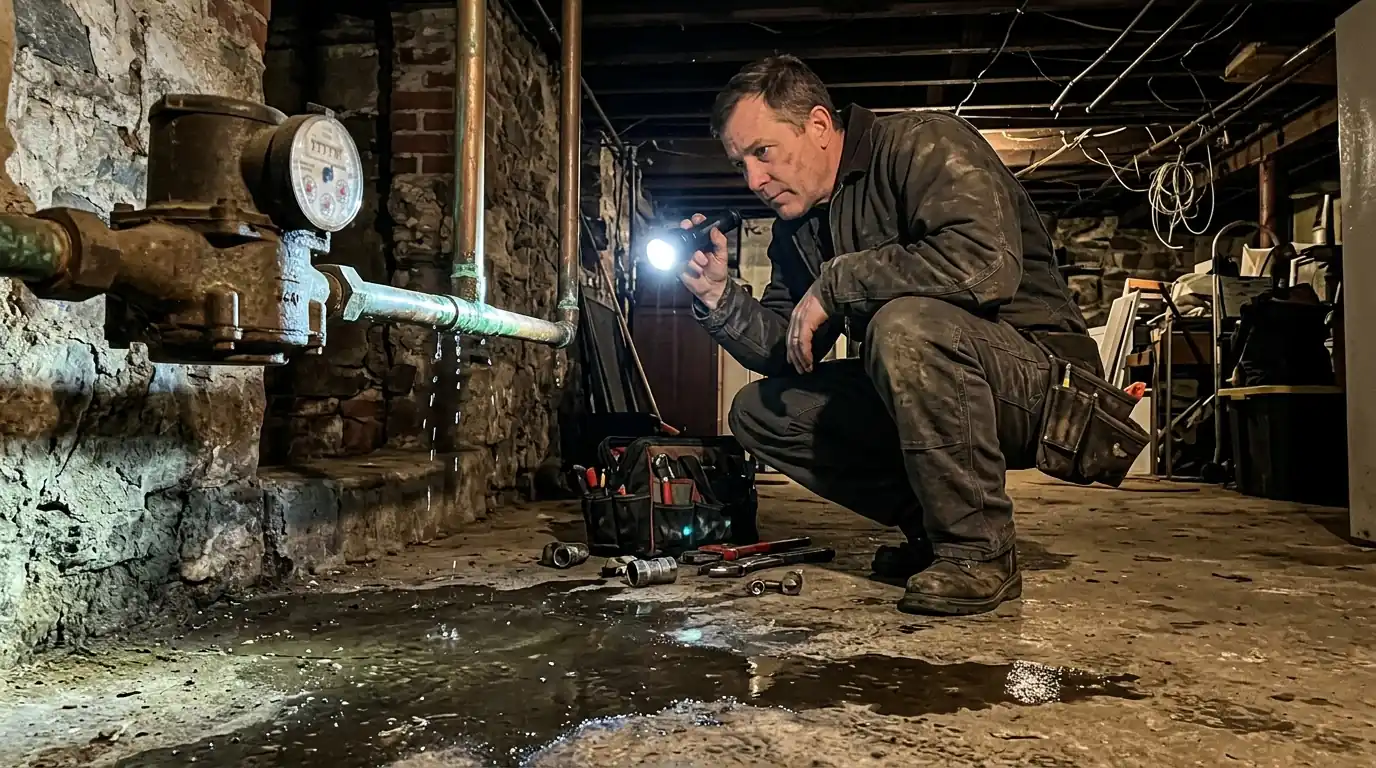
A Philadelphia plumbing emergency is any leak, backup or loss of water that is damaging the house right now or will be by morning. The first move is closing the main valve, usually beside the meter at the front basement wall. Then a plumber finds what failed, stops the damage and makes a repair that holds until any larger job can be planned.
What counts as an emergency and what can wait
Some calls cannot wait: water running through a ceiling, a split pipe spraying in the basement, sewage rising from a floor drain, or no water at all during a freeze. Others can sit until daylight once the water is off, like a dripping trap. When you call, we tell you honestly which kind you have.
On site, the order never changes: stop the damage, then repair the failure properly. If the real fix is bigger, such as a broken lateral, we make the house safe and lay out the choices.
After-Hours Calls
Plumbing rarely fails at a convenient hour. A pipe that froze overnight lets go when the house warms up, or a tub overflows while everyone is asleep. What you notice is the sound of running water, a bulge in a ceiling or a wet stair tread. When you call after hours, we first walk you to the shutoff so the damage stops while a plumber is on the way. On site we trace the source, make the repair if the parts and access allow it, and tell you plainly if a second visit is needed for a full replacement.
Main Shutoff Help
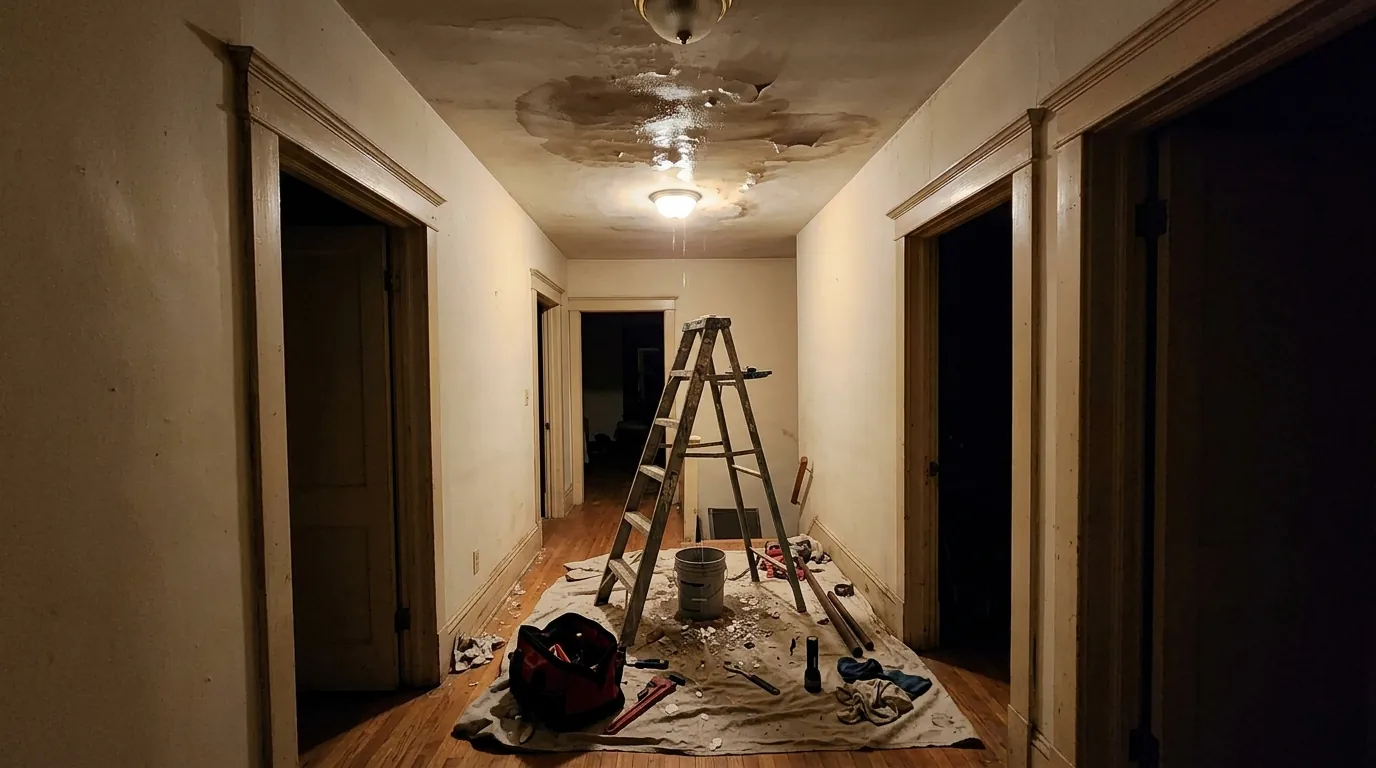
Plenty of owners have never touched the main valve, and many older gate valves refuse to turn the one time it matters. Look at the front basement wall where the water line comes in, right beside the meter. If the handle will not move, do not lean on it with a wrench, because old stems snap and turn a leak into a flood. When the inside valve fails, we stop the water upstream at the curb stop, and we can swap the seized valve for a quarter-turn ball valve while we are there.
Overflowing Fixtures
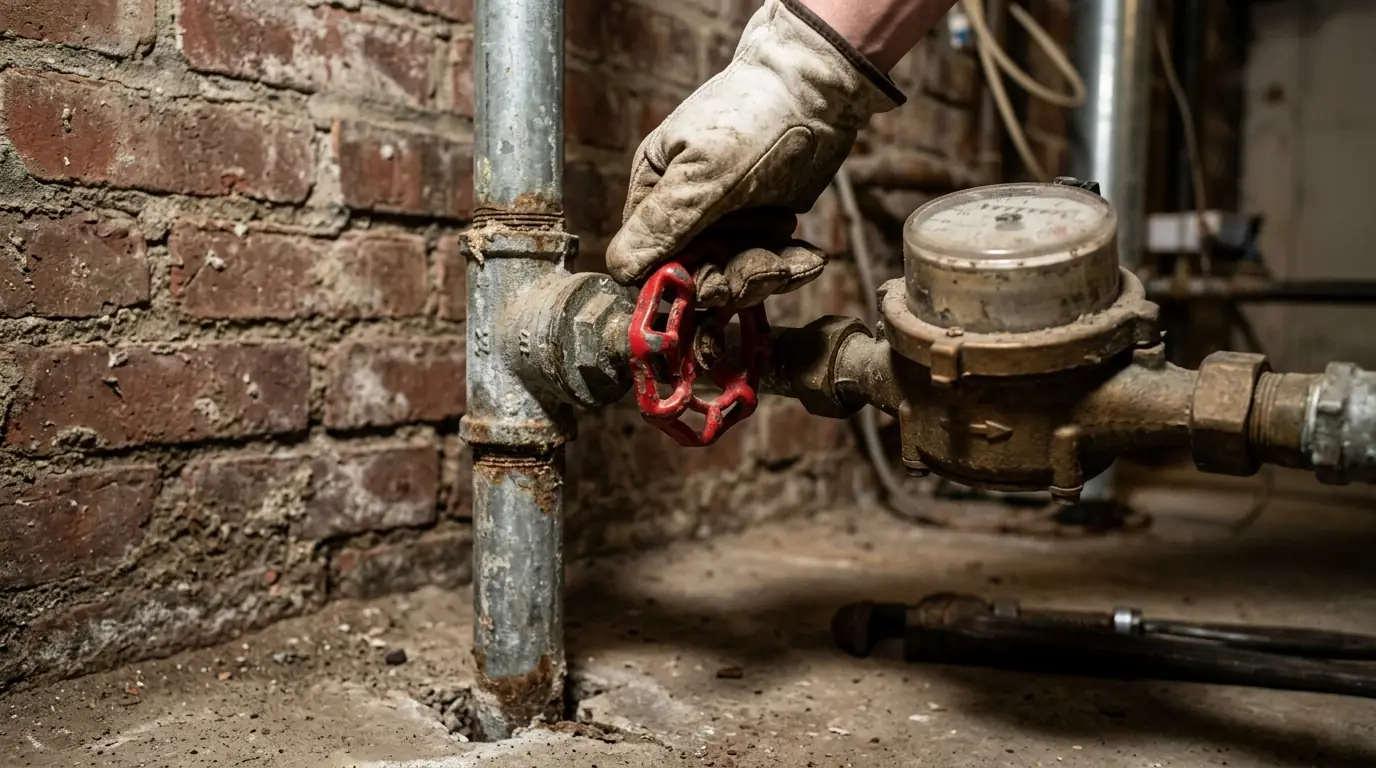
An overflowing toilet or tub on an upper floor sends water straight down through ceilings and light fixtures. The cause is usually a blocked drain, a stuck fill valve or a worn float, but when several fixtures back up together the problem sits in the main line or the house trap. Close the stop behind the toilet, or the main if there is no stop. We clear the blockage, rebuild or replace the valve that stuck, and check the floor and ceiling below for water pooled where you cannot see it.
How long the water stays off
For a split pipe or failed fixture valve, only while that piece is cut out and replaced. A seized main valve keeps the whole house dry until the new one is set. A sewer backup is the reverse: water stays on, drains stay off until the line is clear.
From the phone call to a dry floor
Stop the water on the phone
We help you find the main or fixture shutoff and tell you what else to switch off, including the water heater.
Find the failure
The plumber traces the water to its source, which is often well away from where it shows.
Make the repair
Split pipe is cut out and replaced, valves are swapped and blocked lines are cleared.
Restore and test
Water comes back slowly, air is bled from the lines and the repair is watched under pressure.
Explain what comes next
If a larger job is needed, you get the reasons and the choices in plain terms.
Emergencies in older Philadelphia houses
Many Philadelphia emergencies involve pipe the owner is responsible for. The water service line from the street and the sewer laterals out to the main belong to the property owner, so a break on either side of the foundation is a private repair. Storms bring their own calls. About 60 percent of the city is served by combined sewers that carry stormwater and sewage in one pipe, and in heavy rain that shared pipe can push back up through the lowest basement drain. Knowing where your main valve and cleanouts are saves real damage.
What shapes the bill on an emergency visit
The price of an emergency call depends far more on what failed than on the hour. We explain the repair and its price before work starts, so you can choose a full fix now or a safe temporary one until a planned visit.
- What brokeA short length of split copper is a smaller job than a failed water heater or a broken main drain.
- Where it isPipe inside a finished ceiling or behind tile means opening the surface first.
- Pipe material and ageOld galvanized or cast iron often needs a longer section replaced so new fittings grip sound pipe.
- Shutoff conditionA seized main valve may have to be replaced before the rest of the work can be done safely.
Safe first steps while help is coming
A few things done in the first moments make a real difference. A couple of others make it worse.
| Task | Safe to do yourself | Call a plumber |
|---|---|---|
| Close the main water valve | Yes. Turn it gently clockwise until it stops. | If the handle will not move or the stem leaks. |
| Plunge an overflowing toilet | Yes, once the stop valve behind it is closed. | If more than one fixture is backing up at once. |
| Open a cleanout during a backup | No. Sewage under pressure comes out fast. | Always. We open it with a plan for the water. |
Questions about emergency plumber in Philadelphia
If the water will be off for a while, yes. Set a gas heater to pilot or vacation, and switch off the breaker for an electric one so the elements cannot burn out if the tank drains.
Usually at the front basement wall where the service line enters, right beside the meter. In homes without a basement, check a front closet or the cabinet under the kitchen sink.
Ask your insurer, since it depends on the policy and the cause. We can write up what failed and what we repaired.
A faint smell from a dry floor drain is not; pour water into it. A strong rotten egg smell may be natural gas, which means leaving the house and calling the gas utility from outside. Our gas leak repair page covers what happens next.
Close the fixture valves in your unit, then reach the owner or building contact so the source can be shut off. We trace the water and repair the pipe once we can get into that unit.