Updated October 2026
Storm drain cleaning in Philadelphia clears the buried pipes that carry roof and yard water away from the house: downspout lines, areaway and yard drains, and in some areas a separate storm lateral to the street. When they clog, rainwater spills against the foundation and finds the basement. We clear them with cables or a jetter and camera any line that keeps refilling.
Where rain from your roof is supposed to go
Every gutter drains to a downspout, and in many city homes those downspouts disappear into the ground through a cast iron or clay boot. From there the water runs to the sewer, to a storm lateral or out to the curb, depending on how the house was built. Area drains at the bottom of basement stairwells and window wells join the same system. When any of it clogs, roof water lands at the foundation.
Storm lines clog with leaves, roof grit, silt and roots, and they rarely get attention until a storm. We clear them from the top of the downspout or a cleanout, test the flow and run a camera when a line keeps filling up. If water backs into the basement through the floor drain, that is a sewer issue, covered under main line cleaning and backwater valves.
What changes the cost of clearing storm drains
Storm work is priced by how many lines need clearing and how hard they are to reach. We count them with you before starting.
- Number of linesEach downspout and area drain is its own run.
- What is packed insideLoose leaves flush out; compacted silt and roots take a jetter.
- AccessA storm cleanout makes lateral work simpler than pulling a downspout boot.
- Camera and locatingFilming a line that keeps failing adds time but finds the break.
- Repairs foundCracked boots and crushed lines are quoted separately once we see them.
Downspout Lines
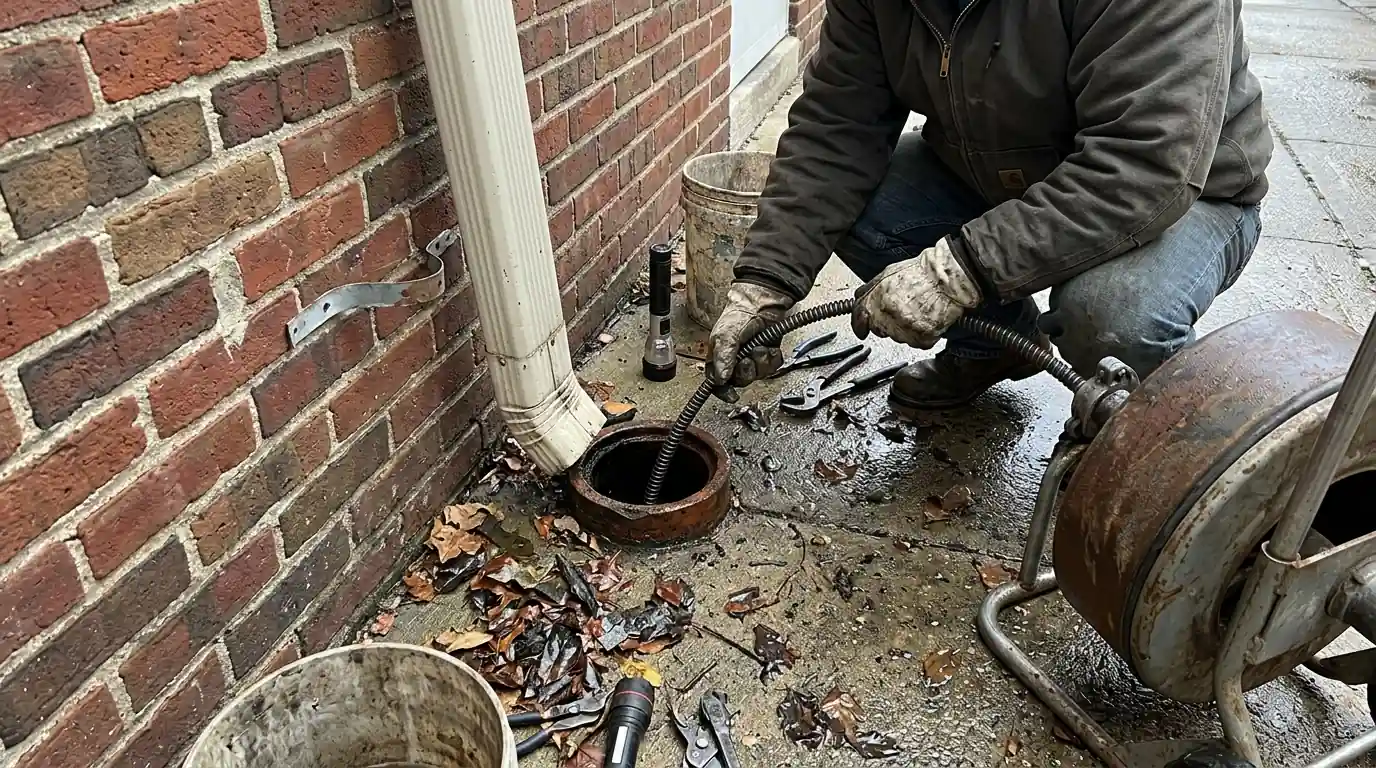
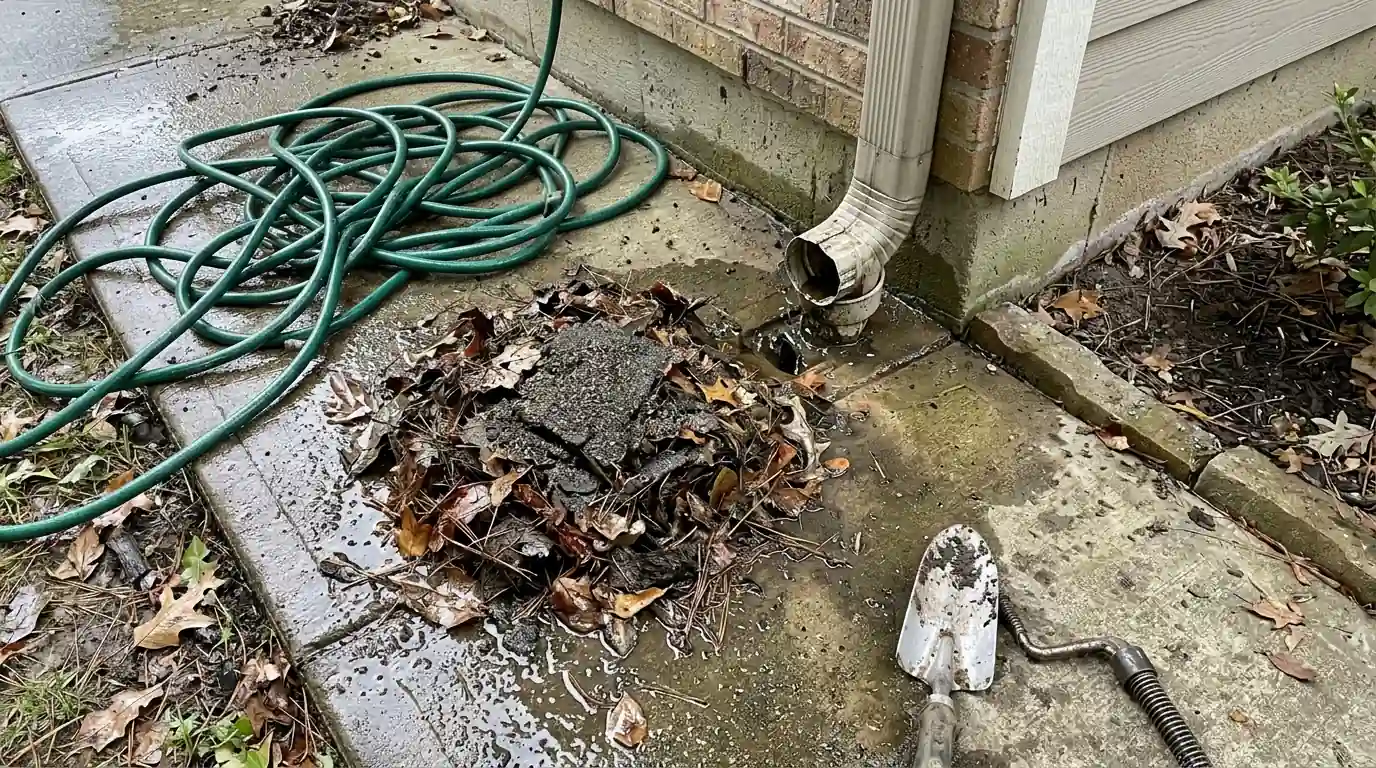
The tell is water bubbling up out of the downspout boot, or pouring over the gutter during heavy rain while the downspout itself stays nearly dry. Leaves and shingle grit pack the elbow at the bottom and the first few feet underground. We pull the downspout off the boot, clear the boot and the line beyond it with a cable sized for storm pipe, and flush it with a hose until it runs free. A boot cracked at the ground or a line separated underground needs repair, and a strainer at the gutter outlet keeps the next season of leaves out.
Yard and Area Drains
An areaway at the bottom of basement steps that fills like a pool, or a yard drain that sits under a puddle long after the rain stops, has a blocked basin or line. These drains collect everything the wind carries, and the pipes below them are often small and shallow. We clean the basin, clear the outlet line and test how fast it takes water. When the line has been crushed by a patio or broken by roots, it shows on camera. What decides the fix is where the line runs and what has been built on top of it since.
Storm Laterals
Some homes have a dedicated storm lateral that carries roof and yard water to a storm sewer, separate from the sanitary lateral. When it clogs, every downspout on that side of the house backs up at once, and owners often mistake it for a gutter problem. We find the storm cleanout, clear the lateral toward the street with a cable or jetter and camera it for roots and breaks. Knowing which lateral is which matters, because clearing the wrong line wastes the visit and leaves the real blockage in place.
What a storm drain cleaning visit covers
We treat the storm side as one system, from the gutter outlet to wherever the water leaves the property.
- Trace where each downspout and area drain goes
- Clear grates, basins and downspout boots
- Cable or jet each blocked line
- Flow test with a hose from the top of the line
- Camera any line that will not hold flow
- Check the storm lateral cleanout where one exists
- Note crushed, disconnected or root-filled sections
Storm drain upkeep you can handle
Owners can keep a lot of debris out of storm lines. Clearing what is already packed inside the pipe is a different job.
| Task | Safe to do yourself | Call a plumber |
|---|---|---|
| Clean gutters and downspout strainers | Yes, from a stable ladder, ideally in fall and spring. | If the downspout still overflows at the ground. |
| Lift and clean an area drain grate | Yes. Scoop the leaves and silt out of the basin. | If water stands in the drain after the basin is clean. |
| Run a garden hose into a downspout line | Yes, to see whether it drains. | If water backs up out of the pipe or shows up where it should not. |
| Push a rented cable into the line | Not advised. Old clay or thin plastic breaks easily. | Any time the line is packed below the surface. |
How we clear a blocked storm line
Trace the system
We find where each downspout and drain goes before opening anything.
Clear from the top down
Grates and boots first, then the line, so debris moves toward the outlet.
Use the right tool
A light cable for small storm pipe, a jetter for silt and packed leaves.
Flow test
A hose run shows whether the line takes water at full flow.
Camera what does not clear
A line that refills gets filmed so a break or crush can be found and marked.
Storm lines in Northeast Philadelphia
Northeast Philadelphia residents have reported sealed street drains and flooded basements as a century-old sewer and stormwater system struggles with heavier rain, and the Delaware River has risen about a foot since those sewers were built. On the two Northeast blocks PWD looked into, every house had its own storm lateral and vent alongside the sanitary one, and 48 of 80 houses had trouble with one or the other. Keeping the storm side of the house clear is the part an owner controls.
Questions about storm drain cleaning in Philadelphia
It depends on the house. Some downspouts tie into the sewer, some into a separate storm lateral and some discharge at the curb or onto the ground. We trace yours before clearing anything.
The drain at the bottom is either blocked or cannot keep up. Leaves and silt in the basin are the usual cause; a crushed or root-filled line below it is the next suspect.
Yes. Water that cannot get into the line spills at the foundation and finds cracks in the wall or floor. Clearing the line costs less than chasing the leak inside.
Before the heavy rain season is a good habit, and again after fall leaf drop for homes with trees nearby. Lines that refill quickly need a camera, not just more cleaning.
No. A sump pump lifts groundwater out of the basement through its own discharge pipe. If your pit runs constantly in storms, our sump pump service is the place to start.