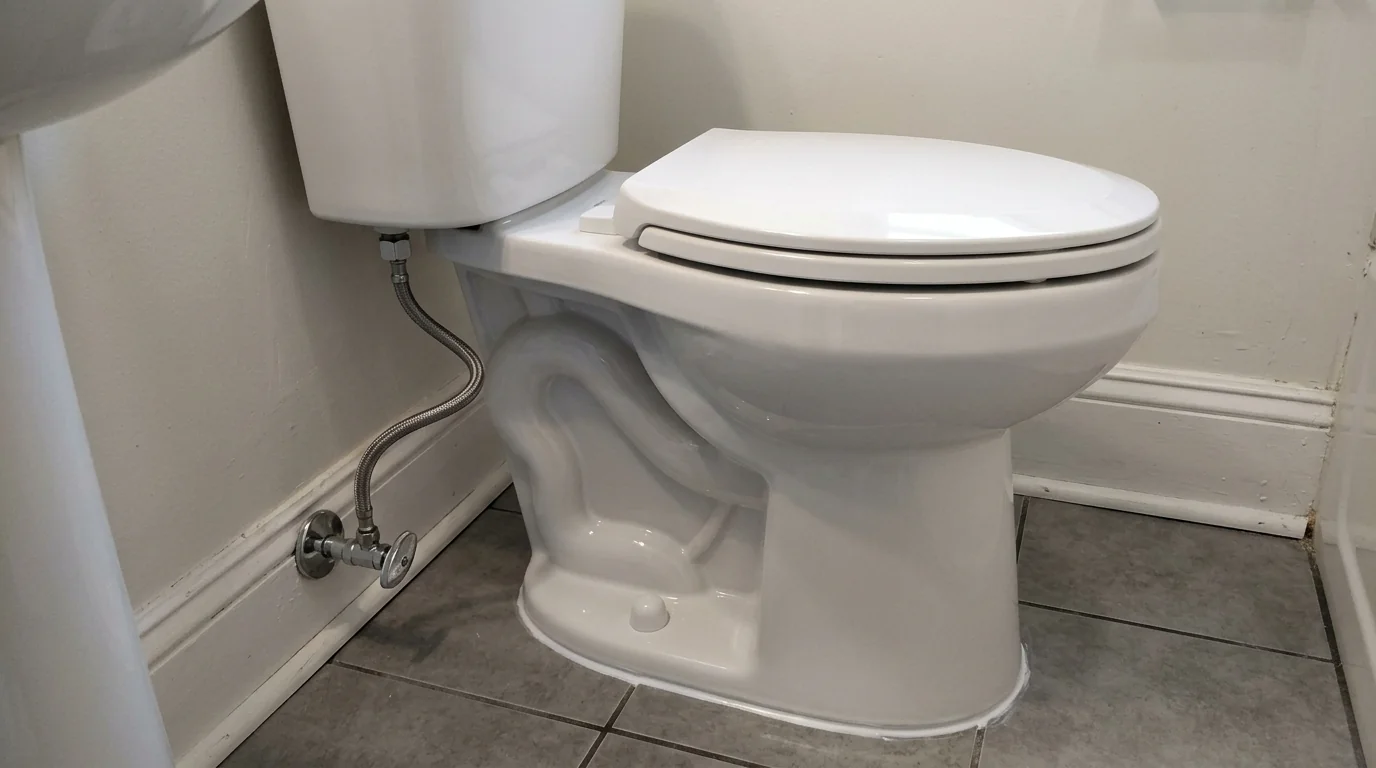
Updated October 2026
Replacing a toilet in Philadelphia is usually a straightforward swap, but the floor under the old one decides how smooth it goes. We measure the rough-in from the wall to the bolts, check the closet flange for cracks and height, and set the new bowl on a fresh seal. A rotted flange or soft subfloor gets repaired before the toilet goes down.
What is under the old toilet matters most
In older homes we often find a cast iron or lead closet bend, an iron flange rusted through at the bolt slots, or layers of tile and plywood that left the flange sitting low. A new toilet set on a bad base will rock and leak, so the base gets fixed first.
We install two-piece and one-piece toilets, elongated and round bowls, and models from makers such as Toto, Kohler, American Standard and Gerber. Before shopping, measure from the finished wall to the center of the bolt caps. For a full room redo, our remodel plumbing covers moving the drain itself.
Standard height or comfort height bowl?
Both flush the same way. The choice comes down to who uses the room and how much space it has.
| What to weigh | Standard height | Comfort height |
|---|---|---|
| Seat feel | Lower, which suits children and shorter adults | Closer to chair height, easier on knees and hips |
| Tight bathrooms | Round bowls project less into a small room | Often elongated, so check the door swing |
| Where it fits best | Kids bath or a guest powder room | Main bath for owners planning to stay |
What moves the price of a toilet install
The toilet you pick is one part of the price. What we find under the old one is the other.
- Toilet supplied by you or by usLabor is similar either way; we confirm a customer-bought model fits before it is unboxed.
- Flange conditionA clean flange at the right height adds nothing. A cracked or low one adds a repair.
- Supply stopA seized or leaking stop is replaced so the new toilet has a working shutoff.
- Floor under the bowlSoft or rotted subfloor around the drain has to be cut out and patched before setting.
Toilet Replacement
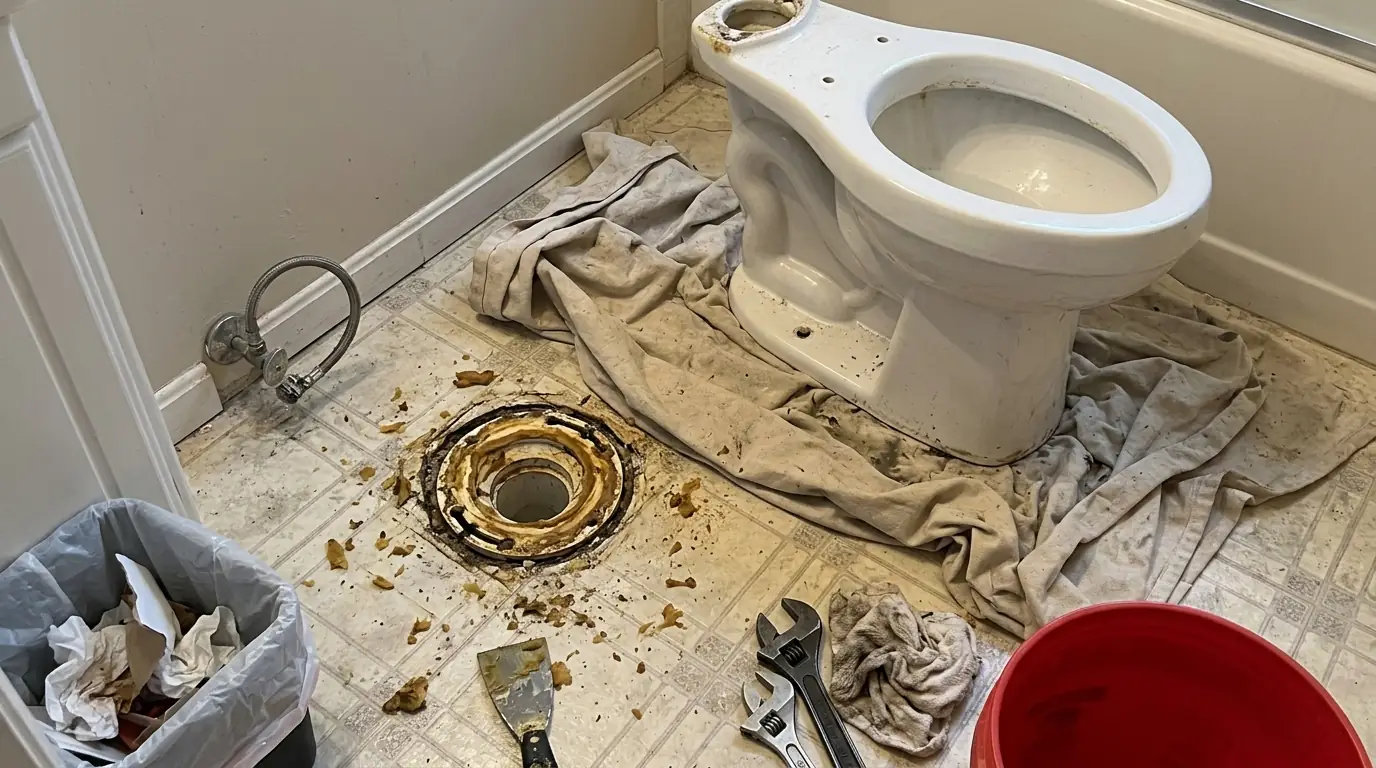
The usual reasons to replace are a cracked tank or bowl, a toilet that clogs every week, or a model that never flushed well. We close the stop, drain the tank, lift the old bowl and plug the drain opening so sewer gas stays out of the room. We scrape off the old wax and check that the flange is sound and flush with the finished floor. The new bowl goes on fresh closet bolts and a wax or wax-free seal, is pressed down evenly and shimmed solid with plastic shims. What decides the details is the rough-in distance, the flange condition and how level the old floor is.
Comfort Height Toilets
Owners with sore knees or tall family members often find a standard bowl too low and ask for a comfort height model. The plumbing is the same as any swap, but the fit is not always. A taller bowl and tank can crowd a window sill, a shelf over the tank or a vanity beside it, and an elongated bowl reaches further into a narrow room. We check the door swing, side clearance and stop position, since a low stop can foul a skirted bowl. In a small rowhome bathroom, the room often decides between a round and an elongated comfort height bowl before anything else does.
Broken Flange Repair
A bowl that rocks no matter how often the bolts are tightened, bolts that spin in their slots, or a leak that returns after a fresh wax ring all point to a broken flange. On cast iron and lead bends, the old flange often rusts away at the slots while the pipe under it is fine. We fit a stainless repair ring or strap screwed into the subfloor, or cut out and replace the flange on plastic drains. Where new tile left the flange below the floor, stacked spacer rings bring it up to height. The material of the closet bend and the condition of the subfloor around it decide which repair holds.
Included when we set a new toilet
Each install covers the steps people tend to skip.
- Remove the old bowl, tank and wax
- Inspect the flange and the floor around it
- Fit new closet bolts and a fresh seal
- Set and level the bowl with shims where needed
- Connect a new braided supply line
- Flush test and check the base for leaks
Setting a new toilet, step by step
Measure before buying
We confirm the rough-in and the space to the side walls so the new model fits the room.
Lift the old toilet
Water off, tank drained, bowl removed and the drain opening plugged against sewer gas.
Make the flange sound
Cracked, rusted or low flanges get a repair ring, spacer or replacement.
Set and level
New bolts and seal, bowl pressed down evenly, shimmed solid and the bolts snugged without cracking the china.
Connect and test
New supply line on, tank filled, several flushes and a check at every joint.
Older Philadelphia houses and the flange under the toilet
Units built in 1939 or earlier make up 41 percent of housing in Philadelphia County, nearly twice the share of any other county in the region, and only 15 percent were built since 1980. In houses that old, the toilet drain is often original cast iron or lead under the floor, and the flange on top has been reset by more than one owner. That history is why we pull and inspect before calling a job a simple swap, and why a flange repair is part of so many Philadelphia toilet installs.
Questions about toilet installation in Philadelphia
Yes. Send us the model before the visit so we can confirm the rough-in and bowl shape suit your bathroom.
It is the distance from the finished wall behind the toilet to the center of the drain. Toilets are made for specific rough-ins, and one that does not match either sits away from the wall or does not fit at all.
Both work when the flange is at the right height. Foam and rubber seals are forgiving if a toilet ever has to be lifted and reset; a wax ring remains the standard on a flange that sits properly.
Only if the old bowl was the cause. If the tub and sink drain slowly too, clearing the line comes first.
A like-for-like swap on the same drain generally does not. Moving the toilet to a new spot changes the drain and vent, which is permit work, and we pull the permit when the job needs one.