Updated October 2026
Water filtration in Philadelphia starts with what you want taken out. City water is treated and disinfected, so most owners filter for chlorine taste and smell, sediment from old pipe or street work, or extra protection where lead pipe may remain. We match the system to that goal and install it with shutoffs and a bypass.
Choosing a filter for city water
Philadelphia water arrives treated, so a filter is about what you want on top of that. Some owners dislike the chlorine taste. Others see sediment in aerators after main work on the block, or live in a house where a lead service line is still waiting to be replaced. Each concern points to a different filter.
Hardness is a separate matter. Filters do not remove the minerals that leave crust on fixtures; that takes a softener. When both matter, we plan them together so the softener sees filtered water.
Which filter fits which complaint
Each type does one job well. Some homes use two, with sediment first.
| Filter type | Best for | Where it goes | Upkeep |
|---|---|---|---|
| Whole-house carbon | Chlorine taste and smell at every tap | On the main after the meter | Cartridge or media changes |
| Under-sink reverse osmosis | Drinking and cooking water | Under the kitchen sink, with its own faucet | Prefilters and membrane |
| Sediment | Grit, rust and sand | Ahead of other filters and fixtures | Cartridge changes, sooner after street work |
What shapes the cost of a filter install
The filter itself is only part of the price. Where it goes and how it connects matter as much.
- System typeA single sediment housing is a small job; a whole-house carbon tank is a larger one.
- Flow and sizeBigger households need larger housings to keep pressure up.
- Space at the meterA tight basement may need pipe rerouted to fit the filter and bypass.
- Counter and sink workA reverse osmosis faucet needs a hole through the counter or sink deck.
- Replacement cartridgesCartridges and membranes are a running cost worth planning for.
Whole-House Carbon Filters
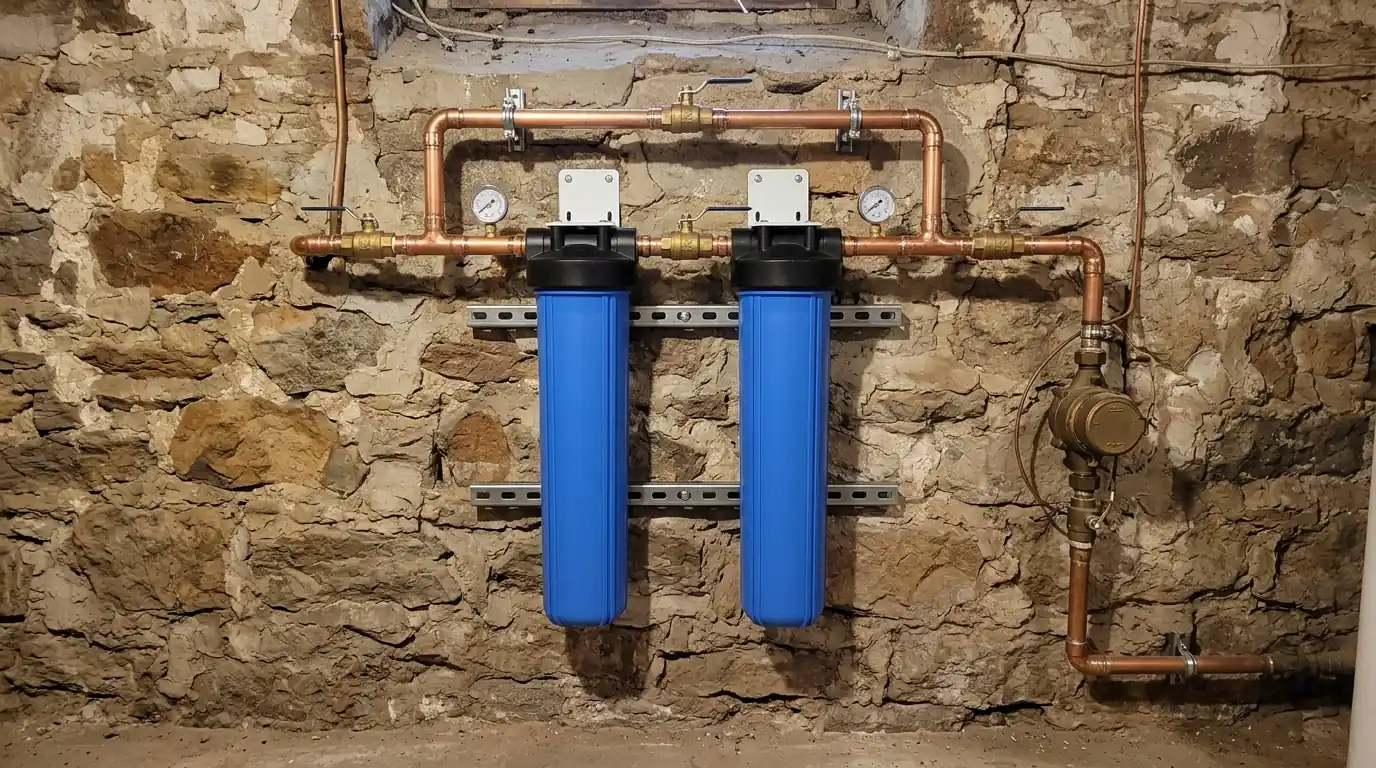
A whole-house carbon filter treats every tap and shower, which suits owners who smell chlorine in the bathroom as much as at the kitchen sink. It mounts on the main after the meter and ahead of the water heater. We size the housing or tank to the flow your household uses, so pressure holds when two showers run. Shutoffs on each side and a bypass let you change the media without losing water. Flow, space near the meter and how often you want to change cartridges decide the setup. In a narrow rowhome basement, wall-mounted housings often fit better than a tall tank.
Under-Sink Reverse Osmosis
Reverse osmosis pushes water through a very fine membrane and stores it in a small tank under the kitchen sink, with its own faucet on the counter. It suits owners who want drinking and cooking water treated more thoroughly than carbon alone, including those picking a unit rated for lead reduction. We tap the cold supply, make the drain connection correctly, mount the tank and drill the counter or sink deck for the faucet. Cabinet space, the counter material and whether the refrigerator should draw from the same unit decide how we lay it out.
Sediment Filters
Grit in faucet aerators, a toilet fill valve that keeps clogging, or brown water after crews work on the main all point to sediment. A sediment filter catches sand, rust and scale before they reach fixtures and appliances. We usually fit it first on the main, ahead of any carbon filter or softener, so those last longer. Clear housings let you see when a cartridge is loaded. The choice is the cartridge grade and housing size: too fine a cartridge clogs quickly and drops pressure, so we match it to what is actually in your water.
Filter upkeep you can do, and what to leave to us
Once the system is in, owners handle most of the routine care.
| Task | Safe to do yourself | Call a plumber |
|---|---|---|
| Change a sediment or carbon cartridge | Yes, with the bypass set and the housing relieved of pressure. | If the housing will not seal or the O-ring is cracked. |
| Replace RO prefilters | Yes, in the order and with the parts your unit calls for. | If the tank will not fill or the drain line leaks. |
| Cut a filter into the main | No. A bad joint here floods the basement. | Always, with a bypass so the house keeps water. |
| Move an RO unit to a new sink | Not a good idea. The drain connection has to be made correctly. | When you remodel or change sinks. |
Installing a filter, start to finish
Agree on the goal
We confirm what you want removed and pick the system for it.
Choose the spot
Main-line filters go near the meter; reverse osmosis goes under the kitchen sink.
Plumb it in
Shutoffs and a bypass go in so the house keeps water during changes.
Flush and start up
New media and membranes are flushed before anyone drinks from them.
Walk you through upkeep
You see how to change cartridges and roughly when.
Hardness and old pipe in Philadelphia water
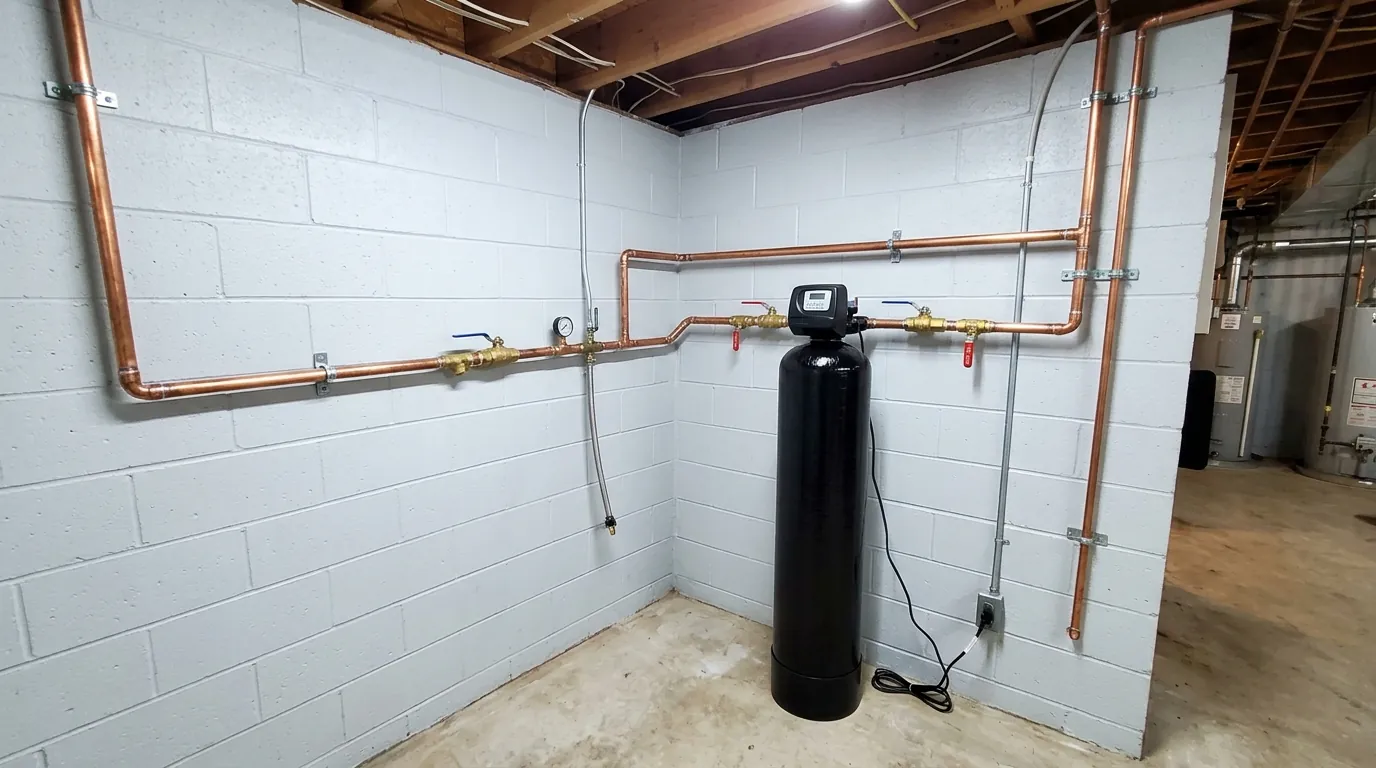
PWD's 2024 water quality report puts one-year hardness averages between 98 ppm and 168 ppm across the city's three treatment plants, moderately hard to hard. Carbon and sediment filters do nothing about that, so homes at the harder end may want a softener as well. PWD also estimates about 1 in 20 Philadelphia properties may have a lead service line. A filter rated for lead is a sensible step while that line waits for replacement, though it is no substitute for replacing the pipe.
Questions about water filtration system installation in Philadelphia
City water is treated to drinking standards, so a filter is a choice. Owners add one for taste, for sediment or for extra protection where old pipe remains.
A correctly sized one should not be noticeable. Undersized housings and clogged cartridges are what cause drops, so we size for your flow and show you when to change them.
No. Carbon and sediment filters leave calcium and magnesium in the water. Removing those is a softener's job.
It depends on the cartridge and how much water you use. Start with the manufacturer's interval, and treat a pressure drop or returning taste as a sign it is time.
Often, yes. We can run a line from the tank to the fridge so ice and drinking water come from the same supply, through the refrigerator line connection.