Updated October 2026
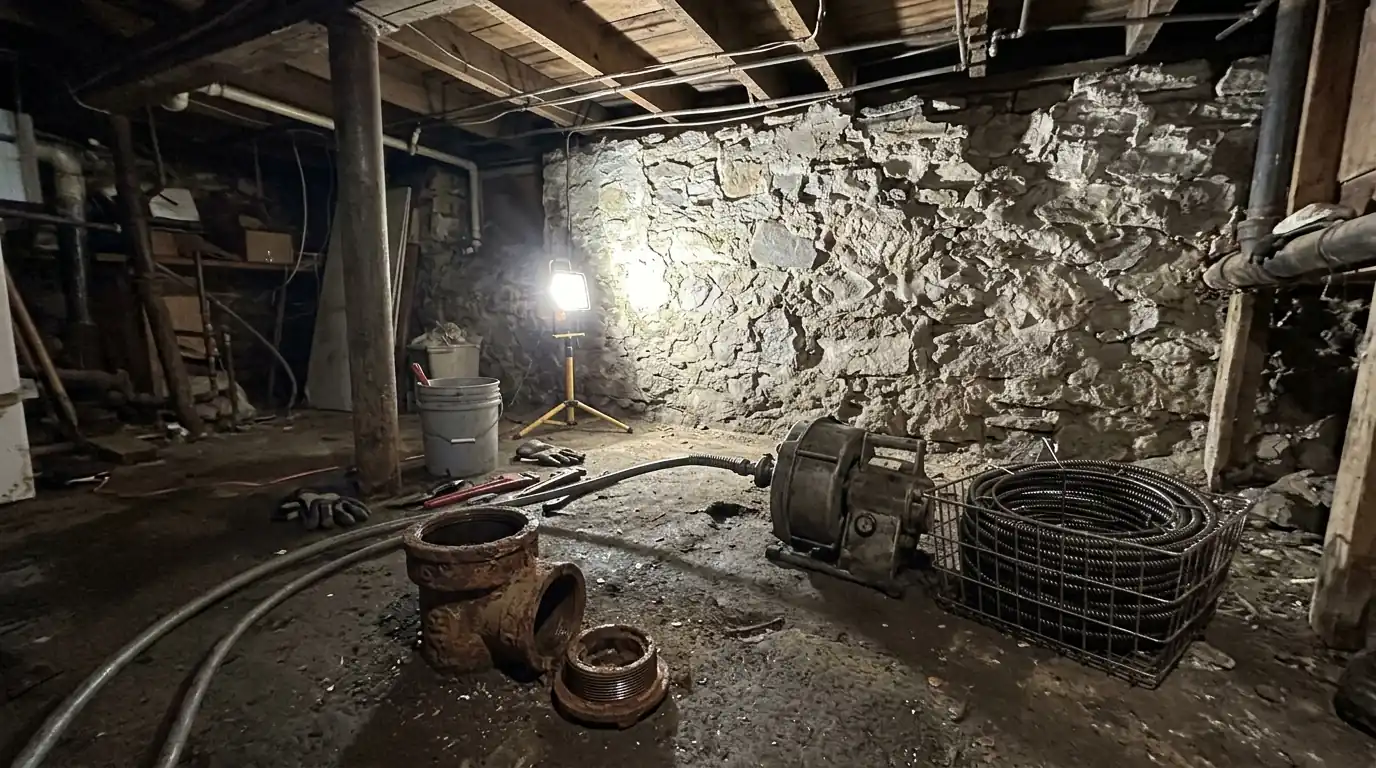
A main sewer line cleaning in Philadelphia clears the single pipe that carries every drain in the house out to the street. When it blocks, the lowest fixture backs up first, usually the basement floor drain. We clear it through the house trap or a cleanout with a cable and cutting head, then run a camera to see whether roots, wipes, grease or a broken joint caused it.
Clues the blockage is in the main line
The floor drain fills when a toilet flushes upstairs
Water from above has nowhere to go but the lowest opening in the house.
Every drain is slow, not just one
Sinks, tubs and toilets losing speed together share one blocked exit.
Gurgling in the basement toilet
Air is being pushed back through its trap as water upstairs tries to get past the clog.
Weeping at a cleanout cap
Water or a sewer smell at the front wall means pressure is building behind the cap.
One pipe carries everything out of the house
Every drain in a house feeds one building drain, which leaves through the wall and becomes the sewer lateral to the city main. A clog anywhere along that run stops the whole house, and the basement takes it first.
We work from the opening closest to the blockage. In many rowhomes that is the house trap at the front wall; elsewhere it is an outside cleanout or a pulled toilet. Once the cable opens the line, a camera shows whether it was a one-time wipe or roots that will be back.
Root Intrusion
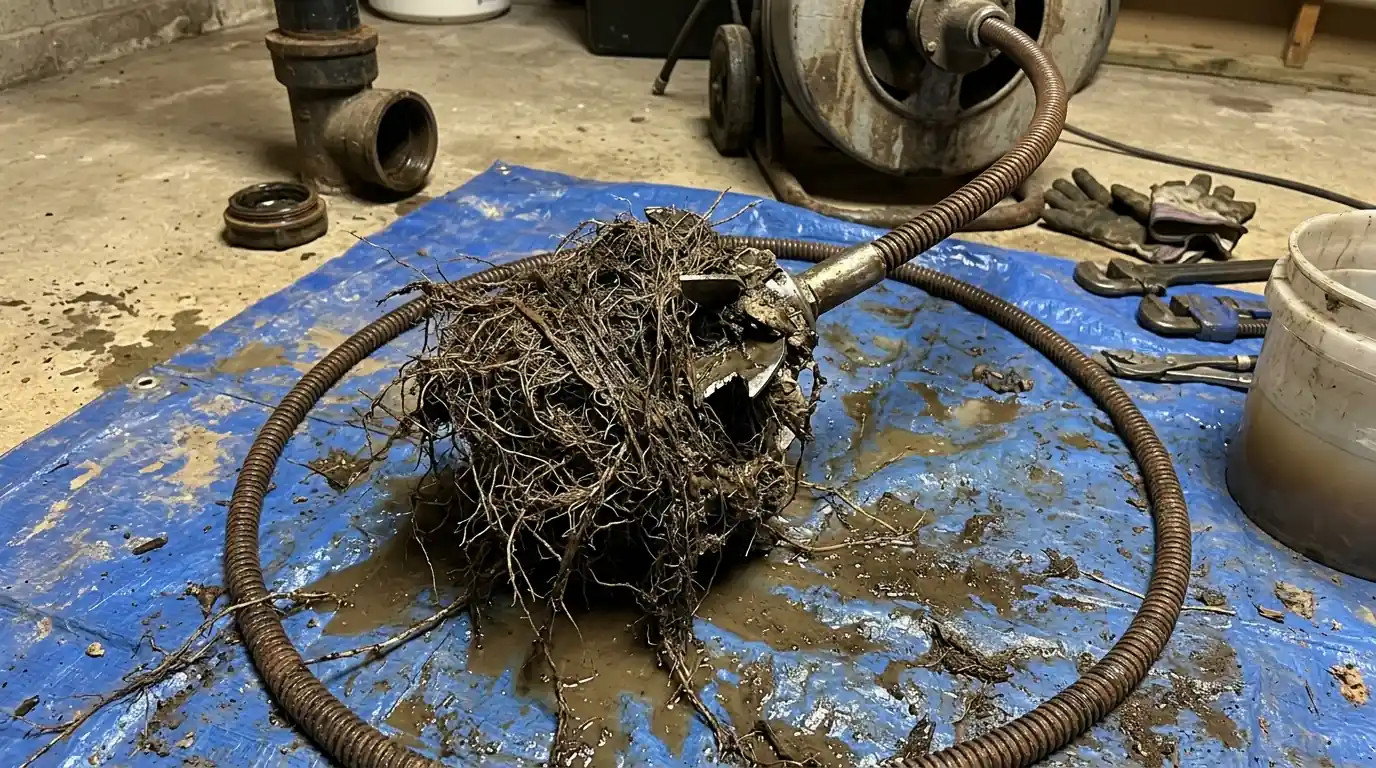
Roots find their way into sewer pipe through loose joints and hairline cracks, drawn by the moisture inside. Early on they cause a slow main that recovers after a few hours; later they fill the pipe and stop it cold. The fix starts with a cutting head sized to the pipe that shaves the roots back to the wall. That restores flow, but roots grow back through the same gap. The camera decides the next step: a single bad joint can be repaired, while roots at joint after joint usually mean the line is due for lining or replacement.
Wipes and Paper Blockages
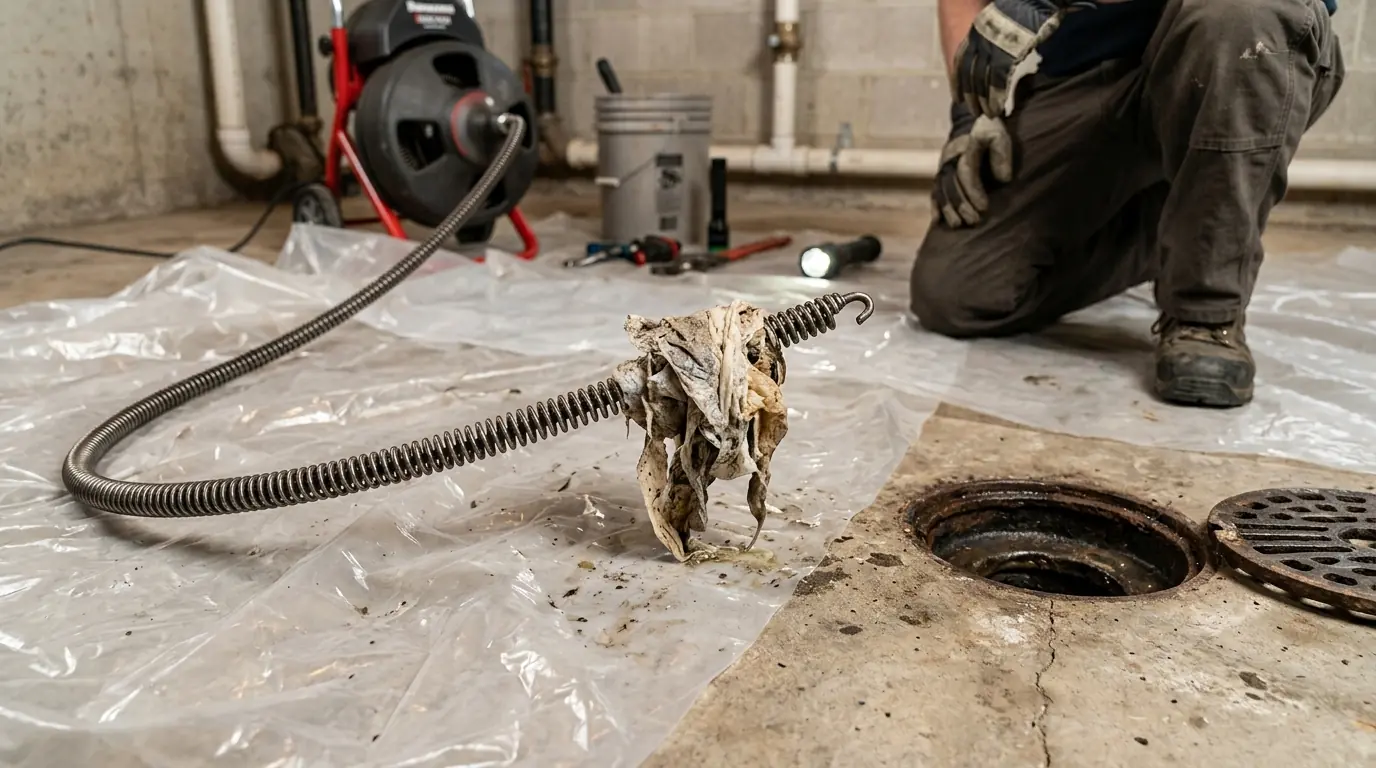
Wipes sold as flushable do not break down the way toilet paper does. They catch on a rough joint or the bottom of the house trap, and paper piles in behind them until the line seals. Most owners notice a toilet that drains slowly for a day or two before the floor drain floods. We clear it with a cable and pull the mass back where we can, so you can see what built it. If it happened once, changing what goes down the toilet is the fix. If it keeps happening, something in the pipe is catching them, and the camera finds it.
Grease Buildup
Grease poured down the kitchen sink cools as it travels and coats the lower part of the building drain and lateral. Over time it hardens into a shelf that narrows the pipe, and food and paper stick to it. A home that has cooked with oil for years can carry a thick layer without ever having one dramatic clog. A cable opens a hole through grease but leaves most of it on the wall, so a line with heavy buildup usually needs hydro jetting to scour it clean. The footage tells us which treatment the line needs.
How long the house goes without drains
From the moment the backup starts until the line is open, nothing should go down any drain, including the washer and dishwasher. Once the cable breaks through, the house can use its plumbing again, gently at first while we flush and film the line.
What changes things is a broken pipe found on camera. Then the line works but should be used lightly until a repair is scheduled, and we tell you how much it can take.
From backup to a clear, recorded line
Stop the water
Everyone stops using fixtures so the basement does not take on more sewage.
Open the nearest access
The house trap, an outside cleanout or a pulled toilet, whichever is least messy.
Cut through the blockage
A sectional cable runs with a head matched to the pipe size and to what is in it.
Camera the line
We push the camera to the city main and show you roots, breaks or buildup on the screen.
Clean the floor
Sewage on a basement floor is cleaned up and the area disinfected before we leave.
Combined sewers and owner-held laterals in Philadelphia
About 60 percent of Philadelphia drains to combined sewers that carry sewage and stormwater in the same pipe. That matters on a backup call, because a basement can flood from a blocked house line or from a city sewer running full in heavy rain, and the two need different fixes. The pipe from your house to the main in the street is the owner's responsibility here, not the city's. So when the camera shows roots or a break in that run, the repair decision belongs to you, and we show you the footage to make it.
What sets the price of a main line cleaning
We price main line work once we know where we can get in and what is blocking the pipe. You hear the number before the cable goes in.
- Where we can open the lineA clean house trap or outside cleanout is quicker than pulling a toilet or cutting in a new access.
- Roots versus a soft blockageRoots need cutting heads and more passes than paper or wipes.
- Length of the runA deep house with a long lateral to the street means more cable and more time.
- CleanupSewage on a finished floor takes longer to clean than bare concrete.
Questions about main sewer line cleaning in Philadelphia
If more than one fixture is affected, or the basement floor drain fills when you use water upstairs, it is the main. A single slow sink is a branch clog, which calls for a simpler drain cleaning.
In most cases, yes. Cutting them restores flow, but the gap they came through is still open. The camera shows whether one joint or the whole line is letting them in, which decides between a spot repair and replacement.
It may slow regrowth, but it does not close the gap the roots came through. On a line that is already backed up it just sits in the standing water.
PWD handles the sewer main in the street. The lateral from your house to that main belongs to the owner, so a blockage there is yours to clear. Our lateral ownership guide walks through the line.
Yes, once we have flushed the line and checked it on camera. If the camera found a break, we will tell you how much load the line can take until it is repaired.