Updated October 2026
Commercial plumbing in Philadelphia covers the restrooms, water heaters and drain lines that keep a shop, office or restaurant open. The fixtures are heavier duty and the stakes are higher, because a broken toilet or a cold hand sink can close a space for the day. We repair, replace and install commercial fixtures and lines, and schedule the work around your hours.
Plumbing for a space that cannot close
Commercial plumbing runs on the same principles as a house, at a harder pace. Flushometers instead of tank toilets, larger water heaters, mixing valves on hand sinks, floor drains with trap primers, and drain lines that see far more use than a home's. The parts differ, and so does the cost of a failure.
We handle repairs, replacements and new fixtures in storefronts, offices, small mixed-use buildings and restaurants. Food service sites have their own page on grease traps, and buildings with a testable device can add backflow testing to the same visit.
What drives commercial plumbing costs
Commercial pricing follows the same logic as residential work, with a few extra factors on top.
- Fixture typeFlushometers, sensor faucets and wall-hung fixtures use specialty parts.
- Off-hours schedulingWorking outside business hours to keep the doors open can change the price.
- AccessDrop ceilings, chases and walls shared with other tenants affect time.
- Water heater sizeCommercial heaters and their venting cost more than residential units.
- PermitsLarger jobs need permits, which we include when required.
Restroom Plumbing
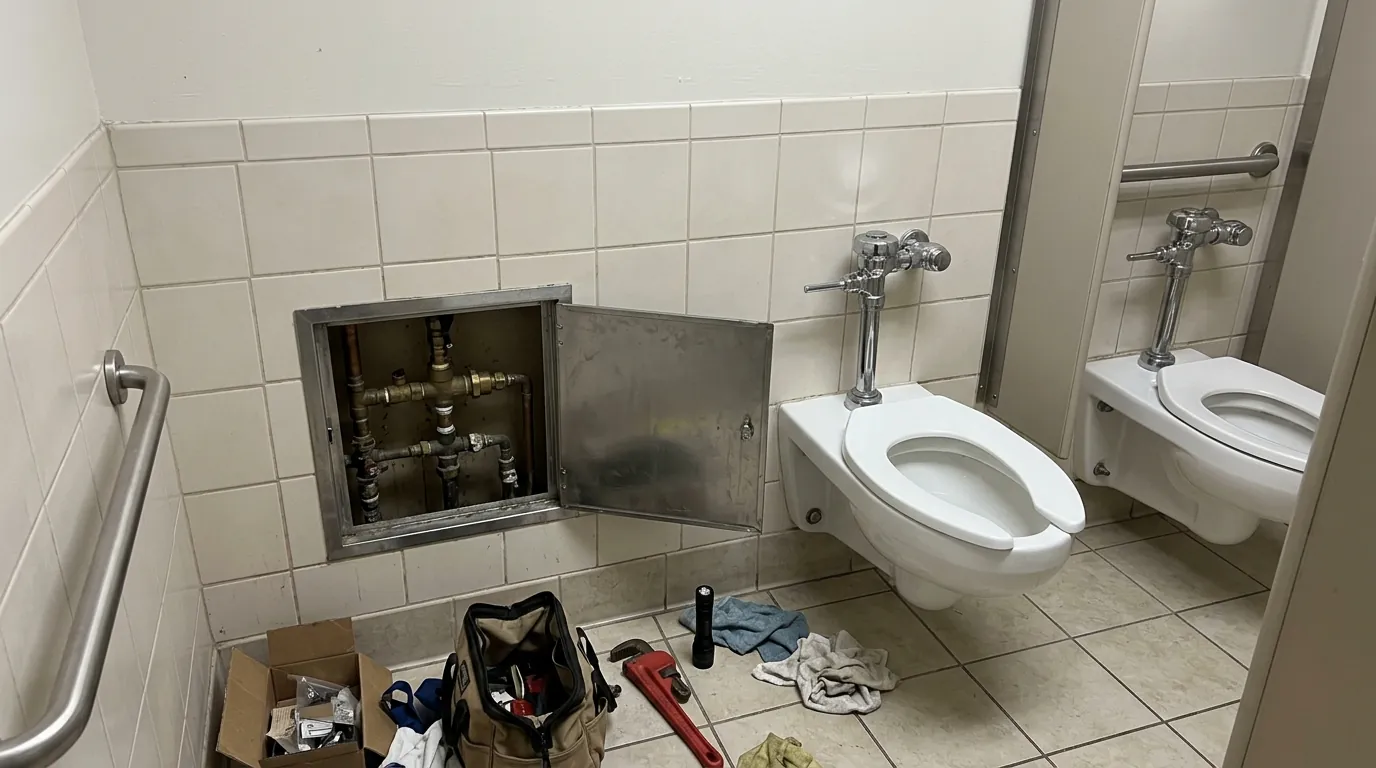
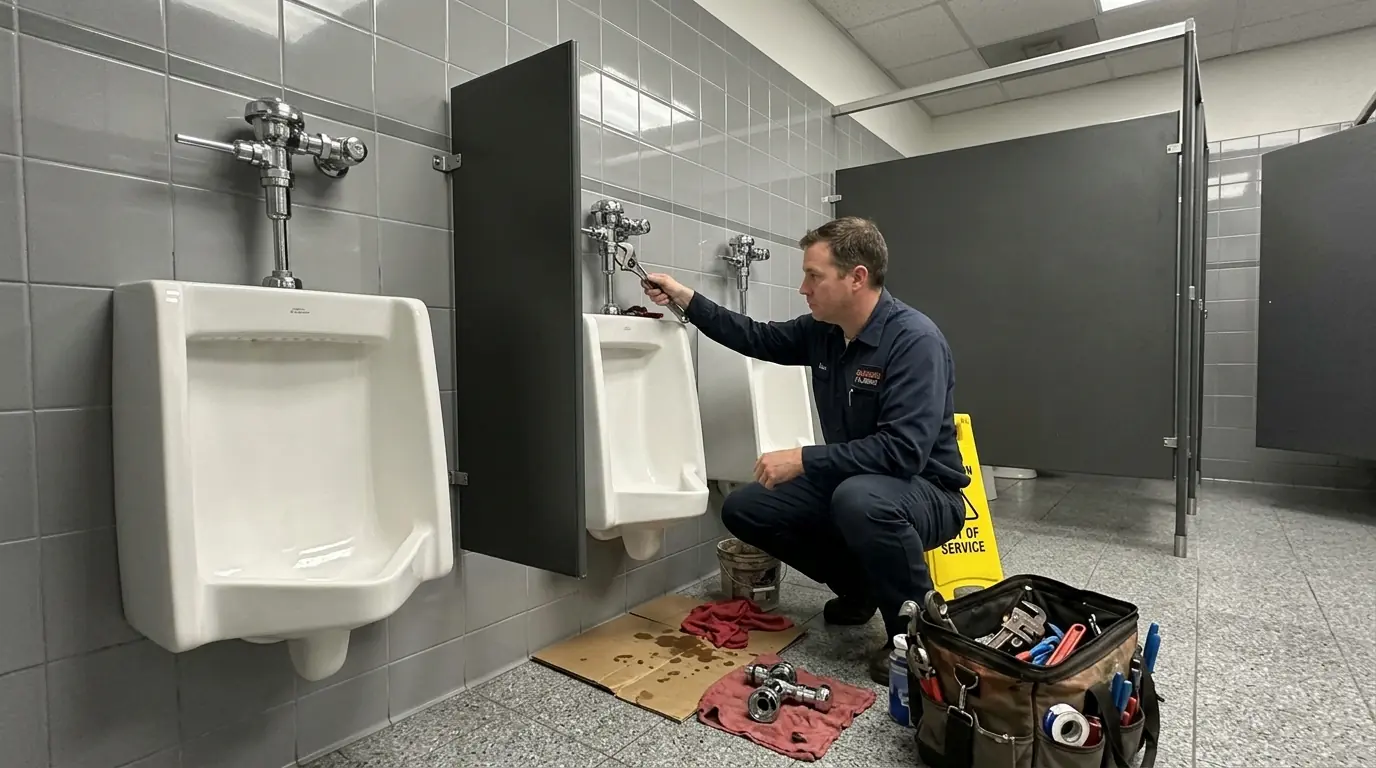
Commercial restrooms fail in predictable ways. Flush valves run on or will not flush, urinals leak at the spud, sensor faucets stop responding and wall-hung toilets work loose on their carriers. We rebuild flushometers with the right diaphragm kit, replace sensor eyes and solenoids, and reset wall-hung fixtures on sound carriers. When a restroom is being refitted, we rough in new supply and drain lines for the new layout. Whether to repair or replace comes down to the age of the valves, whether parts are still made and how hard the room is used.
Commercial Water Heaters
Commercial water heaters work harder than household units, often feeding hand sinks, mop sinks and a small kitchen all day. Owners notice lukewarm water at the far sinks, a relief valve dripping or rust around the base. We check the burner or elements, the venting, the relief valve and any mixing valve or recirculation pump that holds temperature at the fixtures. Replacements are planned around opening hours and sized to the real demand, not just copied from the old unit. Where tankless heaters suit the space and the load, we install those as well.
Commercial Drain Lines
Shared drain lines in commercial buildings back up where customers can see it: floor drains, mop sinks and restroom floors. Food, paper towels, grease and scale build up faster than in a house. We clear lines with cables sized for the pipe, run a camera to find what keeps causing trouble, and jet lines where buildup is the real problem. Floor drains with dry traps let sewer gas into the space, so we check trap primers too. The approach depends on the pipe material, where the cleanouts are and whether the line is shared with other tenants.
What we look at on a commercial visit
On a first visit we look past the call itself and note the condition of the system around it.
- Flush valves and urinal valves
- Hand sink faucets, including sensor models
- Water heater age, venting and relief valve
- Mixing valves feeding hand sinks
- Floor drains and trap primers
- Access to the main drain cleanout
- Backflow assemblies on record
- Leaks and corrosion on exposed lines
How commercial jobs are handled
Talk through the space
We ask what is failing, who uses it and when the space is busiest.
Diagnose on site
We find the cause and explain the repair and how it affects your hours.
Schedule the work
Larger jobs are booked before opening or after closing where possible.
Repair or replace
Commercial-grade parts go in, with permits pulled when the job needs one.
Test and hand back
Fixtures are tested in use and the space is left ready for customers.
Keeping the doors open while we work
For a business, the bigger question is often how long the space goes without a restroom, hot water or a working drain. We plan shutdowns with you, isolate only the fixtures being worked on where the valves allow, and save louder or longer work for before opening or after closing.
When a full building shutdown cannot be avoided, such as a main valve or water heater change, we tell you up front what will be off and for which part of the job.
Commercial drains on Philadelphia's combined sewers
About 60 percent of Philadelphia is served by combined sewers, where sewage and stormwater travel in one pipe. For a storefront or restaurant, whatever goes down a floor drain or kitchen line joins the same system that struggles in heavy rain. Grease, wipes and food solids that make it out of a building add to that load downstream. Keeping commercial drains clear, and grease out of them, protects the building's lines first and the shared sewer after that.
Questions about commercial plumbing in Philadelphia
Yes, on their restrooms, water heaters and drain lines. Grease traps and interceptors have their own page.
We plan larger jobs around your hours and book them before opening or after closing where possible. Emergencies are answered 24/7.
Yes. We coordinate shutdowns that affect other tenants with the building owner or manager before we start.
We trace which part of the line is backing up and where it joins other units. A camera inspection shows exactly where the trouble sits so the right party can deal with it.
Yes. We repair and replace sensors, solenoids and flushometer diaphragms on the common commercial models.