Updated October 2026
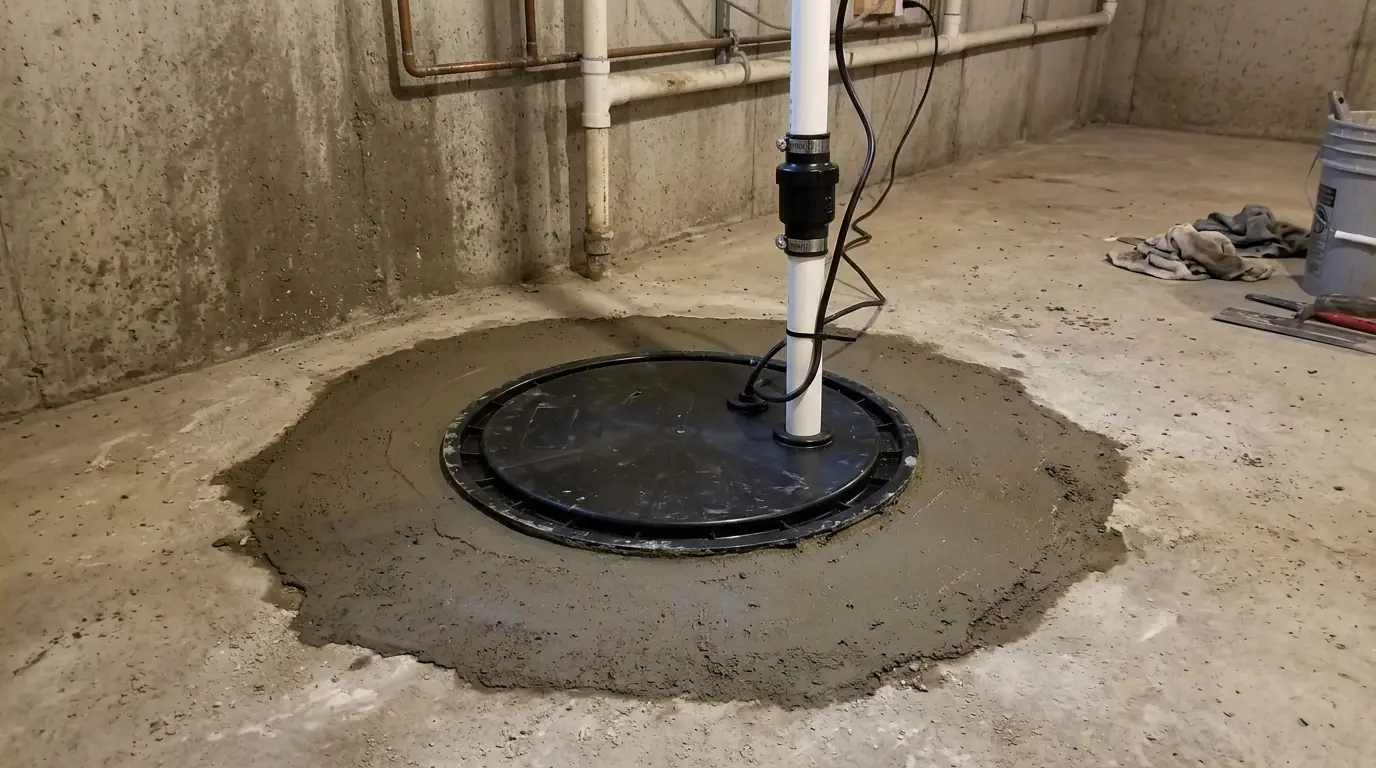
A sump pump in a Philadelphia basement collects groundwater in a pit below the floor and pushes it outside before it spreads across the slab. Installing one means cutting a pit at the low point, setting a pump with a check valve, and running a discharge line that drops the water away from the foundation rather than back against it.
Where a sump pump fits and where it does not
A sump pump handles groundwater: the water table rising under the slab, or rain soaking along the foundation and seeping in where wall meets floor. It does nothing about sewage coming up the drains. That is a backwater valve job, and plenty of basements need both.
Placement matters most. The pit goes at the low point of the floor, or where an interior drain line can feed it. The discharge is the other half. A pipe that dumps water at the base of the wall just sends it back into the pit, so we carry it to ground that slopes away from the house.
Submersible or pedestal pump
Both work. The pit and the space around it usually decide.
| Point | Submersible | Pedestal |
|---|---|---|
| Where the motor sits | Under water, inside the pit | On a column above the pit |
| Noise | Quieter, the water muffles it | Louder, the motor is in the open |
| Best for | Finished basements and deeper pits | Narrow pits and easy motor access |
| Pit cover | A sealed lid fits over it | The column rises through the cover |
What a sump pump installation costs to plan for
Cutting a new pit is the biggest variable. Swapping a pump into an existing pit is a far smaller job, and we tell you which one you are facing before quoting.
- New pit or existingCutting concrete and digging is most of the labor on a new install.
- Pump type and sizeCast iron submersibles cost more than plastic pedestal pumps but stand up to heavy use.
- Discharge lengthA long run to a good drainage point takes more pipe and wall work.
- Interior drain lineAdding drain line along the walls to feed the pit is a larger job.
- Battery backupAdding a second pump for power outages raises the total.
New Pit in a Concrete Floor
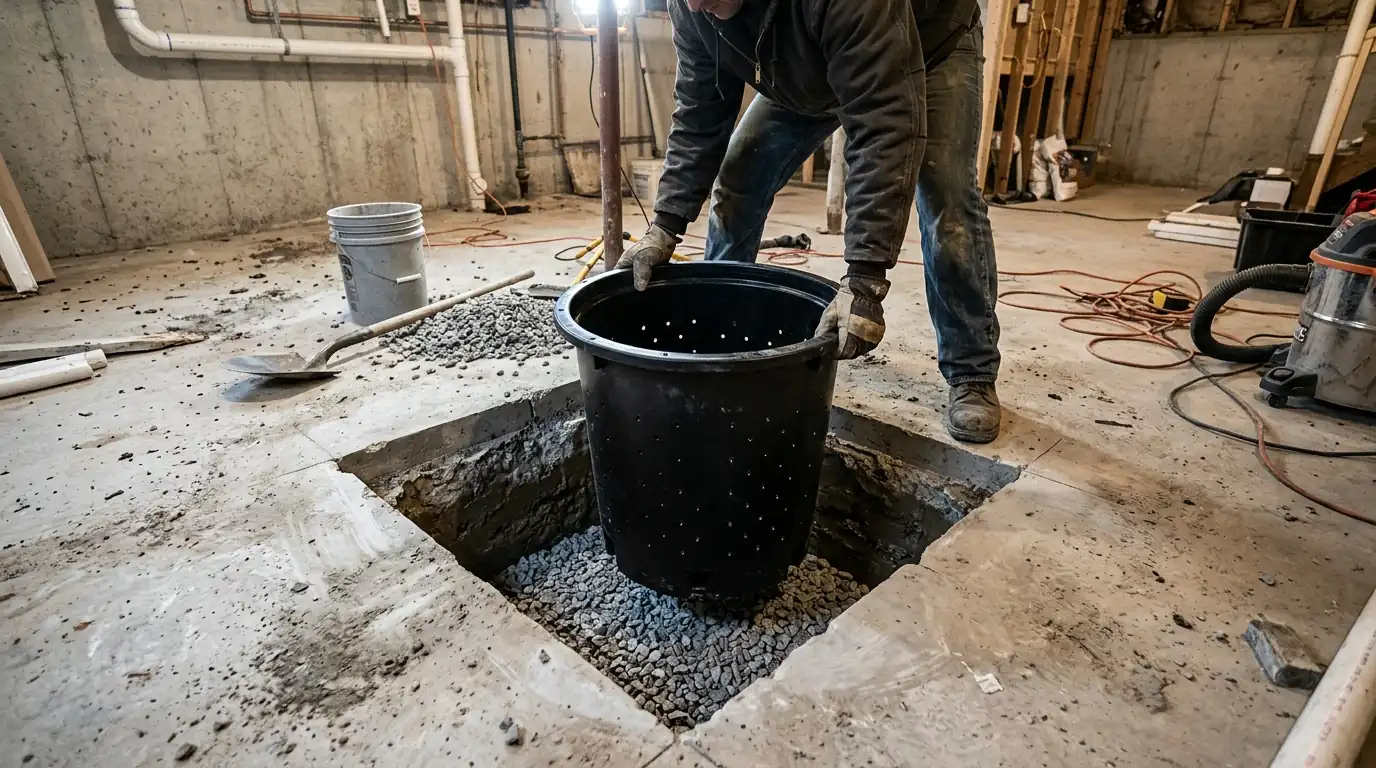
Damp corners, a white mineral line along the bottom of the wall and puddles that return to the same spot after rain all point to where a pit belongs. We cut the slab at the low point, dig out the pit, set a perforated liner on a gravel bed and patch the concrete tight to the liner. Where water comes in along the walls, a short interior drain line under the floor edge can feed the pit. What decides the plan is how much water arrives and where it gets in.
Pump Swap in an Existing Pit
Many basements already have a pit, sometimes just a hole with a pump sitting on bricks. A pump that is old, undersized or noisy is worth replacing before it quits in a storm. We pull the old pump, clean the silt out, check the liner and set the new pump level so the float moves freely. A new check valve goes on the discharge at the same time. If the pit is too small for the float to travel properly, enlarging it keeps the new pump from short cycling and wearing out early.
Discharge Line Rerouting
A discharge that ends at the foundation, runs into a buried pipe that has collapsed, or freezes at the outlet every winter all end the same way: water back in the basement. We trace where the line goes now and reroute it to a point that drains away from the house, sized so the pump is not pushing against a restriction. On some homes we add a freeze relief fitting at the wall, so water still has somewhere to go when the far end ices over.
What a sump pump installation covers
Every install gets the same core pieces, so the pump has a fair chance at a long working life.
- Low point located where water gathers
- Slab cut and pit dug deep enough for a full pump cycle
- Perforated liner set on a gravel bed to keep silt out
- Pump installed with a check valve on the discharge
- Discharge run outside and away from the foundation
- Pump plugged into a dedicated outlet, never an extension cord
- Cover fitted over the pit
- Pit filled with water and a full cycle watched
From the first cut to the first cycle
Find where water enters
Stains, damp spots and slope tell us where the pit should go.
Cut and dig
The slab is cut, the pit dug and the liner set on gravel.
Set the pump
The pump goes in level with a check valve and union on the discharge.
Run the discharge
Pipe goes through the wall and out to where water drains away from the house.
Fill and test
We fill the pit and watch the pump start, empty it and shut off cleanly.
Basement water in Northeast Philadelphia
Basement flooding is a familiar complaint in Northeast Philadelphia. Residents there have reported sealed street drains and wet basements as a century-old sewer and stormwater system struggles with heavier rain, and the Delaware River has risen about a foot since those sewers were built. A sump pump will not fix the sewers, but it does give groundwater around your foundation a controlled way out. Pair it with a backwater valve if the floor drain also takes water from the street side.
Questions about sump pump installation in Philadelphia
If water appears through the floor or at the base of the walls after rain, and not up through the floor drain, groundwater is the issue and a sump pump is the usual answer.
We route it outside to drain away from the house. Sending groundwater into the sewer adds to the load that backs up in heavy rain.
Pour a bucket of water into the pit every few months and before the wet season. The pump should start, empty the pit and shut off on its own.
A standard pump stops. A battery backup pump takes over when the power fails, which is often when storms hit hardest.
Yes. A cover keeps debris and small hands out, cuts humidity and quiets the pump. Sealed covers are the norm in finished basements.