Updated October 2026
When pipes freeze in Philadelphia, the job is to find the ice plug, thaw it slowly and check for a split before full pressure returns. Lines in back additions, outside walls and crawlspaces freeze first. We use warm air, heat tape or an electric thawing machine, never an open flame, and keep a faucet open so meltwater has a way out.
How to tell a line is frozen, not broken
One fixture is dry, the rest work
A single dead faucet usually means its branch is frozen in a cold wall or cabinet.
Frost on exposed pipe
Visible frost, or a pipe that feels painfully cold, points to the plug.
No water anywhere in the house
The ice is near the meter or where the service line comes through the wall.
Thawing a pipe without splitting it
A frozen pipe has not always burst. Often the ice sits in a short stretch of line in one cold spot, and the pipe is still whole. The risk comes during thawing, when heat applied too fast or in the wrong place builds pressure behind the plug. We work from the open faucet back toward the ice so meltwater always has somewhere to go.
Once water runs again, we look along the run for the thin seam a freeze leaves in copper, and for cracked fittings on plastic lines. If we find one, the split section gets replaced before the main is fully open. Then we deal with why it froze: insulation, a draft at the sill plate, or a line that belongs on an inside wall.
Back Addition Kitchens
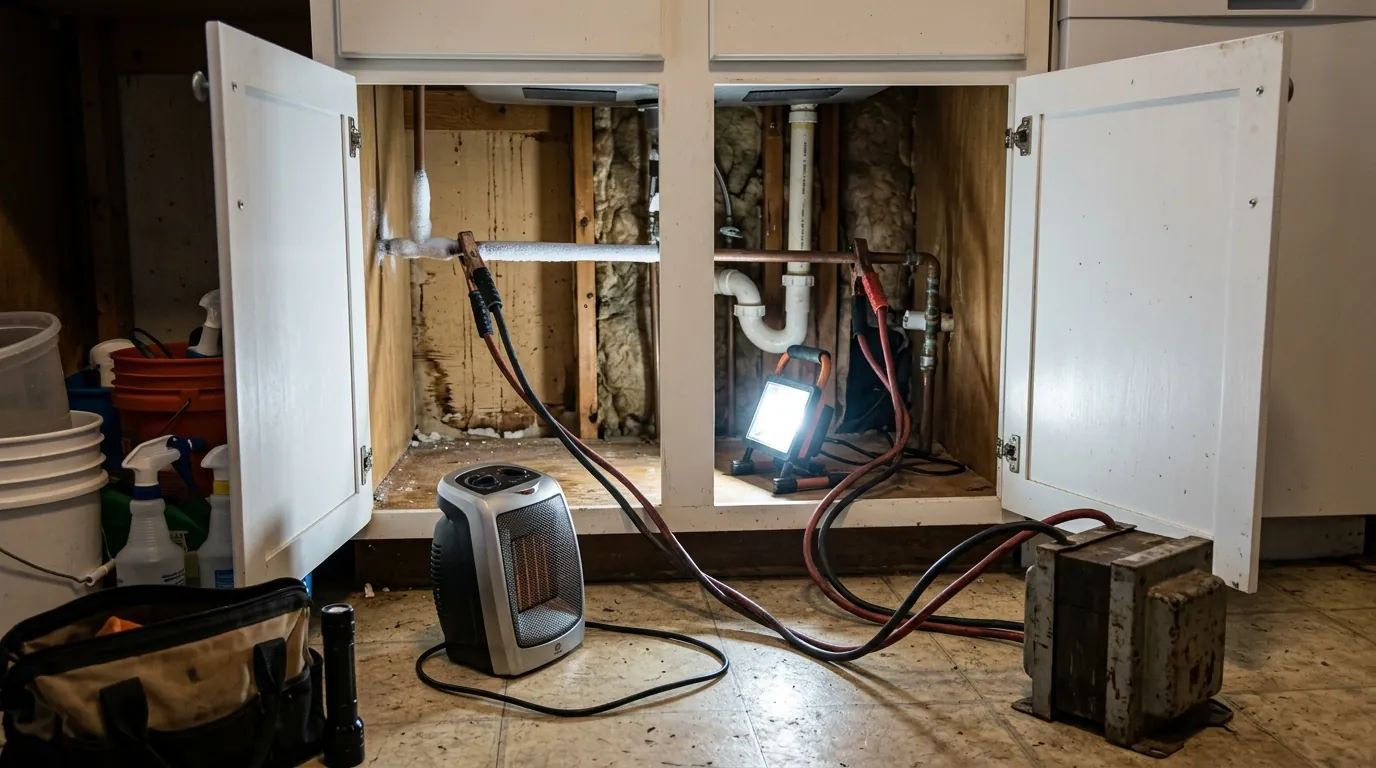
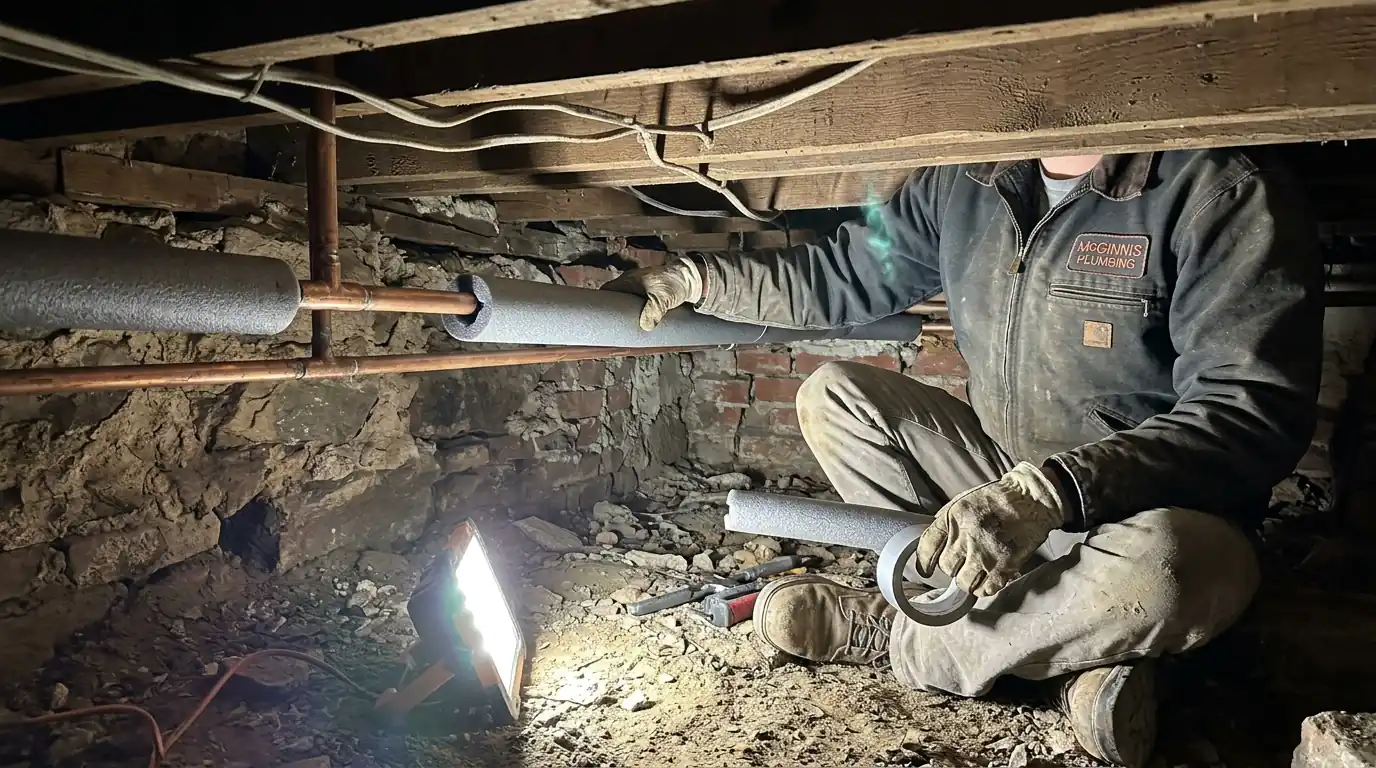
In many rowhomes the kitchen sits in a back addition with thin walls, a crawlspace or open joists underneath, and supply lines running along the outside wall. On a hard freeze the kitchen faucet goes dry while the bathroom still works. We open the sink base, put warm air into the cabinet and work along the line toward its coldest point, often where it crosses over the crawlspace. Once it flows, we look at insulating the run, sealing the gaps that let cold air in, or moving the pipe toward the inside wall.
Frozen Water Meters
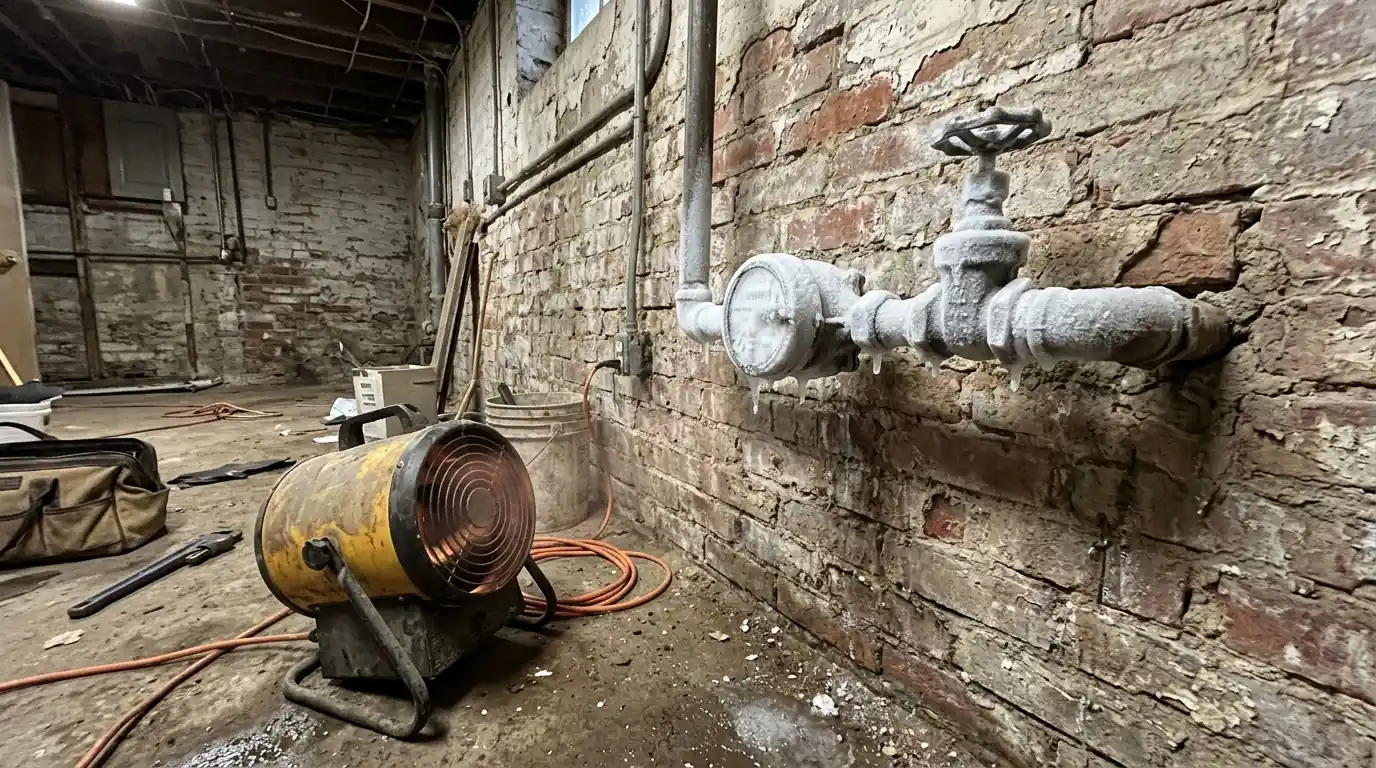
When the whole house loses water at once, the ice is usually at or near the meter, where the service line comes through a cold front wall. A frozen meter can crack its housing, so we warm the area slowly with gentle heat, never a torch, and watch the meter couplings and the main valve for leaks as it thaws. A cracked meter body is reported right away. We replace any split valves or pipe on either side and then look at what let the cold reach that wall, often an open vent or a gap around the pipe.
Exterior Wall Lines
Pipes inside outside walls freeze where cold air finds a path: a gap at the sill, an unsealed hose bib opening, or a bathroom built against an exposed wall. The usual sign is one fixture that stops while the rest of the house is fine. We thaw from inside with warm air or an infrared heater aimed at the wall, open the faucet and let it run. For a line that freezes every winter, the lasting fix is moving it into a heated chase or swapping a drafty sillcock for a frost-free hose bib.
Steps on a frozen pipe call
Find the plug
We note which fixtures are dry and follow the line to its coldest stretch.
Open the faucet
An open tap gives meltwater and steam a way out while the ice softens.
Apply gentle heat
Warm air, heat tape or an electric thawing machine, never open flame near framing.
Check for splits
As water starts to move, we look and listen along the run before full pressure returns.
Protect the cold spot
Insulation, sealed drafts or a rerouted line keep the same pipe from freezing again.
Philadelphia freezes and the calls they bring
Philadelphia does not freeze hard every week, which is why a long cold stretch catches houses off guard. In one winter the water department took 1,295 cold-weather calls, and 1,143 of them came during an eight-day February stretch that never rose above freezing and dropped to two degrees. Pipes are most at risk once temperatures sit below 32 degrees for more than 72 hours, especially when water stays still overnight. Those are the nights to drip a faucet on an outside wall.
What affects the cost of thawing a frozen line
Most of the work is finding the frozen stretch and confirming it did not split. The price follows how hidden the line is and what turns up once water runs.
- Where the ice sitsAn exposed basement pipe thaws quickly; a line buried in an outside wall or crawlspace takes more work to reach.
- Pipe materialMetal pipe can be thawed electrically; plastic lines need warm air and patience.
- Whether it splitA split found during the thaw turns the visit into a repair.
- Prevention workInsulating the run, sealing drafts or rerouting the line adds labor but saves the next call.
Thawing it yourself: safe moves and risky ones
Owners can safely handle a good part of a frozen pipe. The dangers are fire and a hidden split that floods once the ice is gone.
| Task | Safe to do yourself | Call a plumber |
|---|---|---|
| Open cabinet doors and warm the room | Yes. Raise the heat and let warm air reach the pipe. | If nothing flows once the room is warm. |
| Use a hair dryer on exposed pipe | Yes, with the faucet open and the dryer moving along the pipe. | If the frozen pipe is inside a wall or ceiling. |
| Use a torch or open flame | No. It starts fires inside walls and can flash water to steam. | Always. We use electric thawing gear instead. |
| Turn the water back on after a thaw | Slowly, with someone watching the line. | If you see water, hear hissing or the meter keeps moving. |
Questions about frozen pipe thawing in Philadelphia
Leave the main on but open the faucet the frozen line feeds, so pressure has somewhere to go. If any leak appears, close the main right away.
Often you cannot tell until it thaws. That is why we thaw with a faucet open and watch the run, and why it pays to know where your main valve is before you start.
Yes. Traps in back additions and outside walls freeze when water sits in them. We clear them with warm water, never chemicals.
On nights well below freezing, yes. Moving water is much harder to freeze, and a slow drip costs very little.
Because the cause has not changed. Look for a gap letting cold air reach the line, or pipe sitting against an uninsulated wall. Our guide to frozen pipes lists what to check.