Updated October 2026
Most sump pump failures in Philadelphia basements come down to a stuck float switch, a failed check valve or a worn-out motor. Each shows a different symptom: no start, constant cycling, or humming without moving water. We test the power, switch and valve first, because a cheap part often solves it, and replace the pump only when the motor is gone.
What your pump is telling you
Hums but moves no water
The motor is trying, but the impeller is jammed or the pump is airlocked.
Runs and runs
A float stuck up, a check valve letting water fall back, or a pump too small for the inflow.
Clicks on and off every few seconds
Short cycling from a bad check valve or a float set too tight.
Silent with water rising
No power, a tripped outlet, or a float wedged against the pit wall.
Rattling or grinding
Debris in the impeller or worn motor bearings.
Diagnosing a pump that stopped doing its job
A sump pump has a handful of parts that fail in predictable ways. The float switch tells the motor when to run. The check valve keeps pumped water from falling back into the pit. The motor and impeller do the lifting. And all of it depends on a working outlet. Nearly every call traces back to one of those four.
We start with the cheapest explanation and work up: power and switch, then the check valve, then the motor. If the pump is old, too small for the water coming in or has failed before, replacing it is the better spend, and adding a backup pump at the same visit covers the next outage.
Stuck Float Switch
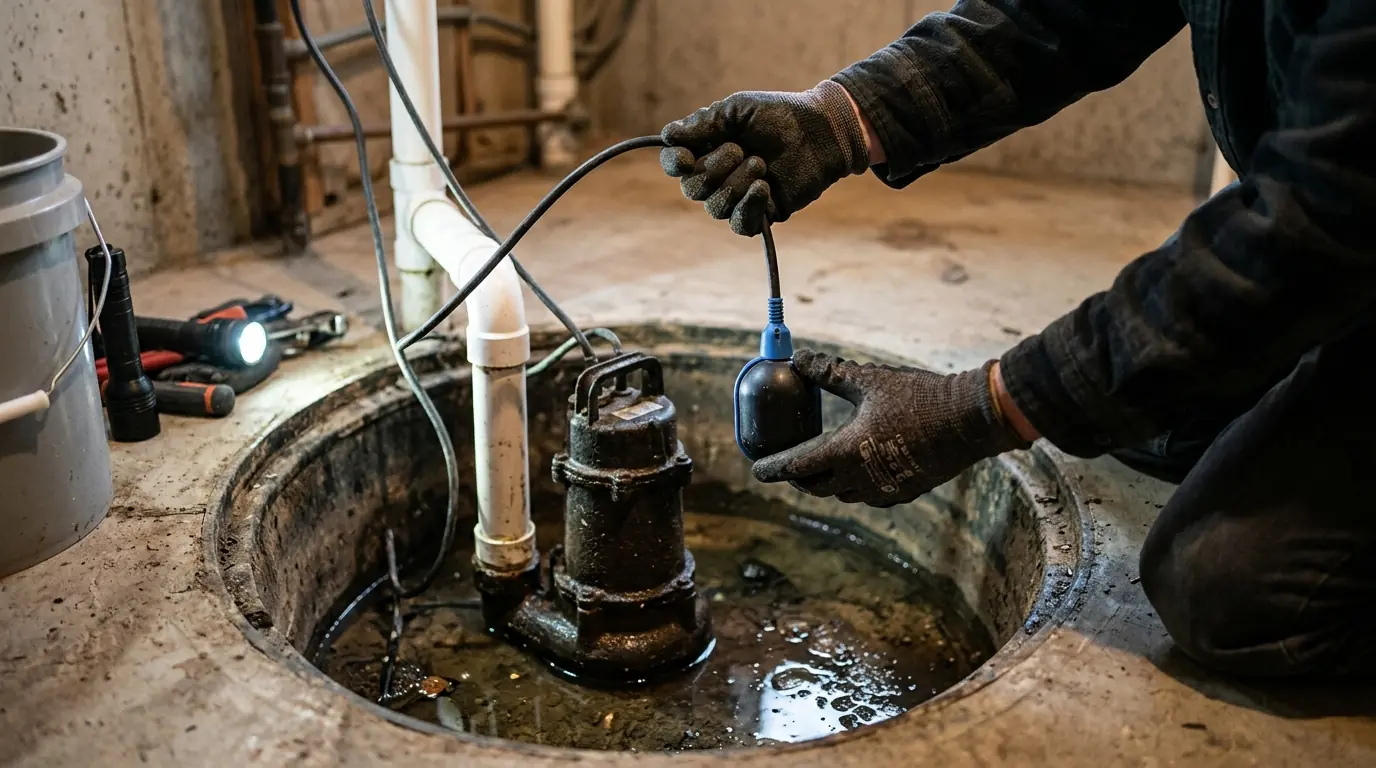
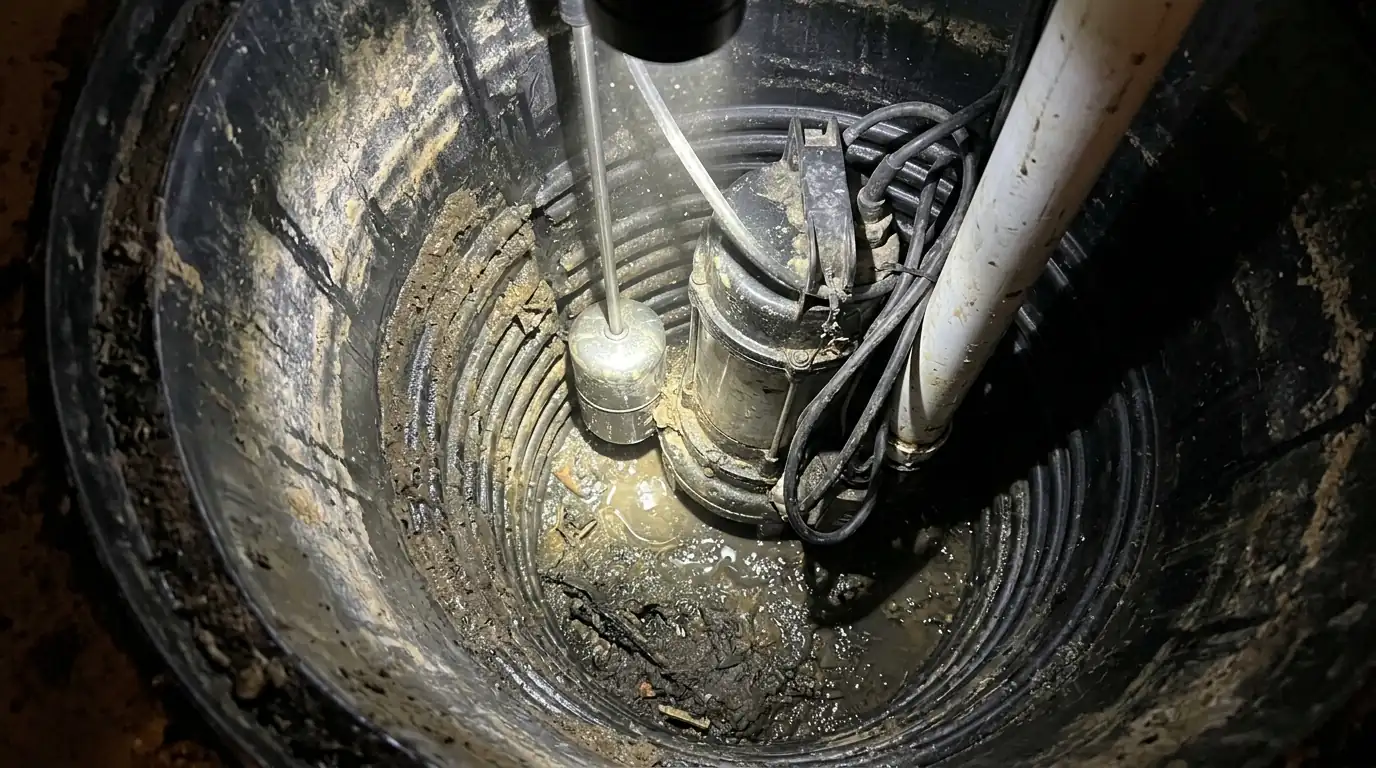
The float rises with the water and flips the switch that starts the pump. If it catches on the pit wall, the discharge pipe or the power cord, the pump either never starts or never stops. Tethered floats need room to swing, and vertical floats need a clean rod to slide on. You notice a pit near overflowing with a silent pump, or a pump still running long after the pit is dry. We free or replace the switch, re-center the pump and, if the pit is narrow, change to a switch style that fits the space.
Failed Check Valve
The check valve on the discharge stops the water in the pipe from dropping back into the pit after each cycle. When its flapper sticks open or wears out, that water falls back, the float rises and the pump starts again, over and over. You hear a heavy thump when the pump stops, or you watch it restart soon after shutting off even in dry weather. We cut out the old valve, fit a new one with unions so it can be serviced later, and confirm the flow arrow points up toward the outlet.
Burned Out Motor
A motor that hums without pumping, trips the breaker or smells hot is near the end. Sometimes the cause is debris jamming the impeller, which can be cleared. More often the motor has simply run itself out, especially if a stuck float kept it going with the pit dry. We test the motor and the switch separately so we do not replace the wrong part. If the motor is gone, we set a new pump sized for the water your pit actually takes in, and look at why the old one wore out early.
How we troubleshoot a sump pump
Check the power
Outlet, breaker and GFCI are tested before anything else.
Watch a cycle
We fill the pit and see how the float, switch and pump respond.
Test the check valve
We listen and watch for water falling back after the pump stops.
Inspect the pump
Intake, impeller and motor are checked for debris and wear.
Repair or replace
We fix the failed part or set a new pump, then run it through several cycles.
When the rain gets ahead of the pump
Heavy rain is what exposes a tired sump pump. In Northeast Philadelphia, residents have pointed to sealed street drains and flooded basements as the century-old sewer and stormwater system copes with heavier storms. When the ground around a foundation is saturated, a pump with a sticking float or a leaky check valve falls behind quickly, and the first sign is water spreading from the pit. Testing the pump before the wet season, and again after any long outage, is the cheapest protection a basement has.
Typical sump pump repair costs and what moves them
Repairs run from a reset outlet to a full pump swap. We tell you which one you are looking at before any parts go in.
- Which part failedA float switch or check valve costs far less than a new pump.
- Pump ageOn an older pump, spending on parts may not make sense.
- Pit conditionA pit full of silt or a broken liner needs cleaning or replacing too.
- Discharge problemsA frozen, crushed or blocked discharge adds work beyond the pump.
Pump checks you can do, and where to stop
Some problems are simple enough to sort out before calling. Unplug the pump before a hand goes anywhere near the pit.
| Task | Safe to do yourself | Call a plumber |
|---|---|---|
| Check the outlet and breaker | Yes. Reset a tripped GFCI or breaker. | If it trips again as soon as the pump starts. |
| Free a float caught on the wall | Yes, with the pump unplugged. | If it keeps catching or the switch housing is cracked. |
| Clear debris from the intake screen | Yes, unplugged and with gloves on. | If the impeller is jammed inside the housing. |
| Replace the check valve | Only if you are handy with unions and PVC. | If the discharge pipe is glued solid or cracked. |
Questions about sump pump repair in Philadelphia
It depends on how often it runs and how well it was built. A pump that cycles hard every spring wears out sooner than one that rarely runs. Test it regularly so you find out before a storm does.
Groundwater can keep feeding the pit for days after rain. If it runs with a dry pit, the float is stuck or the check valve is letting water fall back.
It will move water, but it will cycle far more often and wear out faster. Replace the valve instead of leaving it out.
Only with the pump unplugged. Water and a live pump motor are a dangerous combination.
If the motor is sound, replacing a switch or valve is worth it. If the motor is failing or the pit itself is the problem, see our page on new sump pump installs.