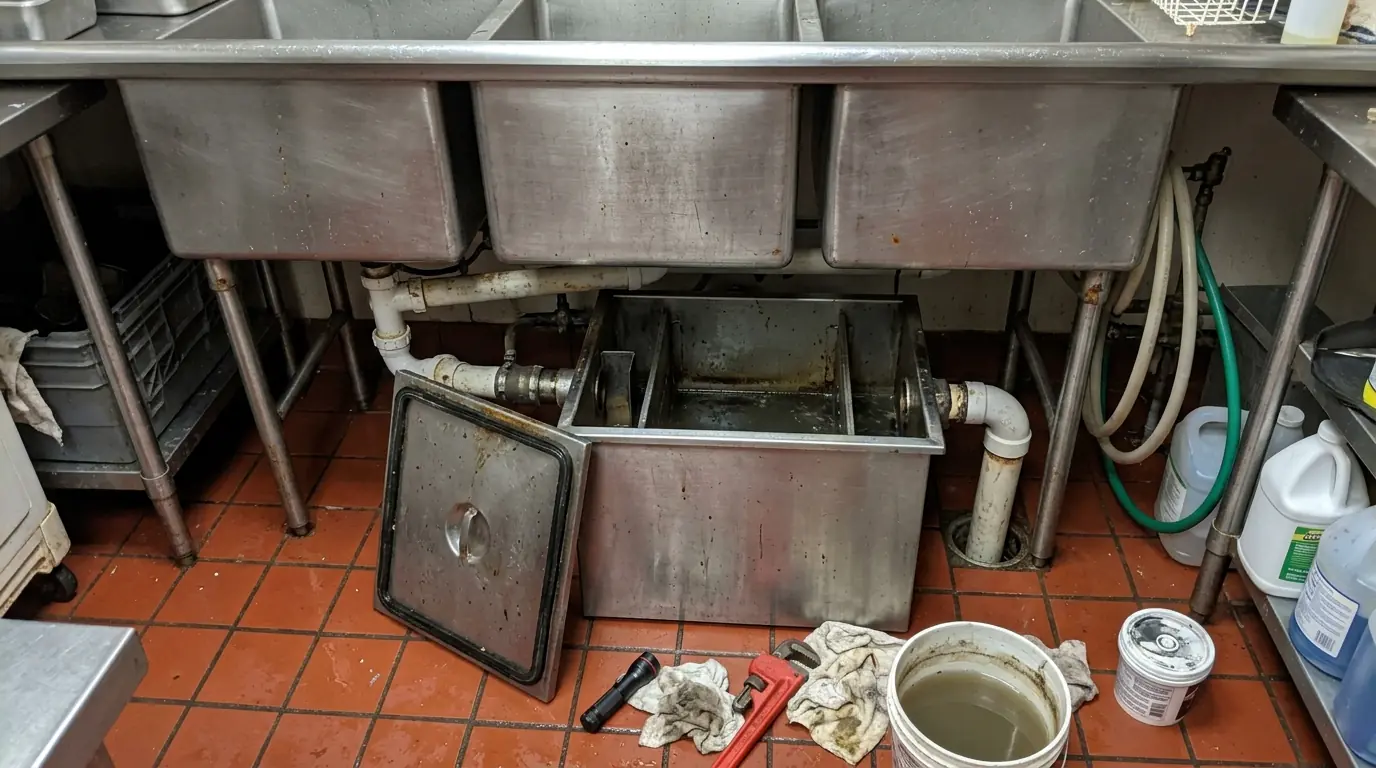
Updated October 2026
A grease trap in Philadelphia kitchens catches fats, oils and grease before they reach the building drain and the city sewer. Small under-sink traps suit light use, while larger interceptors handle busy commercial kitchens. We size the trap to your fixtures and flow, install it with access for cleaning, and clear the lines that feed it.
Keeping grease out of the drain line
Hot grease poured down a sink cools in the pipe and sticks to the walls, catching food and scraps until the line closes. A grease trap slows the water so fat floats and solids settle, and only cleaner water leaves for the sewer.
Whether a kitchen needs a trap, and how large, is set by the plumbing code and the local sewer authority based on the fixtures and the food being prepared. We size and install to those requirements, pull the permit when the job needs one, and set up access so cleaning is not a chore. For lines already coated, hydro jetting scours the pipe back to full size.
Under-sink trap or larger interceptor
The right size depends on how much grease your kitchen sends down the drain and how much room you have.
| Point | Under-sink trap | Larger interceptor |
|---|---|---|
| Typical kitchen | Cafes and small prep kitchens | Full-service restaurants and high volume |
| Location | Under or beside the sink | In the floor, a basement or outside |
| Cleaning | By hand, often by staff | Pumped out by a hauler |
| Space needed | Small | Significant, with room to pump |
What sets grease trap pricing
A small trap and an in-ground interceptor are very different jobs. These are the things that move the price.
- Trap size and typeUnder-sink units cost far less than in-ground interceptors.
- Concrete and excavationSetting an interceptor in an existing floor means breaking and restoring concrete.
- Drain reroutingFixtures may need new lines to reach the trap.
- VentingThe trap has to be vented, which may mean a new vent run.
- Ongoing cleaningPumping and line cleaning are a running cost to plan for.
Under-Sink Grease Traps
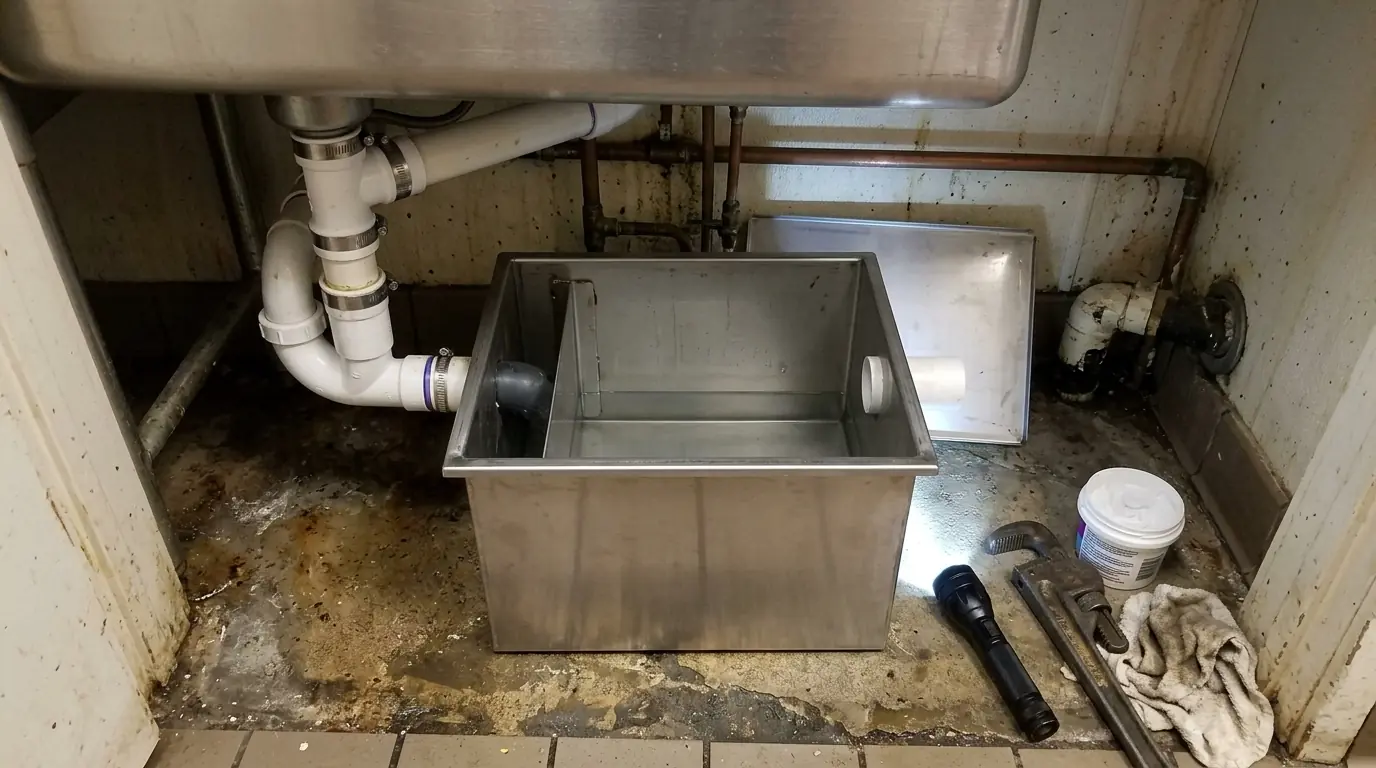
Small kitchens, cafes and prep areas often use a compact grease trap under or beside the three-compartment sink. Staff notice trouble when the sink drains slowly or the lid starts to smell. We size the trap to the sink flow, fit a flow control so water does not rush through too fast to separate, and set the trap where the lid opens without moving shelving. On existing traps we check the inlet and outlet baffles, since a missing baffle lets grease straight through. Sink size, room under the counter and how often staff can clean it decide the model.
Larger Interceptors
Busy kitchens with fryers, dishwashers and several sinks produce more grease than a small trap can hold. A larger interceptor sits in the floor, a basement or outside, and is pumped by a hauler on a schedule. We plan the location around pump access, run the kitchen drains to it with cleanouts, vent it correctly and connect the outlet to the building drain. In an existing building, breaking concrete and rerouting drain lines is common. Fixture count, available space and what the sewer authority requires decide the size and where it goes.
Trap Line Cleaning
Even with a trap in place, the pipe between the kitchen and the trap coats with grease, and the line after it can too when the trap is overdue for service. Symptoms are a slow sink that a plunger fixes for a day, floor sinks that gurgle, and grease at a downstream cleanout. We cable or jet the lines, clean out the trap, check baffles and gaskets, and run a camera when the problem returns too quickly. Cleaning on a regular rhythm costs less than a backup in the middle of service. How thick the buildup is and where the cleanouts sit shape the approach.
When the grease trap needs attention
Slow kitchen sinks
Grease and solids are filling the trap or coating the line ahead of it.
Bad smell near the drains
A full trap or a missing lid gasket lets odor out into the kitchen.
Water rising in floor sinks
The line between the kitchen and the trap, or the trap outlet, is blocked.
Grease at a downstream cleanout
Grease is getting past the trap, often because it is undersized or overdue for cleaning.
From sizing to the first cleaning
Count the fixtures
We list every sink and appliance that will drain to the trap.
Pick the size and spot
The trap is sized to that flow and placed where it can be reached.
Permit and install
We pull the permit when the job needs one and plumb the trap in with vents and cleanouts.
Test the flow
Water runs through to check separation and outlet flow.
Set a cleaning rhythm
We suggest how often to clean or pump based on your volume.
Grease and Philadelphia's shared sewers
Roughly 60 percent of Philadelphia drains to combined sewers, where sewage and stormwater share a single pipe. Grease that escapes a kitchen ends up coating that same system, which already works hard in heavy rain. For a food business, a working grease trap is the first line of defense for the building's own drain and lateral, and keeping it cleaned matters as much as having one. A blocked line under a restaurant floor costs far more in lost service than routine trap cleaning does.
Questions about grease trap installation in Philadelphia
It depends on the trap size and how much grease the kitchen produces. We check how full it is over the first few cleanings and set a rhythm from that.
Yes, many kitchens do it themselves. We show staff how to lift the lid, skim the grease, scrape out solids and refit the baffles and gasket.
It depends on what you serve and the requirements that apply to your space. We look at your fixtures and menu and tell you what the rules mean for your kitchen.
It coats the building drain and the lateral to the street, and eventually blocks them. Clearing it usually takes jetting, followed by a look at why the trap let it through.
Yes. It usually means rerouting drains and sometimes breaking concrete, which we plan around your service hours.