Updated October 2026
If you smell gas in a Philadelphia home, leave right away, do not use light switches, phones or flames inside, and call your gas utility emergency line from outside. The utility makes the situation safe and may shut off the meter. A plumber then finds and repairs the leak in the house piping, and the system is pressure tested before gas returns.
How a gas leak gives itself away
A rotten egg or sulfur smell
Natural gas carries an added odorant so leaks can be smelled. Never ignore it, even when it is faint.
Hissing near a pipe or appliance
A larger leak can make a sound at a fitting, valve or connector.
Bubbles in standing water outside
A leak in a buried line can bubble up through puddles or wet soil.
Dead grass along a gas line route
A strip of dying plants over an outdoor line can point to gas in the soil.
What happens after the utility leaves
The piping past your meter, and the connection to each appliance, is where we work. When the utility tags an appliance or shuts off the meter because of a leak, it is waiting for a proper repair before service is restored.
We find the leak with a combustible gas detector and leak solution on every suspect joint, not by guesswork. Then we repair or replace the leaking section, pressure test the system and, where the job requires it, arrange the inspection the utility needs to see. If a whole run is too far gone, new gas piping replaces it.
Leaking Appliance Connectors
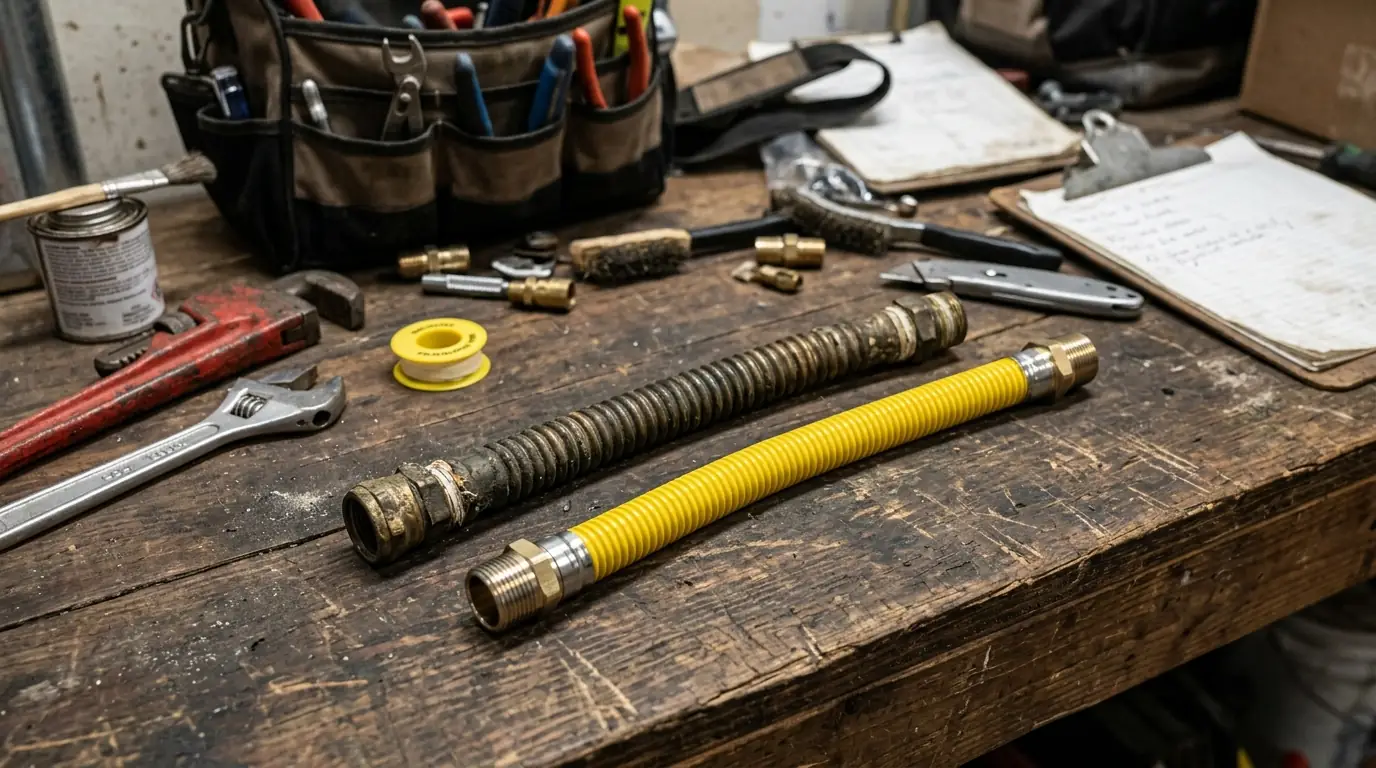
The flexible connector between a range, dryer or water heater and its shutoff valve is the most common leak point we find. Old uncoated brass connectors crack at the flare, and any connector can fail if the appliance has been shoved back hard against it or the connector was reused. A faint smell behind the range is the usual clue. We close the appliance valve, replace the connector with a new coated one sized for the appliance and check the valve itself, since old plug valves can leak at the stem. Every joint gets a leak test before the appliance is relit.
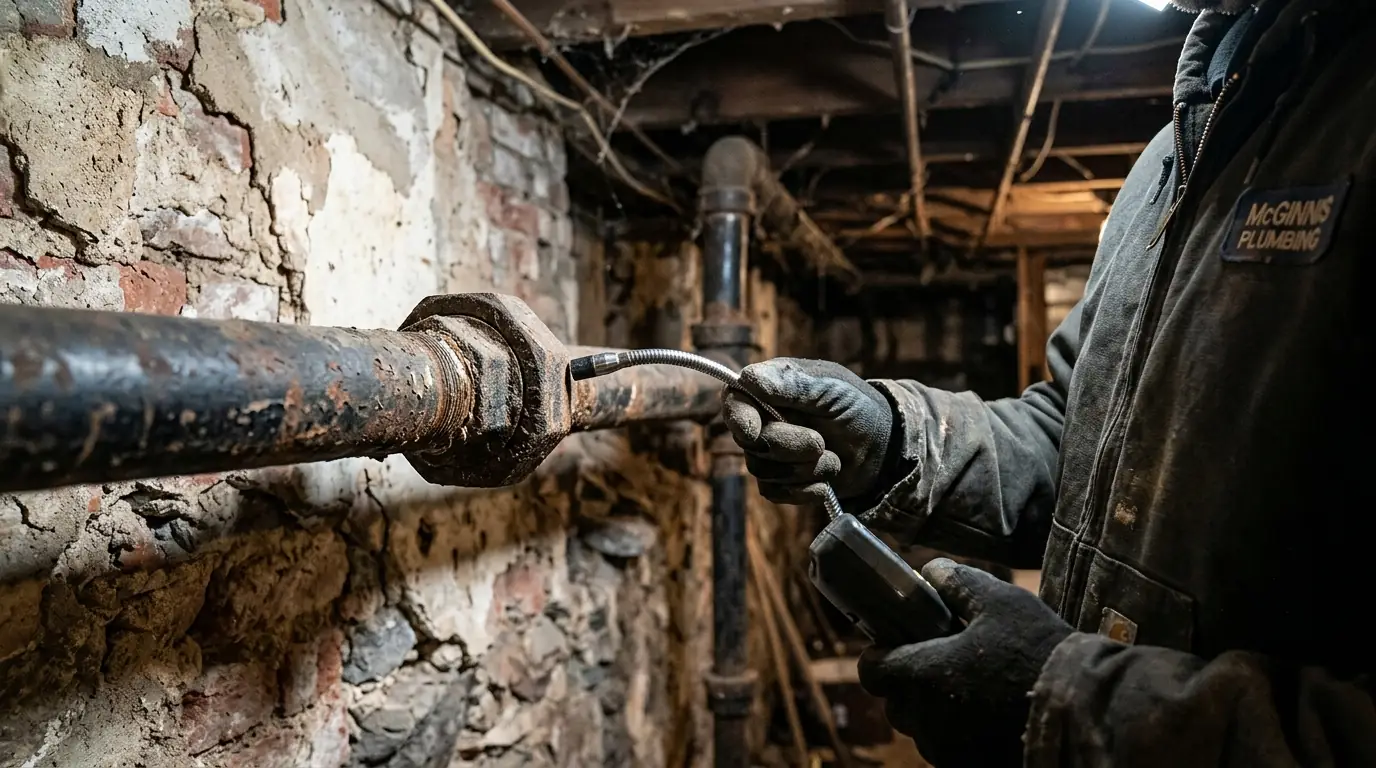
Corroded Basement Lines
Gas pipe in a damp basement rusts from the outside, especially where it runs along a wet wall, lies on a concrete floor or passes through masonry. Surface rust is common. Pitting deep enough to leak is less so, but it happens on old lines in wet spots. We clean the pipe back to judge how deep the corrosion goes, cut out and replace damaged sections with new pipe and fittings, and hang the run so it no longer rests on wet surfaces. If the pipe has rusted through in one place, we check the rest of that run before calling the job finished.
Failed Pressure Tests
Sometimes a leak shows up on a gauge before anyone smells it. A gas system can fail a pressure test during a renovation, before a home sale or after the utility turns the gas off and back on. The needle drops, and the job becomes finding where. We isolate the system section by section, brush leak solution onto joints and valves and use a detector to narrow it down. Leaks often hide at old unions, capped outlets left from removed appliances and valve stems. Once the leak is repaired, the system is tested again and has to hold steady before we sign off.
How long the gas may stay off
When the utility finds a leak inside the house, it usually shuts the gas off at the meter or the appliance and will not restore it until the piping is repaired and passes a test. That means no cooking, no gas hot water and, in homes heated by a gas boiler or furnace, no heat until the repair is done.
A single leaking connector is a small repair. Corroded piping replaced in sections takes longer, and some jobs need an inspection before the utility will turn the gas back on. We tell you which situation you are in before work starts.
A gas leak repair, start to finish
You get out and call the utility
Leave, use no switches or flames, and call your gas utility from outside. The utility makes it safe first.
Locate the leak
With the area safe, we test joints, valves and connectors with a detector and leak solution.
Repair the piping
Leaking connectors, valves or pipe sections are replaced with new parts.
Pressure test
The repaired system is tested and must hold before service can return.
Restore and relight
Once the utility restores or approves service, appliances are relit and checked.
Old gas piping in Philadelphia houses
Age is a big part of the gas leak picture in Philadelphia. Pre-1940 homes account for 41 percent of the county's housing, close to double the share anywhere else in the region, while just 15 percent date from 1980 or later. A lot of that housing has gas piping that several owners have extended, patched and reconnected. Old unions, capped outlets from removed appliances and pipe running across damp basement walls are where we look first.
A gas leak repair is priced by what we find
We price the repair once the leak is located. A connector and a valve are small jobs; replacing corroded pipe is more.
- Where the leak isA connector behind the range is quick to reach; a leak inside a wall or ceiling is not.
- How much pipe is affectedOne bad fitting costs far less than a corroded run.
- Testing and inspectionA pressure test is part of every repair, and some jobs need an inspection before service returns.
- Appliance valvesOld plug valves are often replaced at the same visit.
Questions about gas leak repair in Philadelphia
Leave the house right away and take everyone with you. Do not switch lights on or off, use a phone or light anything inside. Call your gas utility emergency line from outside, then call us for the repair.
The utility makes the situation safe, which may mean shutting off the meter or an appliance. Repairs to the piping inside the house are done by a plumber.
No. Gas shut off at the meter is restored by the utility, and pilots then need relighting in order. We coordinate that with you.
A brief whiff as a burner lights can happen. A smell that lingers is not normal and should be treated as a leak.
Corroded pipe, loose old unions, cracked brass connectors and valves leaking at the stem are the usual causes. A boiler or water heater connection is checked the same way as a range.