Updated October 2026
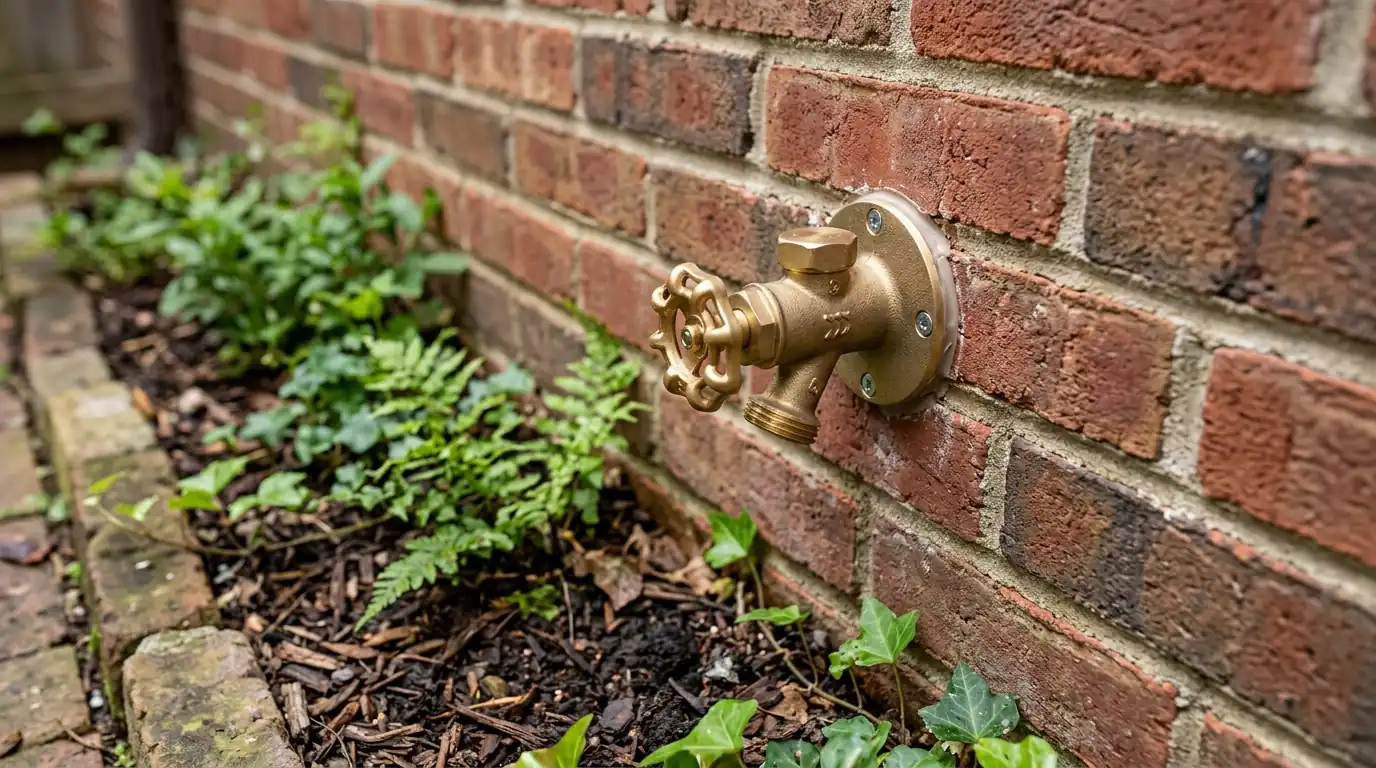
Outdoor faucet repair in Philadelphia is mostly about winter. A standard hose bib holds water right at the outside wall, so a hard freeze splits it or the pipe behind it. We replace damaged bibs, install frost-free sillcocks that keep the valve inside the heated wall, and add a shutoff and drain inside so the line can be emptied before cold weather.
Why outdoor faucets fail after a freeze
A standard hose bib keeps its valve at the outside face of the wall, with water sitting in the pipe right behind it. When cold gets in, that water freezes, expands and splits the pipe or the valve body. Nothing shows until spring, when the hose goes on and water pours into the basement or a finished wall.
A frost-free sillcock moves the valve back into the warm part of the house, so the section at the wall drains every time it is shut. It works only when installed with a slight downward pitch and with the hose taken off for winter. Our frozen pipes guide covers protecting the rest of the house.
What decides the cost of an outdoor faucet fix
Outdoor faucet repairs are usually small. The price grows with how much wall or ceiling has to be opened to reach the damage.
- Repair or replaceA washer or packing fix is quicker than a new sillcock.
- Where the split isA split just inside the wall is easier to reach than one above a finished ceiling.
- Wall typeBrick and stone take longer to drill through than siding.
- Adding a shutoffAn inside shutoff with a drain adds a little time and saves future repairs.
Freeze-Split Hose Bibs
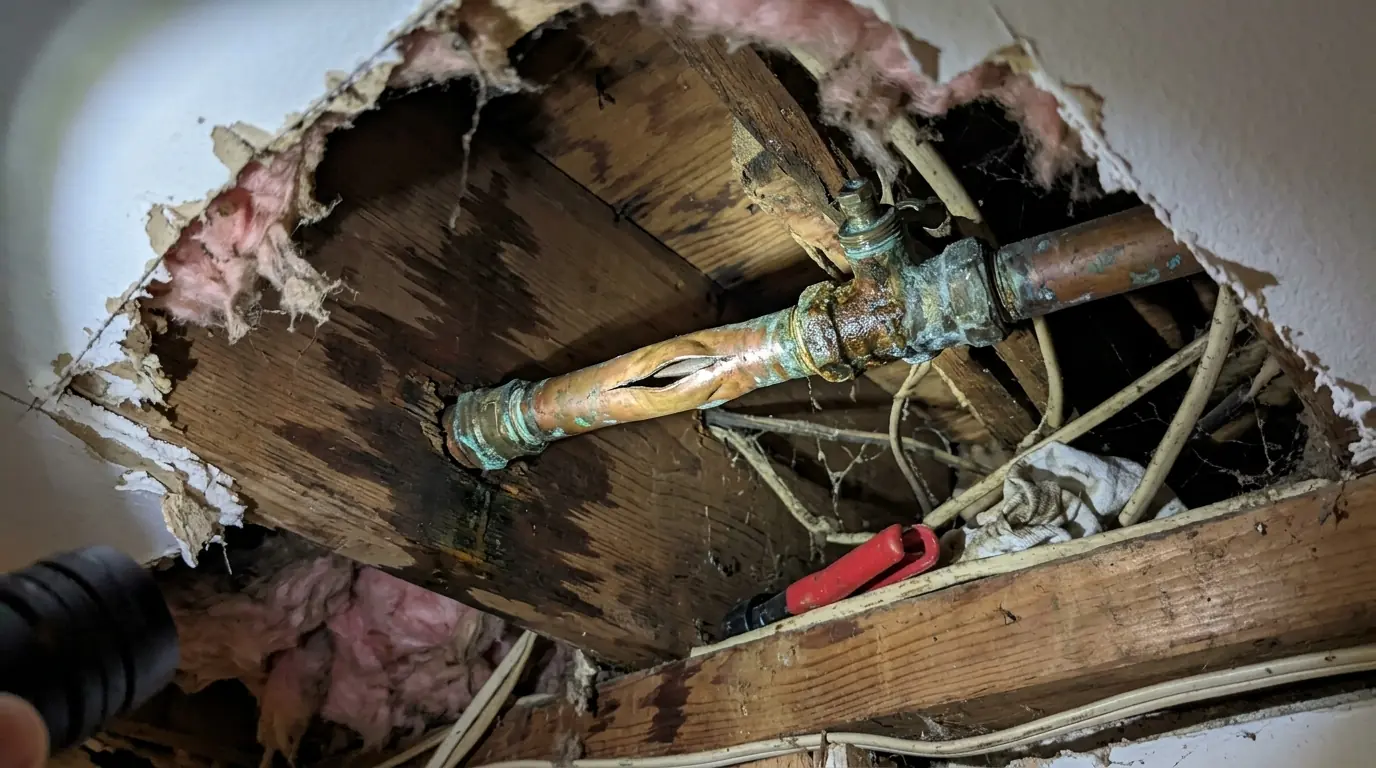
A freeze split often hides until the first warm day. Turn the handle and water sprays inside the wall, drips through a basement ceiling or runs out of the siding below the faucet. The bib itself may be cracked, or the copper behind it may have split a few inches in. We shut the water, open enough of the wall or ceiling to reach the damage, cut out the split section and replace it. When the old bib was a standard compression type, we usually fit a frost-free one instead so the same freeze cannot repeat. Where the split sits decides how much we open up.
Frost-Free Sillcock Installs
Owners choose a frost-free sillcock after one freeze split, or when adding a new outdoor faucet for a garden or back patio. Its long body runs through the wall so the seat sits inside where it stays warm. We match the length to the wall thickness, set it pitched slightly toward the outside so it drains, and seal the opening against drafts. A built-in vacuum breaker keeps garden hose water out of the house supply. Wall construction, brick or frame, and how far the nearest supply line is from where you want the faucet decide the job.
Inside Shutoff Valves
Many older homes have a hose bib with no shutoff inside, so the only winter protection is hope. An inside shutoff with a drain cap lets you close the line and empty the section that runs to the wall each fall. We fit the valve on the branch where it is easy to reach, often in the basement ceiling near the front or back wall, and tag it so nobody has to guess which valve it is. If the branch is old galvanized pipe, we replace that short run at the same time. It is a small job that prevents an expensive one.
Outdoor faucet jobs for you, and for us
Some outdoor faucet care is a homeowner job every fall. Repairs inside the wall are not.
| Task | Safe to do yourself | Call a plumber |
|---|---|---|
| Disconnect hoses before freezing weather | Yes. A hose left on traps water in a frost-free sillcock. | If water drips inside after the hose comes off. |
| Close the inside shutoff and drain the line | Yes, if the house has one. | If there is no shutoff or the valve leaks. |
| Snug a packing nut | Yes, a small turn with a wrench. | If the leak comes back. |
| Cut out a split pipe behind the wall | No. It usually means opening a ceiling or wall. | Always. |
How a damaged outdoor faucet gives itself away
Water inside only when the hose is on
A split in a frost-free sillcock or the pipe behind it leaks only while the valve is open.
Drip from the spout with the handle shut
A worn washer or seat inside the bib.
Water around the handle
A loose packing nut or worn stem packing.
A handle that will not shut off fully
A damaged stem or grit on the seat.
Stain on the wall under the faucet
A slow leak at the wall or in the pipe behind it.
Outdoor faucet repair, in order
Shut off and find the leak
We isolate the line and check the bib, the stem and the pipe behind the wall.
Open only what is needed
Access is cut in the least visible spot that reaches the damage.
Repair or replace
Washers, stems, bibs or split pipe are replaced as needed.
Add winter protection
An inside shutoff and drain go in where there is none.
Test both sides of the wall
We run the faucet and check inside for drips before we leave.
Philadelphia cold snaps and outside faucets
Pipes are at greater risk of freezing when temperatures stay below 32 degrees for more than 72 hours, especially when water sits unused overnight. An outdoor faucet is the most exposed pipe in the house and the one used least in winter. In one winter PWD fielded 1,295 cold-weather calls, 1,143 of them during an eight-day February stretch in Philadelphia that never rose above freezing and dipped to two degrees. Long cold spells like that are when a hose bib without an inside shutoff gives out.
Questions about outdoor faucet repair in Philadelphia
No. Close the inside shutoff, open the outdoor faucet to drain the line, then leave it open. A frost-free sillcock with the hose removed protects itself.
Usually a hose was left attached and trapped water in the body, or the sillcock was installed without a downward pitch. We check both when we replace it.
Yes. We can relocate it or add a second one wherever a supply line can reach, including the back of a rowhome.
If it is leaking inside the house, shut the branch valve or the main and call any hour. A drip outside can wait for a booked visit.
Frost-free sillcocks usually have a vacuum breaker built in to stop hose water being drawn back into the house. Older bibs can take a screw-on one.