Updated October 2026
Low water pressure in a Philadelphia home usually comes from one of four places: a main valve that is partly closed or failing, rusted galvanized pipe, a bad pressure regulator, or a narrow or leaking service line. We put a gauge on the system, compare readings at the meter and upstairs, and fix the part that is holding the water back.
Finding where the flow is being lost
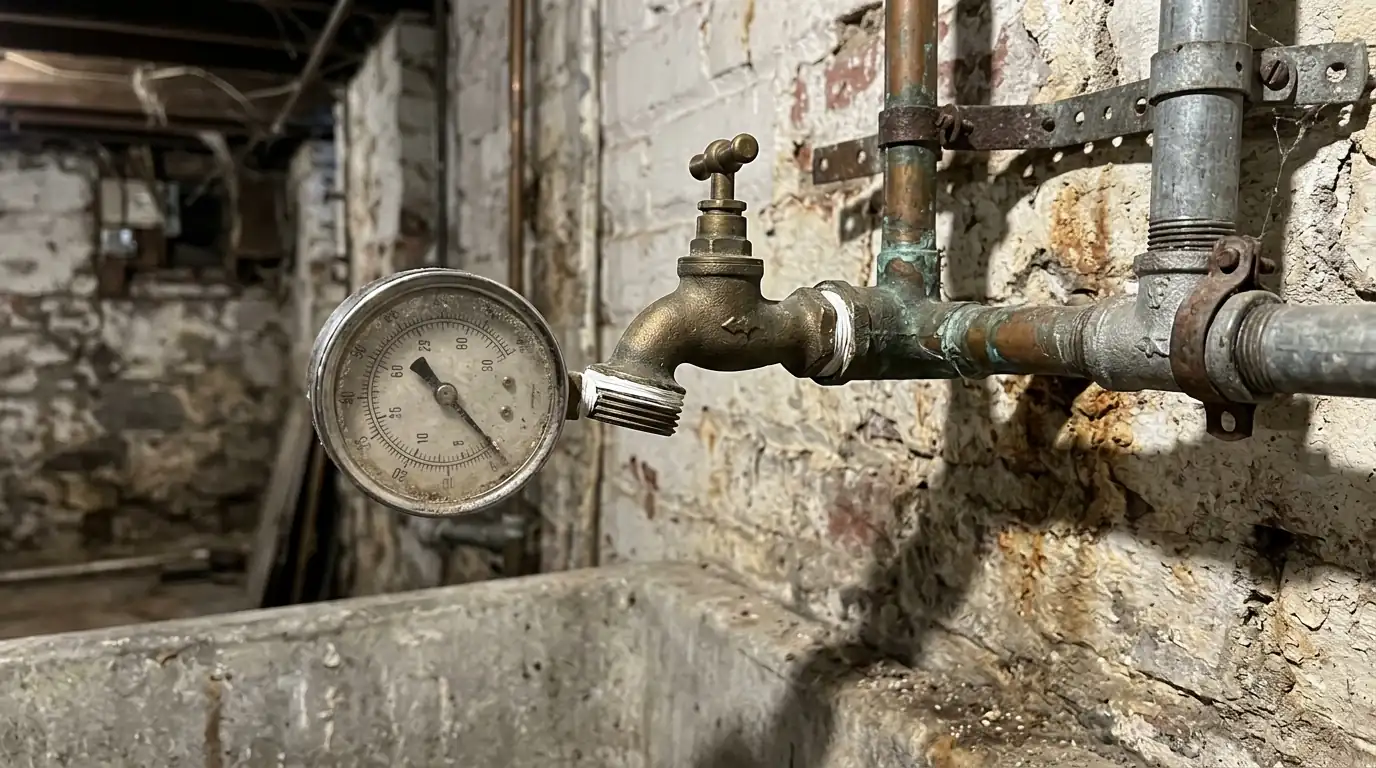
Pressure is a reading, not a guess. We thread a gauge onto a hose bib or laundry valve, note static pressure with nothing running, then open fixtures upstairs and watch how far the needle falls. A big drop under flow means a restriction between the meter and the fixture. A low reading with everything shut points back toward the street.
In older Philadelphia homes the restriction is often rusted galvanized pipe, and the answer may be a section of new pipe or a repipe. When the main valve at the meter is the problem, a new main shutoff is a small job that brings back full flow.
What changes the price of a pressure fix
Some pressure calls end with a cleaned aerator. Others end with new pipe. Testing first tells you which before any money is spent on parts.
- Where the restriction isA valve or regulator in the basement is quick to reach; a clogged riser inside a wall is not.
- Part or pipeReplacing a regulator or main valve is a small job next to replacing a run of pipe.
- Number of arrestorsEach quick-closing valve that bangs may need its own arrestor.
- AccessFinished basements and ceilings add time before the pipe can be reached.
Low Pressure Upstairs
When the basement and first floor are fine but the top-floor shower sputters, the water is losing pressure on the climb. The usual suspects are a galvanized riser rusted to a fraction of its size, a long run of small pipe feeding two bathrooms, or a valve left partly closed somewhere along the line. We measure at the bottom and top of the run to find where the loss happens. The fix ranges from one new riser to a larger line routed upstairs. Height itself costs some pressure, so the goal is clearing the restriction, not forcing the whole house harder.
Failed Pressure Regulators
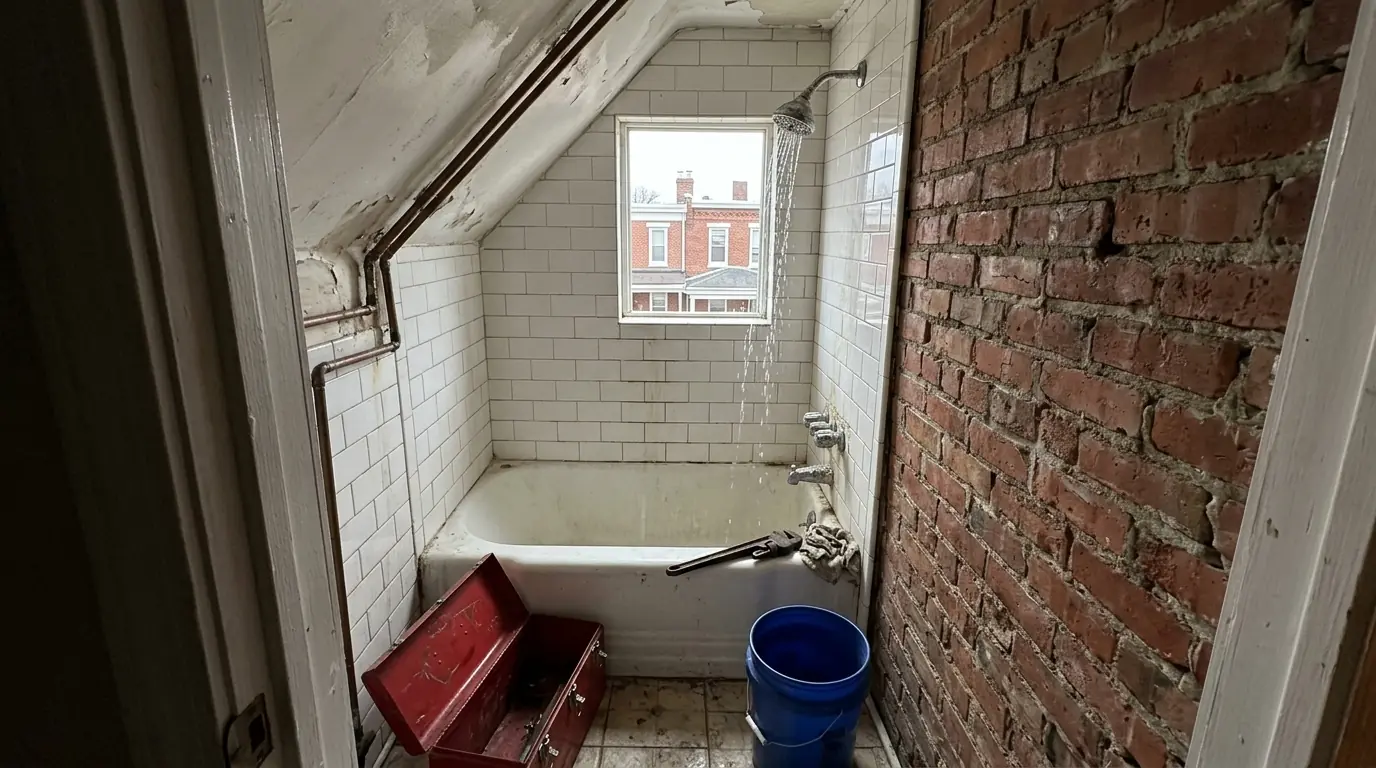
A pressure regulator, or PRV, sits just past the meter in some homes and holds house pressure steady. When it fails it goes one of two ways. Pressure creeps up, leaving the water heater relief valve dripping, toilets refilling on their own and fittings seeping; or the valve sticks partly closed and every fixture goes weak. We confirm with a gauge, then clean, adjust or replace the regulator and set it to a level the fixtures and heater can live with. Not every Philadelphia house has one, so we check what is actually installed before recommending anything.
Water Hammer
Water hammer is the bang you hear when a washing machine or dishwasher valve snaps shut and moving water stops all at once. Over time that shock loosens joints, shakes pipe off its hangers and wears out valves. We look for loose runs first, because strapping the pipe properly often quiets most of the noise. Then we fit hammer arrestors at the quick-closing valves and check the pressure, since high pressure makes hammer worse. Old air chambers that have filled with water can be drained or replaced so they cushion the shock again.
Checks to try before you call
A few simple checks narrow down the cause and sometimes solve it.
| Task | Safe to do yourself | Call a plumber |
|---|---|---|
| Clean a faucet aerator | Yes. Unscrew it, rinse out the grit and refit it. | If the faucet is still weak with the aerator off. |
| Make sure the main valve is fully open | Yes, turned gently. Never force a stiff gate valve. | If the handle will not move or the stem leaks. |
| Adjust the pressure regulator | No. Set wrong, it strains fixtures and the water heater. | Always. We set it against a gauge. |
| Snug loose pipe straps in the basement | Yes, on exposed pipe you can reach easily. | If the knocking continues or comes from inside walls. |
Clues that tell us where the pressure goes
Strong in the basement, weak upstairs
Good flow low in the house and poor flow higher up points to clogged or undersized pipe on the way up.
Every fixture weak at once
That suggests the main valve, the service line or a regulator rather than one faucet.
One faucet weak, the rest fine
Look at that faucet's aerator or cartridge before anything else.
Knocking when valves close
Quick-closing washer and dishwasher valves, or pipe loose on its straps.
Pressure that changes through the day
A regulator starting to fail, or a narrow line struggling at busy hours.
How a pressure call goes
Static reading
A gauge on a hose bib or laundry valve shows pressure with nothing running.
Flow reading
We open fixtures upstairs and watch how far pressure falls.
Trace the loss
The main valve, regulator, risers and service line are checked until the restriction turns up.
Fix the cause
We repair or replace the part responsible, from an aerator to a run of pipe.
Read it again
The same gauge readings are repeated so you can see the change.
Why pressure fades in older Philadelphia houses
Just over 40 percent of Philadelphia homes were built before 1940, against about 22 percent across the region. Houses that age often still have some galvanized supply pipe, and it narrows with rust until the upper floors lose flow. The owner is also responsible for the service line from the main in the street, so a weak reading right at the meter is a problem on the house side, not the city's. That is why our first gauge reading is at the meter, before we blame anything upstairs.
Questions about water pressure repair in Philadelphia
Usually a valve someone turned, a failing regulator, a service line leak or work on the street main. If neighbors notice it too, look to the street; if not, it is on your side.
A booster pushes harder through whatever restriction is causing the problem, so it often treats the symptom. We find and fix the restriction first, and talk about a booster only if supply from the street is genuinely low.
Yes. It wears out cartridges, fill valves and appliance hoses and can keep a heater relief valve dripping.
Washer valves close fast, and that sudden stop sends a shock through the pipe. An arrestor at the washer box and better strapping usually quiet it.
A large one can, especially on the service line. A meter leak test with every fixture off shows quickly whether water is going somewhere it should not.