Updated October 2026
In Philadelphia homes where a basement toilet, shower or laundry sits below the sewer line, a sewage ejector pump lifts waste up into the main drain. It sits in a sealed basin, starts on a float and pushes waste out through a check valve. When it fails, nothing in that bathroom can be used until it is fixed, which is why the alarm matters.
How an ejector moves waste uphill
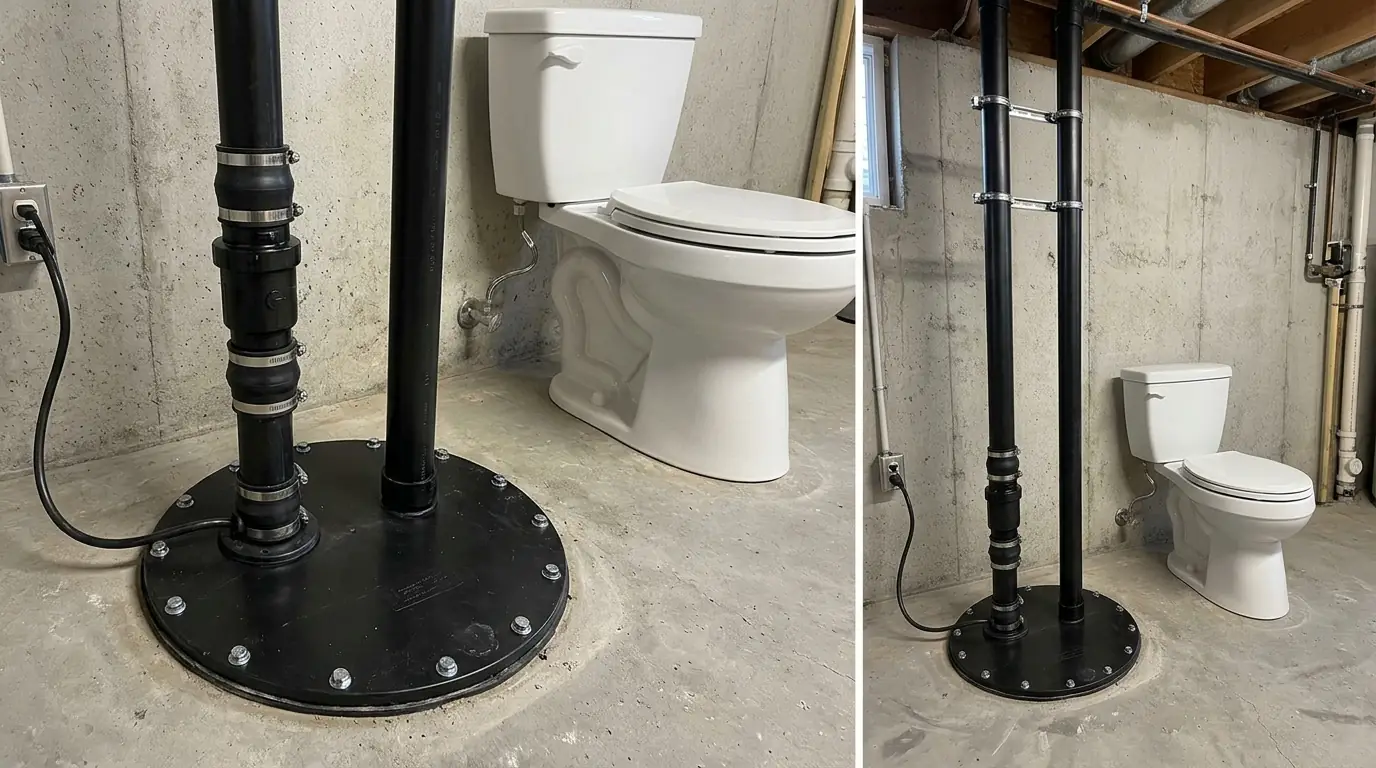
Gravity does most of the work in a drain system, but it cannot help a toilet that sits lower than the sewer line leaving the house. Waste drains into a sealed basin under the floor, a float starts the pump when the level rises, and the pump pushes everything up through a discharge pipe into the main.
Ejectors are not the same as sump pumps. They pass solids, sit in a sealed and vented basin and tie into the sanitary drain rather than the yard. When one fails, the basement fixtures stop working and waste can back up through the lowest drain.
What decides an ejector pump bill
Ejector work runs from a float swap to a complete new basin and discharge. We look at the whole system before pricing it.
- Repair or replacementA float, switch or check valve costs much less than a new pump.
- Basin conditionA cracked basin or failed lid seal means more than a pump swap.
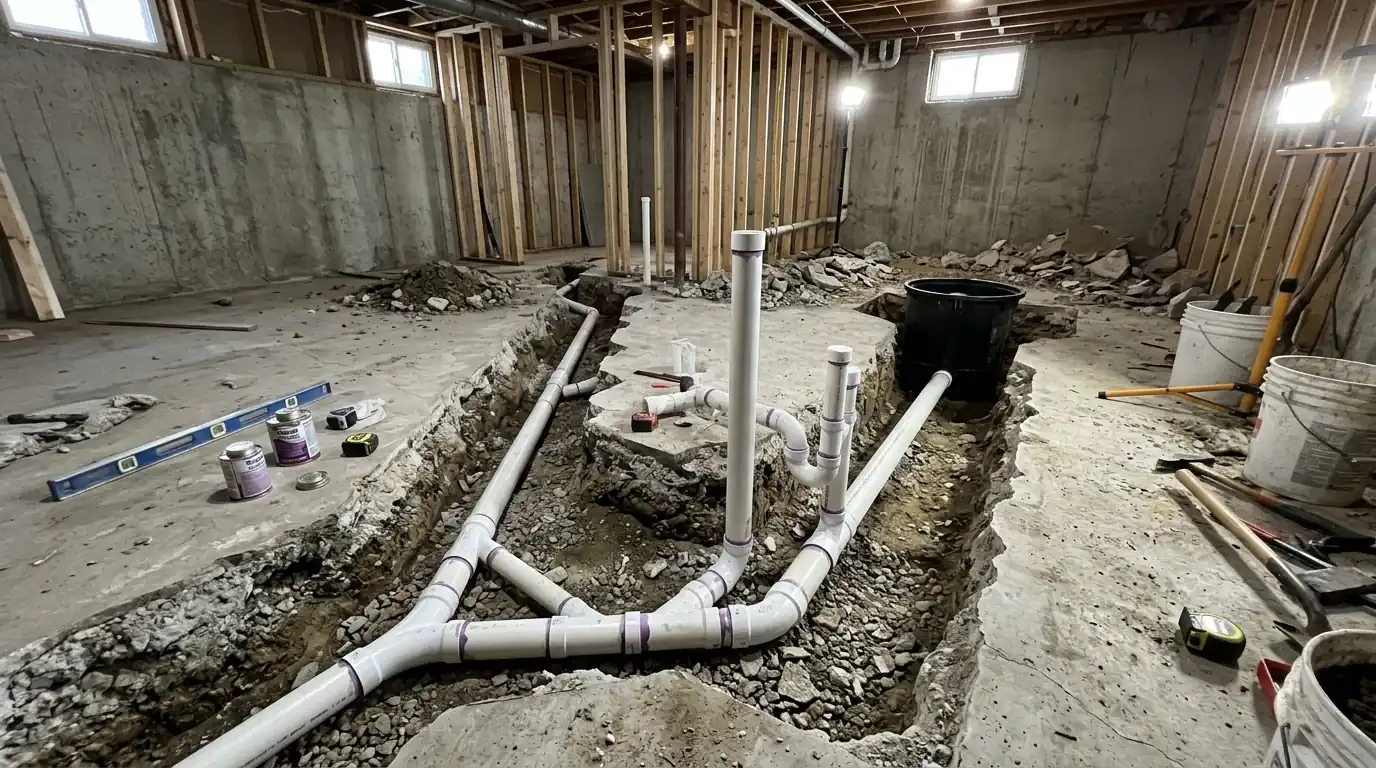
- New installationA new basin means cutting the slab plus drain, discharge and vent piping.
- Vent accessRunning a vent from the basin to the existing system can be the hardest part.
- Pump typeGrinder pumps and higher-lift pumps cost more than standard ejectors.
Basement Bathroom Ejectors
Adding a toilet or shower to a basement below the sewer line almost always means an ejector. The basin is set into the slab near the fixtures, the drains run to it by gravity, and the pump lifts waste to the main overhead. We size the pump for a toilet, plan the discharge and vent routes, and coordinate with the rest of the bathroom rough-in. In an existing bathroom, a pump that has turned loud or slow usually needs replacing before it quits for good.
Laundry Tray Pumps
A basement washer or laundry tub below the sewer line needs a pump to lift its water, but not a full sewage ejector. A smaller laundry tray pump sits beside or under the tub and handles gray water with no solids. When it fails, the tub fills and will not drain, or the pump runs without stopping. We clear lint from the intake, replace the switch or the pump, and fit a check valve so water cannot drain back. If a toilet will ever drain to the same spot, the system has to be a full ejector instead.
Ejector Alarms and Floats
Every ejector needs a high-water alarm, because otherwise the first sign of trouble is sewage at the lowest drain. Floats get coated in grease and stick, and alarms get unplugged or lose their batteries. We open the basin, clean or replace the floats, confirm the pump starts and stops at the right levels and test the alarm by lifting its float. If the alarm sits in a corner of the basement where nobody would hear it, we move it somewhere it gets noticed.
What an ejector pump install includes
An ejector system is more than a pump. Skip a part and it shows up later as a smell or a backup.
- Sealed basin set below the basement fixtures
- Ejector pump rated to pass toilet solids
- Check valve and full-port shutoff on the discharge
- Discharge piped up into the main drain
- Vent run from the basin into the vent system
- Gasketed lid with sealed pipe and cord passthroughs
- High-water alarm mounted where it will be heard
- Permit pulled when the work requires one
Signs the ejector is in trouble
High-water alarm sounding
The basin is filling faster than the pump empties it, or the pump has stopped.
Sewage smell near the basin
A broken lid seal or a disconnected vent lets gas out into the basement.
Pump runs constantly
A stuck float, or a check valve letting waste fall back, keeps it cycling.
Gurgling or slow basement drains
The basin is full, the pump is weak or the discharge is partly blocked.
Servicing or replacing an ejector
Hold off on basement fixtures
We ask the household to stop using anything that drains to the basin.
Pump down the basin
The basin is emptied so the pump and floats can be reached.
Diagnose
Float, switch, pump and check valve are each tested.
Repair or replace
Failed parts or the whole pump are replaced and the lid resealed with fresh gaskets.
Run full cycles
Water runs through the basement fixtures until the pump starts and stops cleanly and the alarm checks out.
How long the basement fixtures are out of use
While the ejector is down, nothing that drains into the basin can be used: no flushing, no shower, no washing machine. Upstairs fixtures that drain by gravity keep working as normal.
For a pump swap in a sound basin, the basement fixtures come back once the new pump is set, sealed and tested. A new basin or a rerouted discharge takes longer, and we tell you before starting how long the basement will be off-limits.
Basement fixtures and Philadelphia's sewers
In Philadelphia, basement fixtures are the ones most exposed to the sewer. About 60 percent of the city is served by combined sewers carrying stormwater and sewage together, and the water department's Basement Backup Protection Program exists because basements take sewer backups through those low fixtures in heavy rain. A pumped ejector system has some protection built in, since its check valve stops flow from running back into the basin. Gravity fixtures in the same basement still need a backwater valve.
Questions about sewage ejector pump in Philadelphia
No. A sump pump moves groundwater outside. An ejector moves sewage from basement fixtures into the main drain, passes solids and sits in a sealed, vented basin.
Stop using every fixture that drains to the basement basin, including the washer, and call. Do not open the basin lid yourself.
No. Wipes wrap around the impeller and foul the floats. Only toilet paper belongs in a toilet that drains to an ejector.
The lid gasket, a cord seal or the vent connection may be letting gas escape. We reseal the lid and check the vent.
Most basement baths are fine with a standard ejector. A grinder makes sense when the discharge has to travel farther or higher than a standard pump handles well.