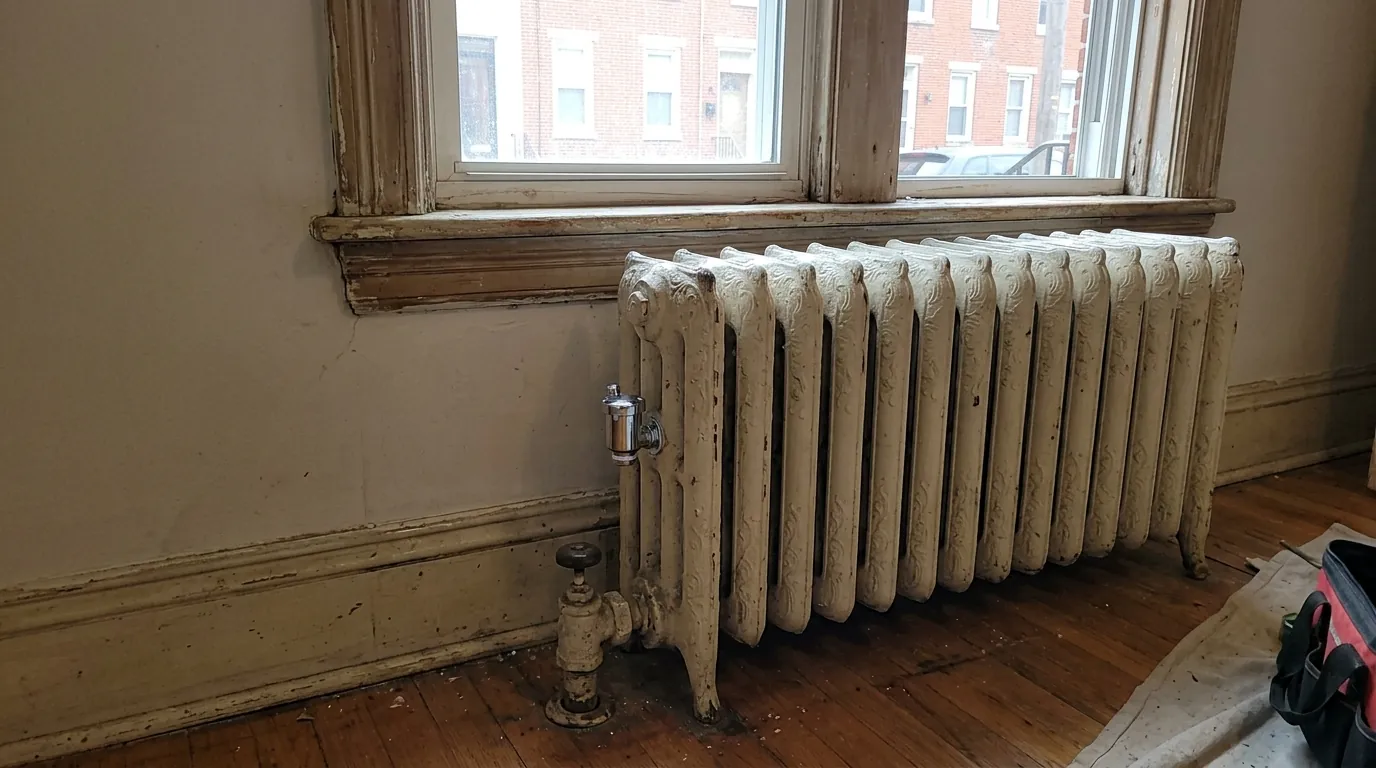
Updated October 2026
Radiator and baseboard problems in Philadelphia homes usually come down to air and valves. Steam radiators need working air vents to let steam in, hot water radiators and baseboard need air bled out, and old valves leak at the packing or the union. Most fixes happen at the radiator itself, not the boiler, and cost far less than boiler work.
Fixing heat at the radiator end
When a single room stays cold, the boiler is often fine. The problem sits at the radiator: a steam vent that no longer opens, a hot water radiator full of air, a valve that will not open or a baseboard loop that has lost flow. Those are smaller, cheaper repairs than boiler work, and they are where we start when only part of the house is cold.
We work on cast iron radiators, convectors and copper fin baseboard on both steam and hot water systems. If the trouble turns out to be at the boiler, boiler repair is the next step.
What a radiator repair costs comes down to the part
Most radiator repairs are small jobs. The price grows when joints are seized or a radiator has to be disconnected.
- Vents and bleedingSwapping steam vents or bleeding radiators is the smallest job.
- Valve repacking or replacementRepacking is quick; a new valve and union take longer, especially when the old one is seized.
- Draining the systemHot water work that needs the system drained adds time to refill and bleed.
- AccessRadiators behind built-ins or under painted-over covers take longer to reach.
Radiator Valve Leaks
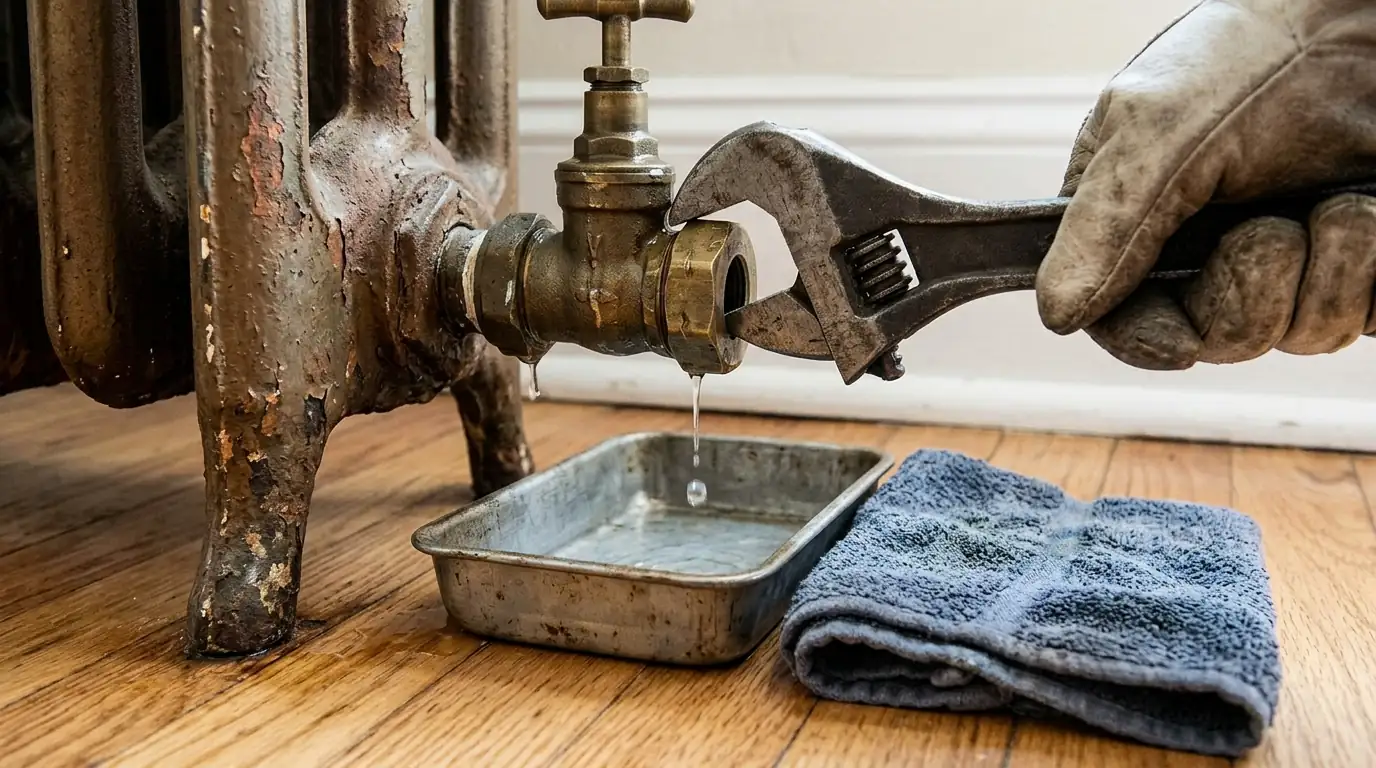
Radiator valves leak in two places. Water or steam at the stem means the packing has dried out, and fresh packing or a snugged nut often stops it. Water at the union, the nut joining the valve to the radiator, means the seating surfaces have corroded, and that joint has to be taken apart and cleaned or replaced. On steam radiators the valve belongs fully open or fully closed, because half open causes banging. We shut the system down, drain where needed, repack or replace the valve and union and check the radiator's pitch before refilling.
Air Vents and Bleeding
A steam radiator relies on the air vent on its side to let air out so steam can get in, then close when steam arrives. A vent that is painted over, clogged or stuck shut keeps the radiator cold; one stuck open hisses and spits. We replace failed vents and match vent speed to how far each radiator sits from the boiler, so the whole house heats more evenly. On hot water radiators the job runs the other way: air has to be bled out through a small valve at the top. Radiators that need bleeding over and over point to a pressure or air separation problem we trace at the boiler.
Cold Baseboard Loops
Copper fin baseboard on a hot water system stops heating when air blocks the loop, a zone valve fails or a circulator stops. Upper floors and the far end of a loop go cold first. We check whether the zone is calling for heat, whether the zone valve opens and whether water is moving, then purge the loop with fresh water through a purge valve to push trapped air out. Bent fins and blocked covers also cut heat output, so we straighten fins and make sure furniture and carpet are not choking the airflow along the floor.
Radiator tasks you can handle and ones to leave
Some radiator upkeep is a homeowner job. Steam and pressurized hot water can burn, so know where to stop.
| Task | Safe to do yourself | Call a plumber |
|---|---|---|
| Bleed a hot water radiator with a key | Yes, with the system cool and a cloth ready. | If no water comes out, or the air keeps returning. |
| Snug a packing nut on a weeping valve | Yes, a gentle turn only. | If it keeps leaking or the union leaks. |
| Swap a steam air vent | Yes, on a cold system with the boiler off. | If new vents do not fix the cold radiator. |
| Remove or move a radiator | No. They are heavy and the joints corrode. | Always. |
Clues at the radiator
Cold radiator with a hot boiler
A failed steam vent or an air-bound hot water radiator keeps the heat out.
Hissing or spitting from a steam vent
A vent that spits water is stuck open, or the radiator is pitched the wrong way.
Water dripping at the valve
The packing nut or the union under the valve is leaking.
Gurgling in baseboard pipes
Air trapped in a hot water loop makes noise and blocks flow.
How we work through a cold radiator
Find which rooms are cold
We walk the house and check each radiator or baseboard run for heat.
Check vents and air
Steam vents are tested; hot water radiators and loops are bled or purged.
Repair valves and joints
Leaking packing, unions and valves are repaired or replaced.
Balance the system
Vent sizes or balancing valves are set so heat arrives evenly.
Radiators in Philadelphia's older homes
Radiators are a fixture of older Philadelphia housing. The city's homes are older than the region's, with just over 40 percent built before 1940 versus about 22 percent regionwide, and many of those houses still carry their original cast iron radiators. A radiator like that can outlast several boilers, but its vents, valves and unions wear out along the way. Repairing them keeps a sound heating system working without tearing anything out, and it is often the cheapest heat improvement a house can get.
Questions about radiator & baseboard repair in Philadelphia
On steam, a failed air vent or a closed valve is the usual cause. On hot water, air trapped in that radiator keeps the water out.
No. Steam radiator valves should be fully open or fully closed. A half-open valve traps water and causes banging.
Air keeps getting into the system or is not being separated at the boiler. A pressure or air separator problem at the boiler is worth checking.
Leaks at valves and unions are usually repairable. A crack in a cast iron section generally means the radiator needs replacing.
Yes, though it means disconnecting the piping and repiping to the new spot. We can plan it alongside a larger job, such as a boiler replacement.