Updated October 2026
A plumbing inspection in Philadelphia looks closely at the parts general home inspections touch lightly: the water service line material, the house trap, the cast iron stack, the water heater and the sewer lateral to the street. We test, look and run a camera where needed, then give you findings in plain language so you can plan repairs or negotiate.
Looking past the surface of an older house
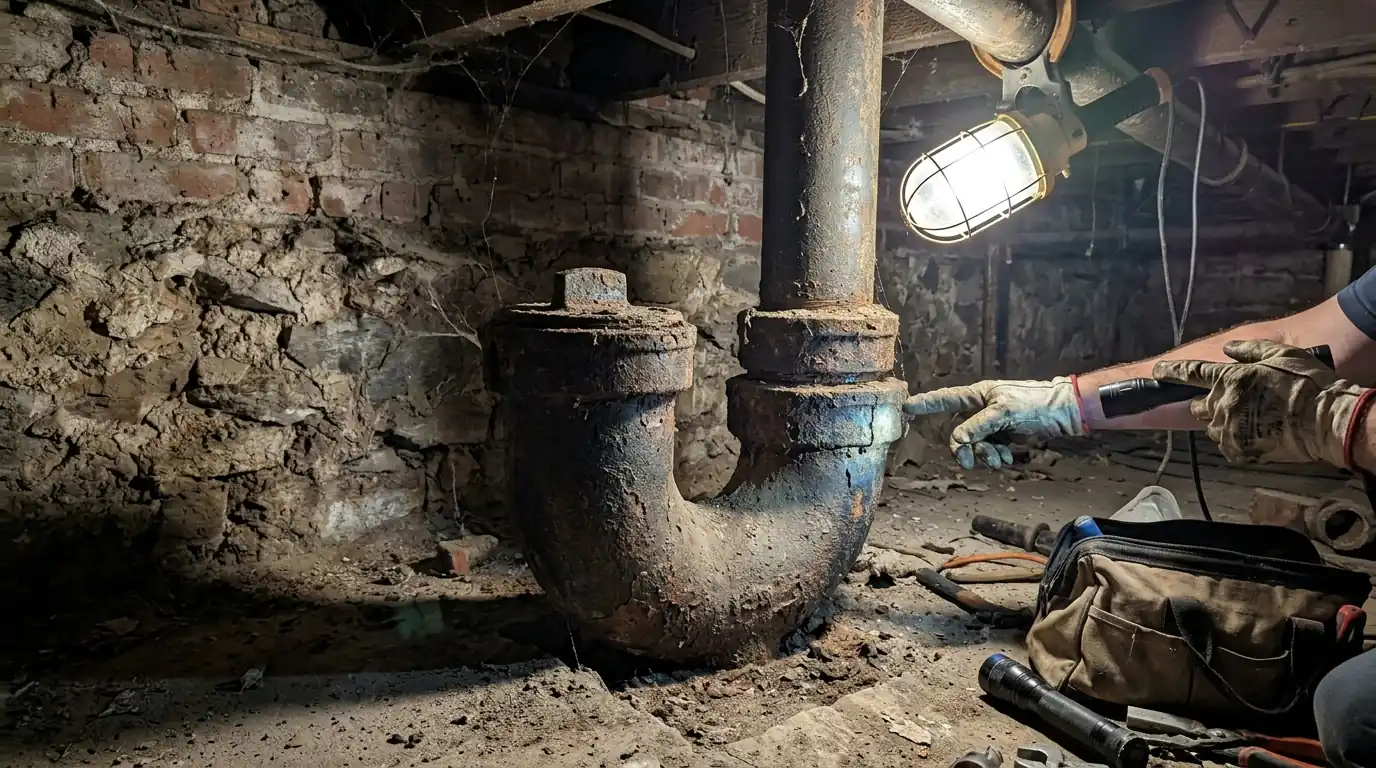
General home inspections cover a lot of ground and often stop at running the taps. In an older Philadelphia house, the expensive items are the ones you cannot see at a glance: a lead service line under the floor, a cracked house trap at the front wall, a rotted section of stack or a sagging clay lateral under the sidewalk.
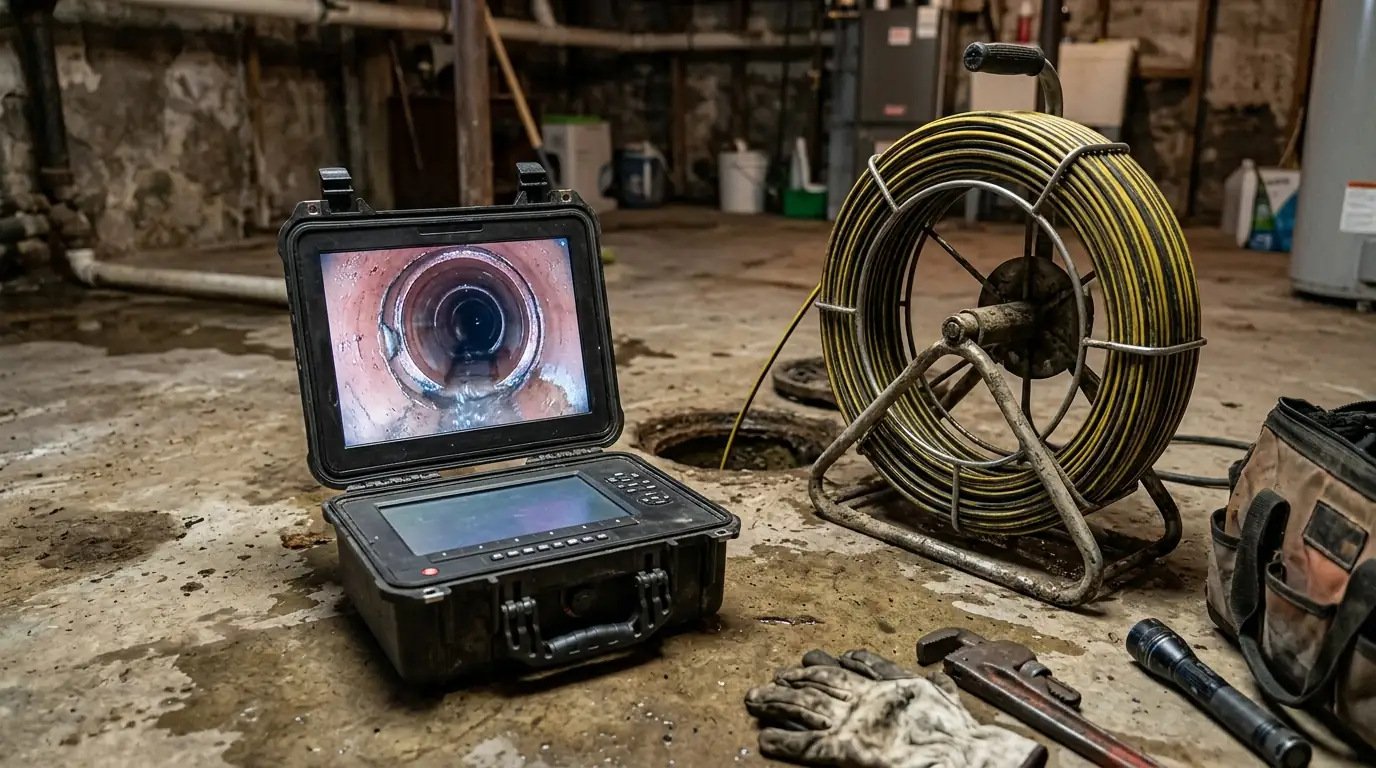
Our inspection goes after those. We check what we can see, test what we can test, and run a sewer camera down the lateral when there is access. If the service line turns out to be lead, our lead line guide lays out what comes next.
What a plumbing inspection covers
We work through the house in the same order every time, from the street side in.
- Service line material at the meter
- Main shutoff valve operation
- Supply pipe material and condition
- Water heater age, venting and relief valve
- Cast iron stack and drain lines where visible
- House trap, cleanout caps and fresh air vent
- Fixture leaks, drains and stop valves
- Exposed gas piping and appliance connectors
- Camera run through the lateral where accessible
Pre-Purchase Inspections
Buyers book a pre-purchase inspection inside their inspection window, while findings can still shape the deal. We identify the service line material at the meter, check the supply pipe, the water heater, the house trap and the stack, and run a camera through the lateral to the street. Findings come back in plain terms with photos and video, sorted into what needs attention now and what can wait. In older houses the biggest surprises are usually underground or behind plaster, which is why the camera and the meter check matter more than opening every faucet.
Pre-Listing Inspections
Sellers who inspect before listing get to choose what to fix and what to disclose, instead of reacting to a buyer's report under a deadline. We run the same checks a buyer's plumber would, so nothing in their inspection comes as a shock. Common findings in older homes are a missing cleanout cap, a dripping relief valve, leftover galvanized pipe or roots in the lateral. Some are quick repairs; others are better disclosed with a written price attached. Cost, the selling timeline and what buyers in your market expect decide the next step.
Annual Checkups
An annual checkup catches small problems before they turn into a midnight call. We look for slow leaks under sinks, a water heater heavy with sediment or near the end of its life, shutoff valves that will not close, toilets that run and drains starting to slow. In houses with a sump pump or a backwater valve, we test those too. You get a short list of what to fix now and what to keep an eye on. The checkup earns its keep in older houses, where cast iron and old valves wear quietly until the day they fail.
How an inspection visit runs
Start at the meter
We identify the service line material and test the main shutoff.
Work up through the house
Supply, drains, fixtures and the water heater are checked floor by floor.
Check the basement drains
The house trap, stack and cleanouts get a close look.
Camera the lateral
Where access allows, we run a camera out to the street connection.
Write it up
You get findings in plain language, with photos and footage.
What changes the cost of a plumbing inspection
Inspection pricing mostly comes down to the size of the house and whether a camera run is part of it.
- Size of the houseMore bathrooms and floors mean more to check.
- Sewer cameraRunning a camera through the lateral adds time and equipment.
- AccessFinished basements can hide the trap and stack, which takes longer to reach.
- Number of unitsMulti-unit buildings need each unit checked.
- Report detailPhotos and video are worth having in a negotiation and take time to prepare.
What older Philadelphia houses tend to hide
In Philadelphia County, 41 percent of homes date from 1939 or earlier. When PWD looked at two blocks in Northeast Philadelphia, it found lateral or vent problems at 48 of the 80 homes, each of which has separate storm and sanitary laterals and vents. The owner is responsible for the water service line and those laterals out to the mains in the street. A buyer takes all of that on at closing, which is why we check the underground lines as carefully as the fixtures.
Same checks, three different reasons
The inspection is the same work. Who books it, and why, changes what the findings are used for.
| Inspection | Who books it | What it helps with |
|---|---|---|
| Pre-purchase | Buyers | Finding costly problems before closing |
| Pre-listing | Sellers | Fixing or disclosing issues before buyers find them |
| Annual checkup | Owners | Catching wear early and planning upkeep |
Questions about plumbing inspection in Philadelphia
A home inspection covers the whole house at a general level. A plumbing inspection goes deeper on the supply, drains, water heater, service line and lateral.
It helps. You see what we find as we find it and can ask questions on the spot. If you cannot attend, the photos and video cover it.
We can price the repairs we would do, so you have real numbers to bring to a negotiation.
Yes. We check each unit plus the shared systems, such as water heaters and the main drain, and note which unit each finding belongs to.
That is a finding in itself. A blockage or collapse that stops the camera is something you want to know about before closing, and it may point to lateral repair.