Updated October 2026
Drain cleaning in Philadelphia homes usually means clearing one branch line, such as a kitchen sink, a tub or a floor drain, rather than the main sewer. We run a cable sized to that pipe through the trap or a cleanout, pull back the clog and run water to confirm it flows. If several fixtures back up together, the problem is further down the line.
How to tell a branch clog from a main line problem
Only one fixture is slow
A single sluggish sink or tub points at its own trap or drain arm, not the sewer.
Gurgling from a nearby drain
When the tub burps as the sink empties, the two share a line and air is fighting past a partial clog.
The floor drain fills on wash day
If the basement floor drain rises when the washer pumps out, the blockage sits low in the house and may be in the main.
Why branch drains clog and how we clear them
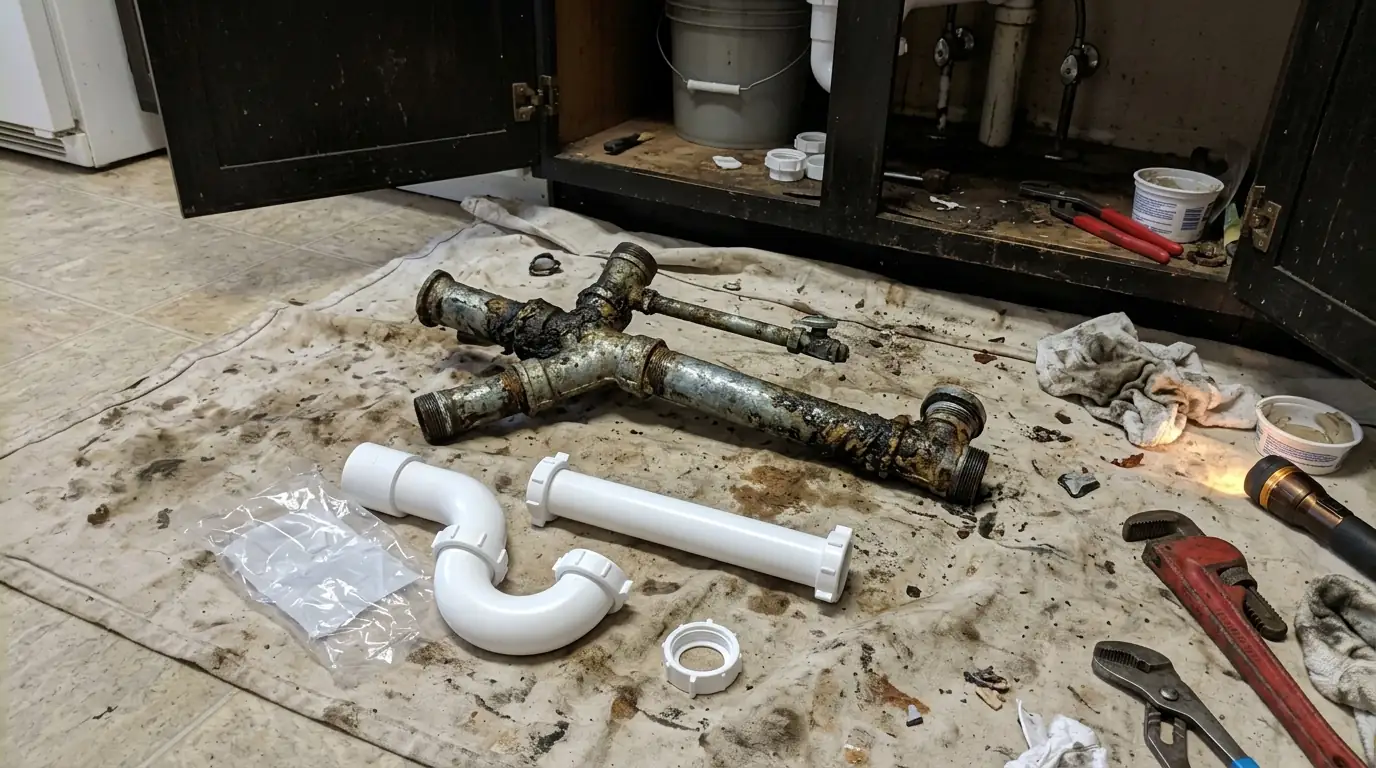
Most clogs sit within a few feet of the fixture: a kitchen arm packed with grease, a tub trap wound with hair, a toilet trapway holding something never meant to be flushed. In older houses those branch lines are often galvanized or cast iron, and their walls roughen with age.
We pick the tool for the pipe: a small drum cable for a lavatory or tub, a heavier machine for a kitchen line, a closet auger for a toilet. When a branch keeps clogging, we suggest jetting the line or a look with a camera before anyone pays for the same cleaning twice.
Kitchen Sink Clogs
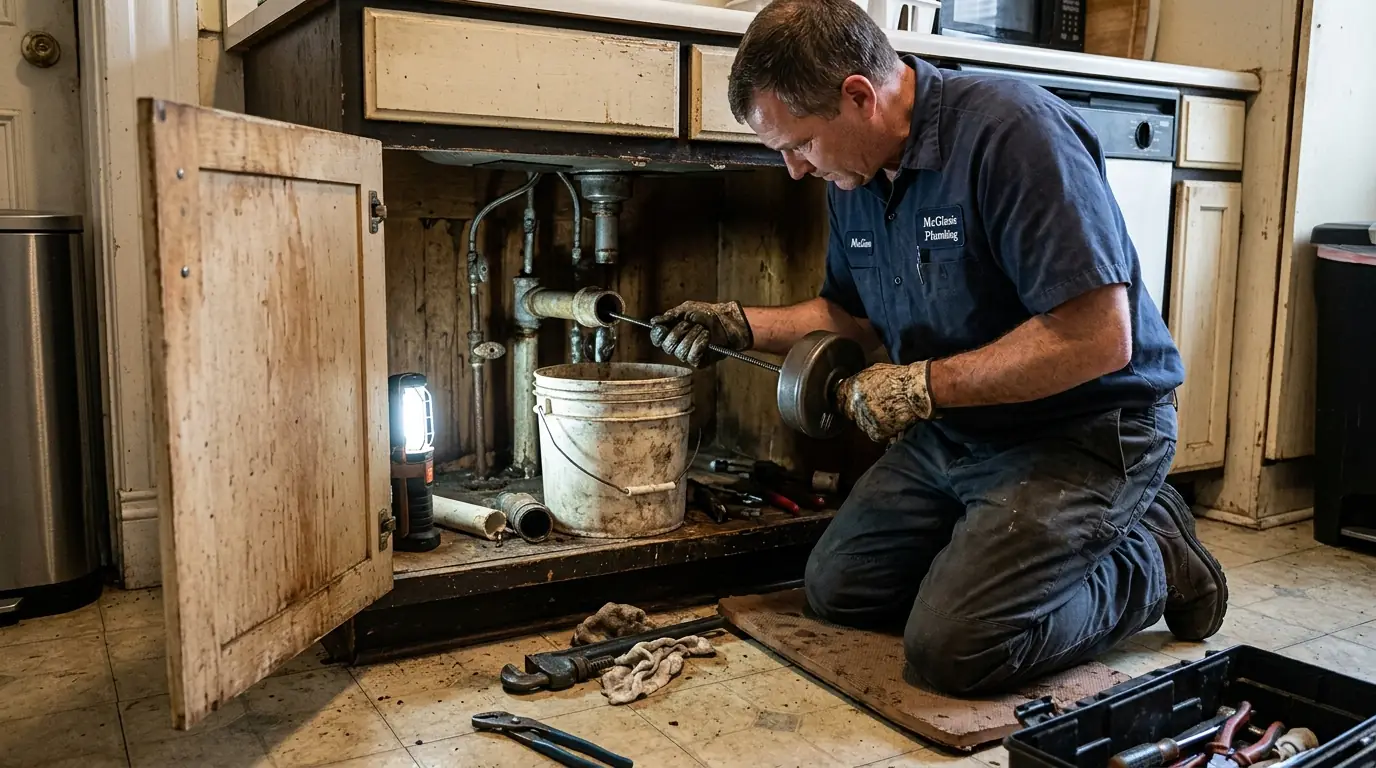
A kitchen sink that empties slowly on one side, or fills the other bowl when the dishwasher drains, has grease and food packed into the drain arm behind the wall. Hot water moves it for a while, then it sets again. We pull the trap, run a cable through the arm and scrape the walls as we go. What decides the approach is how far the grease has traveled: a short arm clears from under the sink, but a long run across a back addition may need a cleanout opened or the line jetted.
Tub and Shower Drains
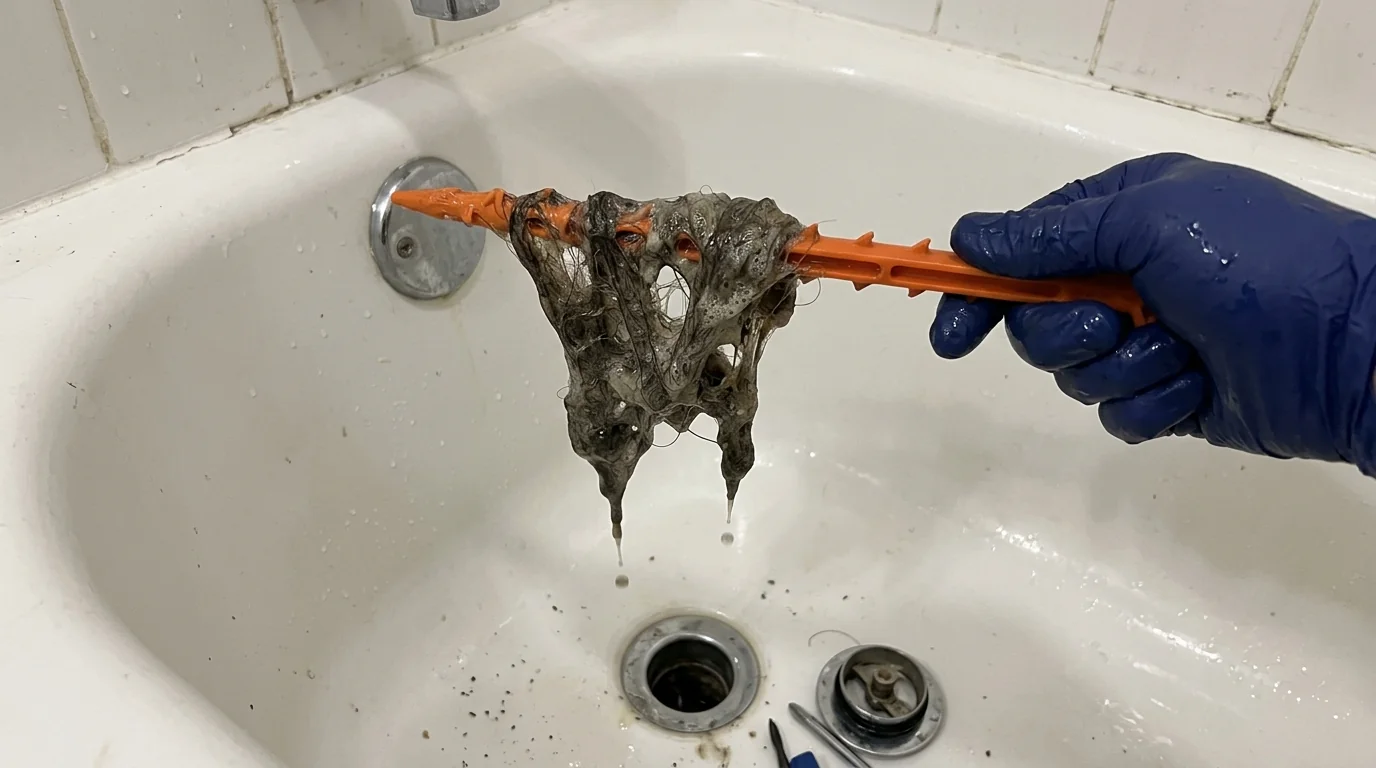
Standing water around your ankles by the end of a shower means hair and soap scum have built a mat in the tub trap, or in the drum trap some older bathrooms still hide under the floor. We remove the stopper, cable through the overflow when that gives a straighter path and pull the mat out whole. An old drum trap often has a seized cover or one buried under tile. Swapping it for a proper P-trap ends the repeat visits.
Basement Floor Drains
Water pooling around the floor drain after the washer runs, or seeping up during a storm, says something about the lines under the slab. Sometimes it is only silt and lint in the drain. Other times the floor drain is just the lowest opening in the house, showing a blockage further down. We clear the drain and its trap, then check whether water from the main is pushing back. If it is, the real fix is a main line cleaning.
Toilet Clogs
A toilet that rises to the rim and drains slowly, or needs two flushes every time, has a partial blockage in the trapway or the closet bend below it. Wipes, paper towels and small toys are the usual culprits. We start with a closet auger, which turns through the porcelain without marking it. If the object will not come back through the bowl, we pull the toilet, push it out from the flange side and reset it on a new wax ring. Repeat clogs can mean a cracked trapway.
How a drain call runs from start to finish
Ask which fixtures are affected
Which drains are slow tells us whether to work at the fixture or further down.
Protect the area
Covers go down and a bucket goes under the trap first.
Clear with the right cable
Sized to the pipe and fed through the trap, overflow or nearest cleanout.
Show you what came out
Grease, hair, a wipe or roots each say something about a repeat.
Run water and check the joints
We run the fixture hard and look over every joint we disturbed.
Old drain lines in Philadelphia homes
Just over 40 percent of Philadelphia homes were built before 1940, against about 22 percent across the region. Houses that old often still drain through galvanized arms and cast iron that narrow and roughen over the decades. Add combined sewers serving about 60 percent of the city, and a basement floor drain can act up for reasons unrelated to the sink. We sort out which it is first.
What changes the cost of clearing a drain
Most branch clogs are a short job. The price moves with where the clog sits and how hard it is to reach.
- Which fixtureA bathroom sink clears from the trap; a kitchen line takes a heavier machine.
- AccessSealed vanities and painted-over cleanout plugs add time.
- What the clog is made ofHair pulls out quickly; hardened grease may need more than one pass.
- Whether the toilet has to come upPulling and resetting a toilet adds a wax ring and labor.
Clogs you can try first, and where to stop
Plenty of owners clear a sink trap themselves. The trouble starts with chemicals.
| Task | Safe to do yourself | Call a plumber |
|---|---|---|
| Plunge a sink or toilet | Yes. Use a flange plunger on toilets. | If two tries do not move it. |
| Pull hair out of a tub strainer | Yes. A plastic hair tool works. | If water still stands afterward. |
| Pour chemical drain opener | No. It sits in the trap and splashes when the line is opened. | Tell us if any went in before we open the trap. |
Questions about drain cleaning in Philadelphia
We advise against it. Caustic openers sit in the trap when they fail and leave a hazard for whoever opens the line next. A plunger or hand cable is safer.
Grease cools and sticks to the drain arm, and each layer catches food. Clearing it opens a path, but the coating stays unless the line is scraped or jetted.
Usually yes. A closet auger reaches through the bowl and trapway. We only pull the toilet when something solid is stuck.
It is the lowest drain in the house, so it shows trouble in the building drain or sewer first. If it fills after rain, read our basement backup guide.
Yes. Our phones are answered 24/7, and we clear drains at any hour when a backup cannot wait.