Updated October 2026
Cast iron stack replacement in Philadelphia rowhomes swaps out the vertical drain that carries every toilet and sink down to the basement. Old stacks crack along their seams and rot through at the bottom, causing leaks, smells and stains. We support the pipe above, cut out the bad section, install new pipe and reconnect the branches, from a single basement length to a full stack.
How stacks fail and how they are replaced
The stack is the vertical spine of a house drain system. It runs from the basement up through the walls to a vent on the roof, and every bathroom and kitchen branches into it. Cast iron lasts a long time, but water runs down its inside wall for decades, and the seams of vertical pipe and the bottoms of horizontal runs wear through first.
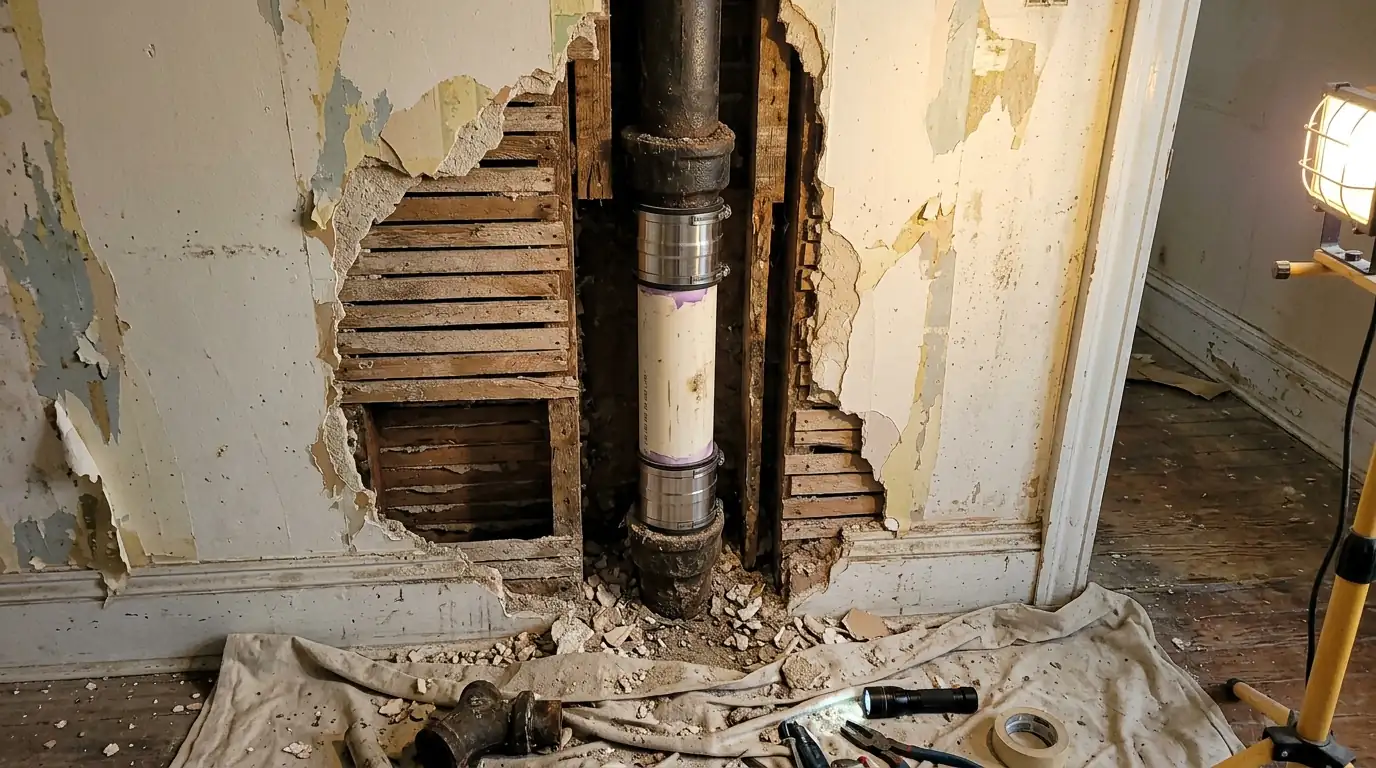
Replacement is done in sections. We clamp the pipe above the cut so its weight is carried, remove the failed length and fit new pipe joined to the remaining cast iron with heavy couplings. Whether to replace one length or the whole stack depends on what the rest looks like once a section is open. Our stack warning signs guide covers what to watch for in the meantime.
What a stack replacement price depends on
No two stacks cost the same, because access and length vary from house to house. We price it once we have seen where the pipe runs.
- How much pipe is replacedA basement bend is a smaller job than a full run to the roof.
- Access through finished wallsPlaster, tile and built-ins over the stack add opening and patch work.
- Number of branchesEach bathroom and kitchen tied into the stack is another connection to make.
- Roof vent workA new vent through the roof needs proper flashing.
- Inspection timingWhen the job needs a permit, the inspection has to fit into the schedule before walls are closed.
Cracked Stack in a Wall
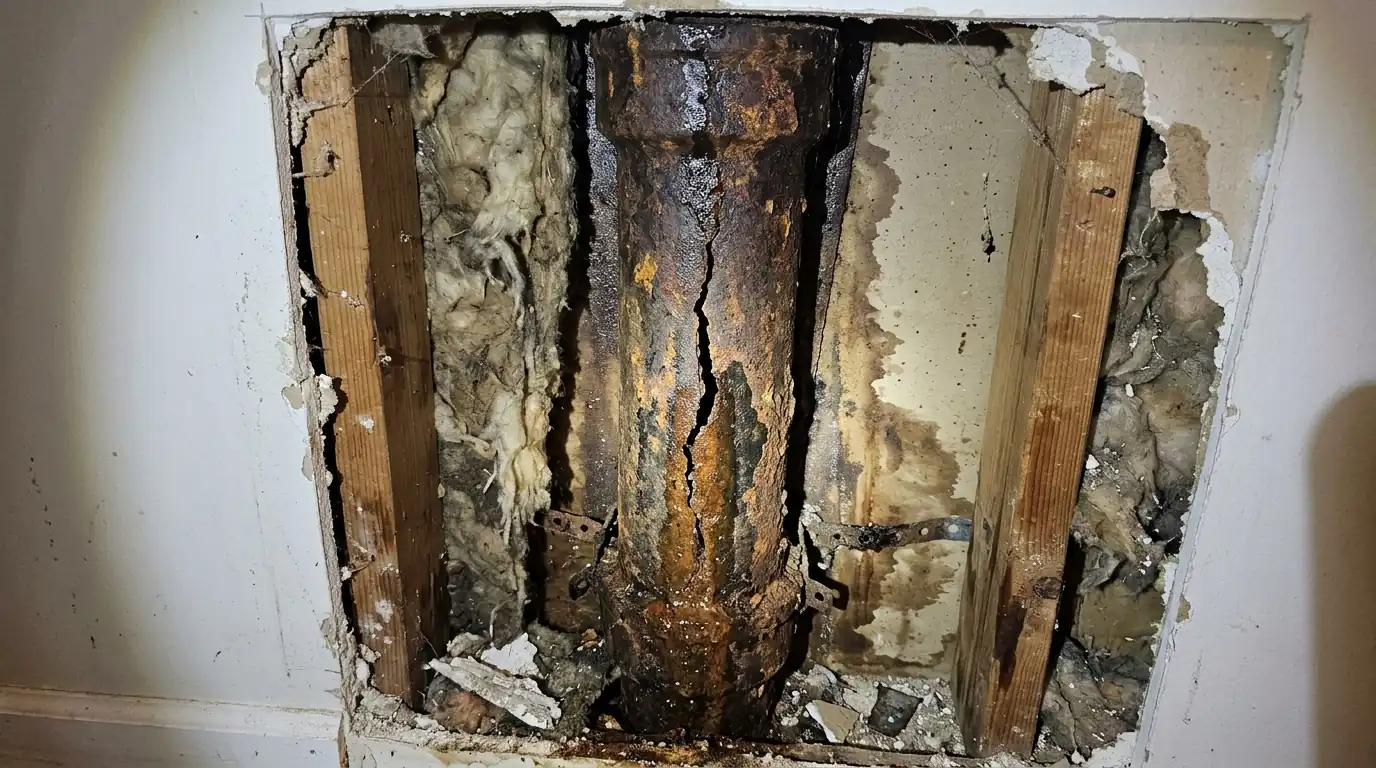
Most owners first notice a stain on a ceiling or wall below a bathroom, or a sewer smell inside a closet. Opening the wall usually shows a vertical crack running along the pipe, sometimes long enough that it weeps every time a toilet flushes. We cut an access big enough to work, support the stack above and below, and replace the cracked length with new pipe and couplings. The pipe on either side decides the extent: if it rings solid and has clean walls, we stop there; if it is thin, we keep going.
Rotted Basement Section
The base of the stack, where it turns to run horizontally toward the front wall, takes the hardest wear. Water sits in the bottom of that bend and eats through it from the inside. The first sign is often a damp spot on the floor that never dries, or a pinhole that weeps during a shower upstairs. We replace the bend and the horizontal run back to sound pipe, add a cleanout where none existed and, where the house still has one, tie in cleanly at the house trap so the whole basement run is sound.
Full Stack to the Roof
When cracks show on several floors, or a basement repair reveals pipe that is thin all the way up, piecing it together stops making sense. A full replacement runs from the basement to the roof vent, with every branch reconnected on the way. In a rowhome the stack often sits in a party wall or a tight chase, so access is the planning problem. We look at where walls can be opened with the least finish work, which floors can share an opening, and how the roof penetration will be flashed when the new vent goes through.
What a stack replacement includes
Replacing a stack touches every floor, so the job covers more than the pipe itself.
- Support clamps installed above every cut
- Old cast iron cut out and carried out of the house
- New drain and vent pipe sized and installed
- Each toilet, tub and sink branch reconnected
- Transition couplings where new pipe meets sound cast iron
- Cleanout added at the base where one is missing
- Water test before walls are closed
- Permit and inspection when the work requires them
What a failing stack looks like
Rust streaks or flaking on the pipe
Scale lifting off the outside often means the wall has thinned underneath.
A crack along the length of the pipe
Cast iron tends to split along its seam, often on the side facing the wall.
Sewer smell inside a wall or closet
Gas is escaping through a crack you cannot see.
Water stain on a ceiling under a bathroom
A cracked hub or fitting is leaking behind the finish.
Replacing a stack without dropping the pipe above
Find the failure
A visual check, a water test and a camera tell us how much pipe is failing.
Open and support
We open the wall or ceiling where needed and clamp the stack above every planned cut.
Cut out the old cast iron
A snap cutter or saw removes the bad length in pieces that can be carried out.
Install and reconnect
New pipe goes in, branches are tied back and couplings join it to sound cast iron.
Test before closing up
We run water from each fixture and check every joint before the wall is closed.
Why so many Philadelphia stacks are due
In Philadelphia County, 41 percent of housing units were built in 1939 or earlier, nearly twice the share of any other county in the region, and only 15 percent were built since 1980. Many of those older homes still drain through original cast iron, or through stacks repaired piece by piece over the years. That age is why we look past the crack you called about and check the rest of the stack while the wall is open.
Questions about cast iron stack replacement in Philadelphia
It varies with water, use and how the pipe was installed. Many stacks in older Philadelphia homes are still original, which is why age alone does not decide replacement. Condition does.
Wraps and epoxy can slow a weep for a while, but cast iron that has cracked once usually cracks again nearby. Replacing the cracked length is the lasting fix.
Usually PVC or new cast iron, depending on what the job needs. Cast iron is quieter inside walls next to bedrooms, and PVC is lighter to handle. We go over the choice with you.
Some opening is almost always needed to reach the stack. We plan the openings to keep finish work small and show you where they will be before we start.
Not the fixtures draining into the section being replaced. We plan the order so you know which bathroom is out and when. A camera look down the stack beforehand helps keep that window tight.