Updated October 2026
Most toilet problems in Philadelphia homes come down to three parts: the flapper, the fill valve and the wax ring under the bowl. A running toilet usually needs a new flapper or fill valve. Water at the base means the seal or the closet bolts have failed. A weak flush often traces to mineral scale in the rim holes or a partial clog.
What your toilet is telling you
Refilling on its own
A tank that tops itself up every so often is losing water past the flapper into the bowl, even when you cannot see it moving.
Water on the floor after flushing
A puddle that appears after each flush, not between flushes, points at a failed wax ring rather than a sweating tank.
A brown ring on the ceiling below
Many rowhome bathrooms sit over the kitchen, and a stain there often starts at the toilet base above.
Which toilet part fails, and how we tell
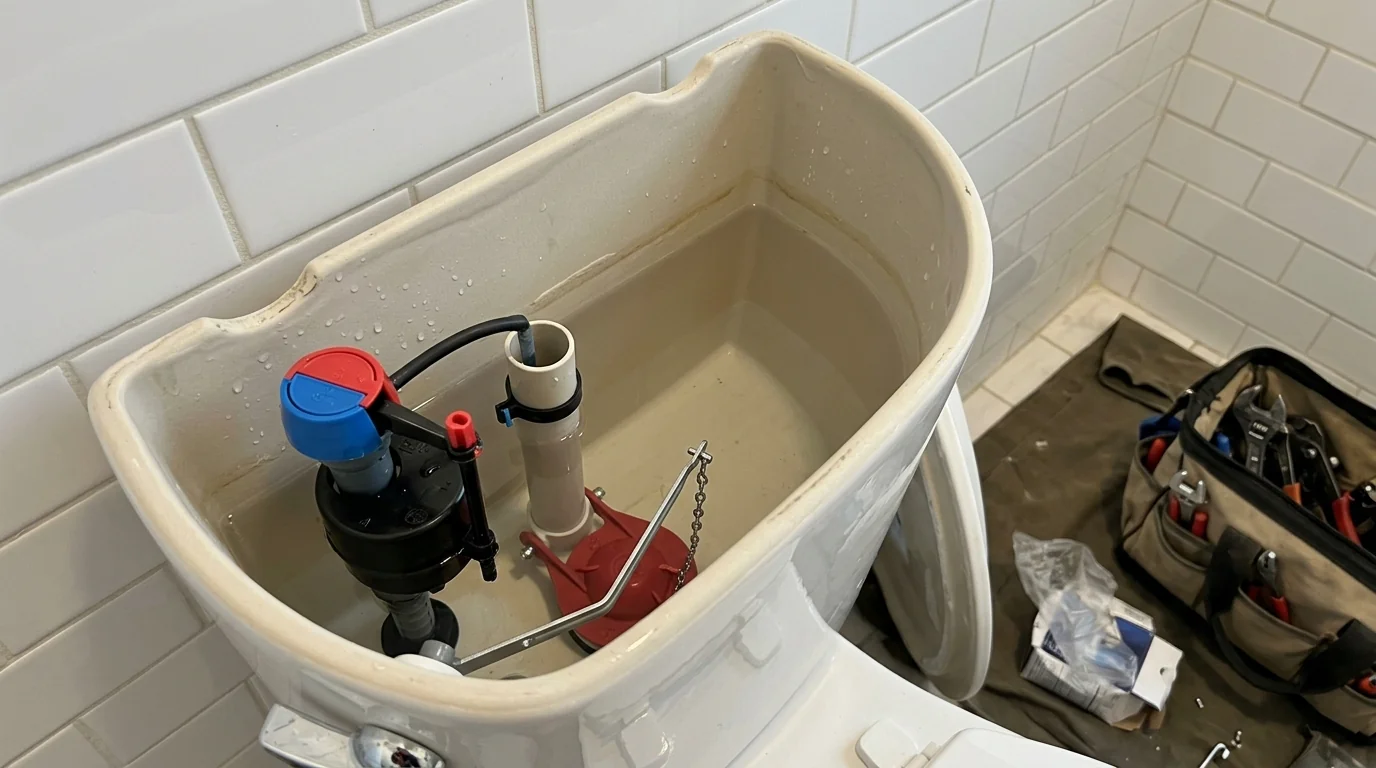
A toilet has few moving parts. The flapper seals the bottom of the tank, the fill valve refills it, and the wax ring seals the bowl to the flange in the floor. Each fails in its own way, and we test them in that order before replacing anything.
We repair Kohler, American Standard, Toto and Gerber toilets among others, matching flapper size and fill valve height to the tank. A toilet that keeps clogging rather than leaking may need a drain clearing visit instead of new tank parts.
Running Toilets
A toilet that runs on and off, or never stops, is sending water down the overflow tube or past the flapper. Press the flapper down with a finger; if the noise stops, the flapper is warped or the seat under it is pitted. If water keeps spilling into the overflow, the fill valve is set too high or will not shut off. We fit a flapper sized to the flush valve opening and replace or adjust the fill valve. Scale on an old flush valve seat can make even a new flapper leak, so on older tanks we replace the flush valve itself.
Leaks at the Base
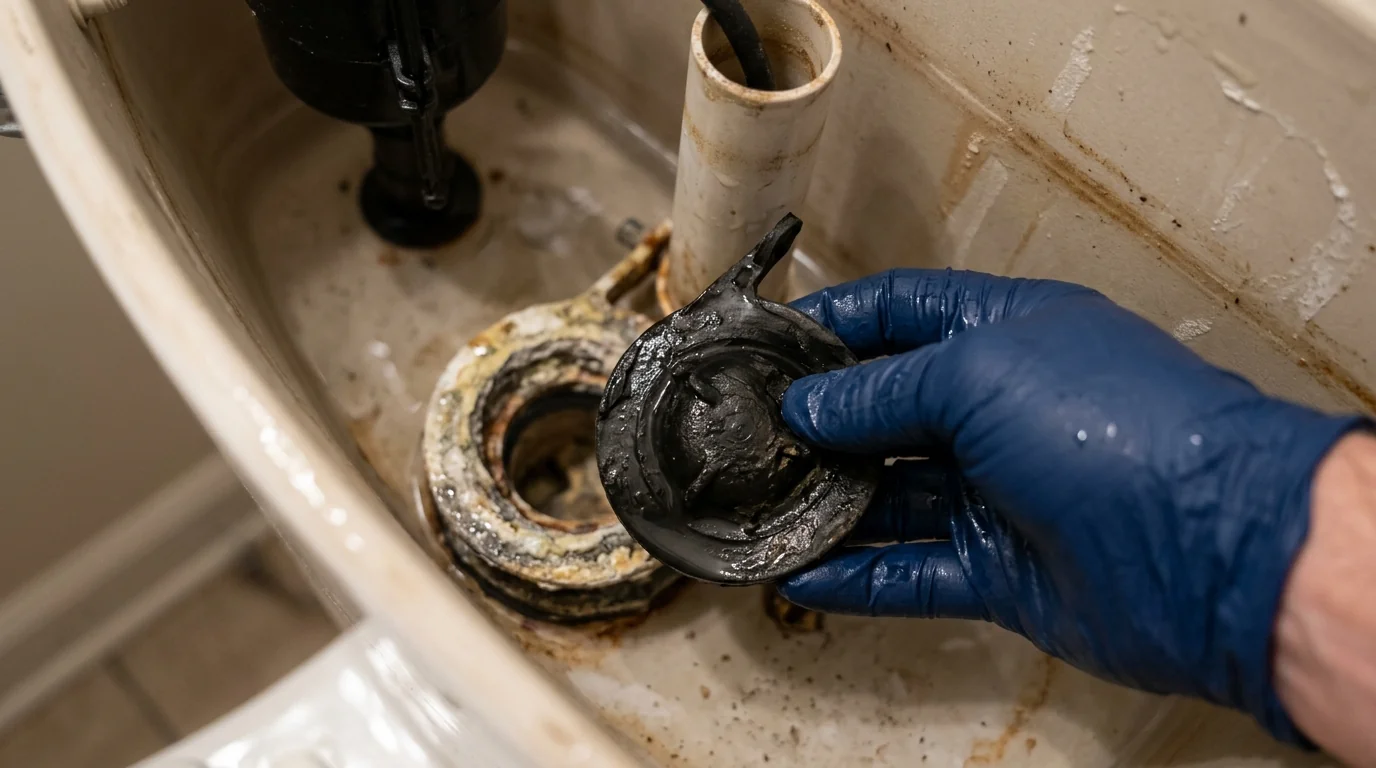
Water around the bowl after flushing usually comes from the wax ring, the seal between the toilet horn and the closet flange. A sweating tank, a hairline crack or a loose supply nut can look similar, so we dry everything and use dye to see where water shows up. When the seal is to blame, we pull the toilet, scrape off the old wax, check the flange and set the bowl on a new ring with fresh closet bolts. If the flange is cracked or sits below the finished floor, a repair ring or spacer goes in first, or the new seal fails the same way.
Weak Flushes
A bowl that drains sluggishly, leaves paper behind or needs a second try has lost either water or flow. A low tank level comes from a fill valve or float set too low. Scaled rim holes and a crusted siphon jet slow the flush even with a full tank, which is common where water runs hard. A partial trapway blockage behaves much the same. We check the tank level, clear the rim and jet openings and run a closet auger through the trapway before looking past the toilet.
How a toilet repair visit goes
Watch a full flush
We note when the noise or leak happens, then lift the lid and watch the tank empty and refill.
Test with dye
Food coloring in the tank reveals a silent flapper leak in the bowl, or a seal leak on the floor.
Replace the failed part
Flapper, fill valve, flush valve, tank bolts or wax ring, matched to your tank and bowl.
Recheck after several flushes
We look at the base and supply connection for drips and set the water to the line in the tank.
Hard water and Philadelphia toilet tanks
Philadelphia water is moderately hard to hard. PWD's 2024 water quality report lists one-year hardness averages of 98 ppm at the Baxter plant, 152 ppm at Belmont and 168 ppm at Queen Lane. That mineral content leaves scale on fill valve seals, flush valve seats and the small holes under the bowl rim, which is why a running toilet or a weak flush is such a common call here.
Toilet repair prices depend on the part
Tank parts are inexpensive. The bigger variable is whether the toilet has to come off the floor.
- Tank part or bowl sealA flapper or fill valve swap stays inside the tank. A wax ring means pulling and resetting the whole toilet.
- Supply stop and lineA seized stop or brittle supply tube is worth replacing while the water is off.
- Flush valve conditionA scaled or cracked flush valve requires splitting the tank from the bowl and new gaskets.
- The flange underneathA broken or low flange needs a repair ring, spacer or new flange before the bowl goes back.
Toilet fixes you can try first
Tank parts are one of the few plumbing repairs many owners take on. The bowl seal is where it gets messy.
| Task | Safe to do yourself | Call a plumber |
|---|---|---|
| Replace a flapper | Yes, if you match the size and close the stop first. | If the new flapper still leaks or the seat is scaled. |
| Clear scale from the rim holes | Yes, with a bent wire and vinegar. | If the flush stays weak afterward. |
| Adjust the float or water level | Yes. Set it to the line marked inside the tank. | If the fill valve keeps running after adjustment. |
Questions about toilet repair in Philadelphia
Water seeps from the tank into the bowl, usually past a worn flapper, until the fill valve tops it up. A dye test confirms it, and a new flapper or flush valve stops it.
Yes. A leak through the overflow or flapper runs around the clock. If you suspect a leak you cannot find, our meter test guide shows how to check with the house quiet.
It is not a flood, but stop using that toilet if you can. Water under a toilet soaks the subfloor and can stain the ceiling below first.
Yes. Old multi-turn stops often seize or drip once moved, so we swap them for quarter-turn stops during the repair.
If the china is sound and parts are available, repair is usually the better value. A cracked tank or bowl, constant clogging or discontinued parts are good reasons to look at a new toilet.