Updated October 2026
Most shower valve problems in Philadelphia homes are fixed from the front by replacing the cartridge or the stems and seats, with no tile removed. A dripping showerhead, a stiff handle or a sudden swing to hot usually points to a worn or scaled cartridge. Old valve bodies with no parts available, or with leaks inside the wall, need replacement through the tile or an access panel.
Inside the wall behind your shower handle
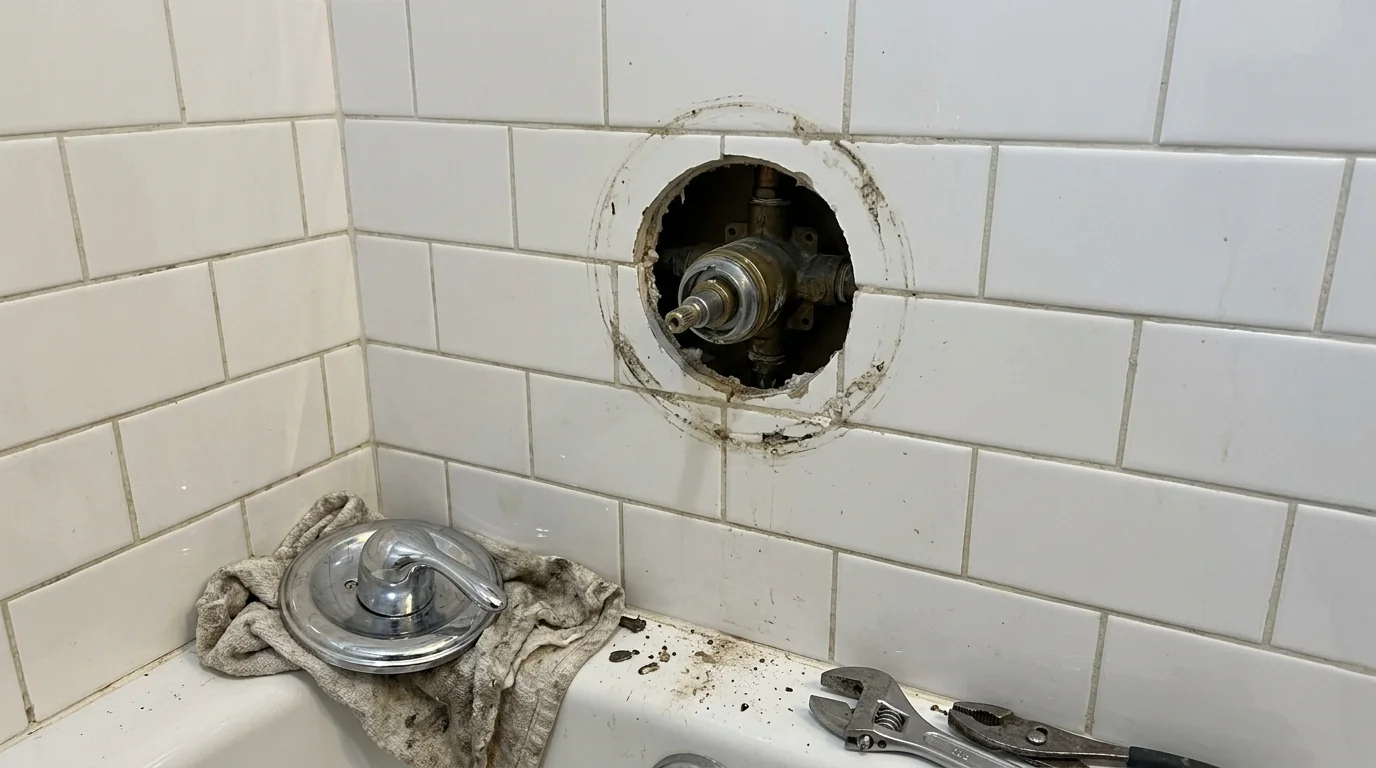
Behind the trim plate sits a brass valve body with a cartridge or stems that do the mixing. Modern single-handle valves from Moen, Delta, Kohler and Symmons use one cartridge. Older two- and three-handle setups use separate stems with washers and seats. Knowing which one you have tells us how much of the job happens from the front.
A sound body with available parts gets rebuilt. A cracked, leaking or orphaned body gets replaced, through the tile, from a closet behind the wall, or as part of a bathroom remodel.
What changes the price of shower valve work
The line between a modest repair and a larger one is the wall. Work from the front costs far less than opening tile.
- Front repair or behind the wallCartridge and stem work stays in front; body replacement means opening the wall.
- Valve brand and ageCurrent cartridges are easy to match. Orphaned valves may need a new body.
- Access from behindA closet or room on the other side of the wall saves tile.
- Tile and wall finishOpening tile means patching, or a trim plate large enough to cover the cut.
Cartridge Replacement
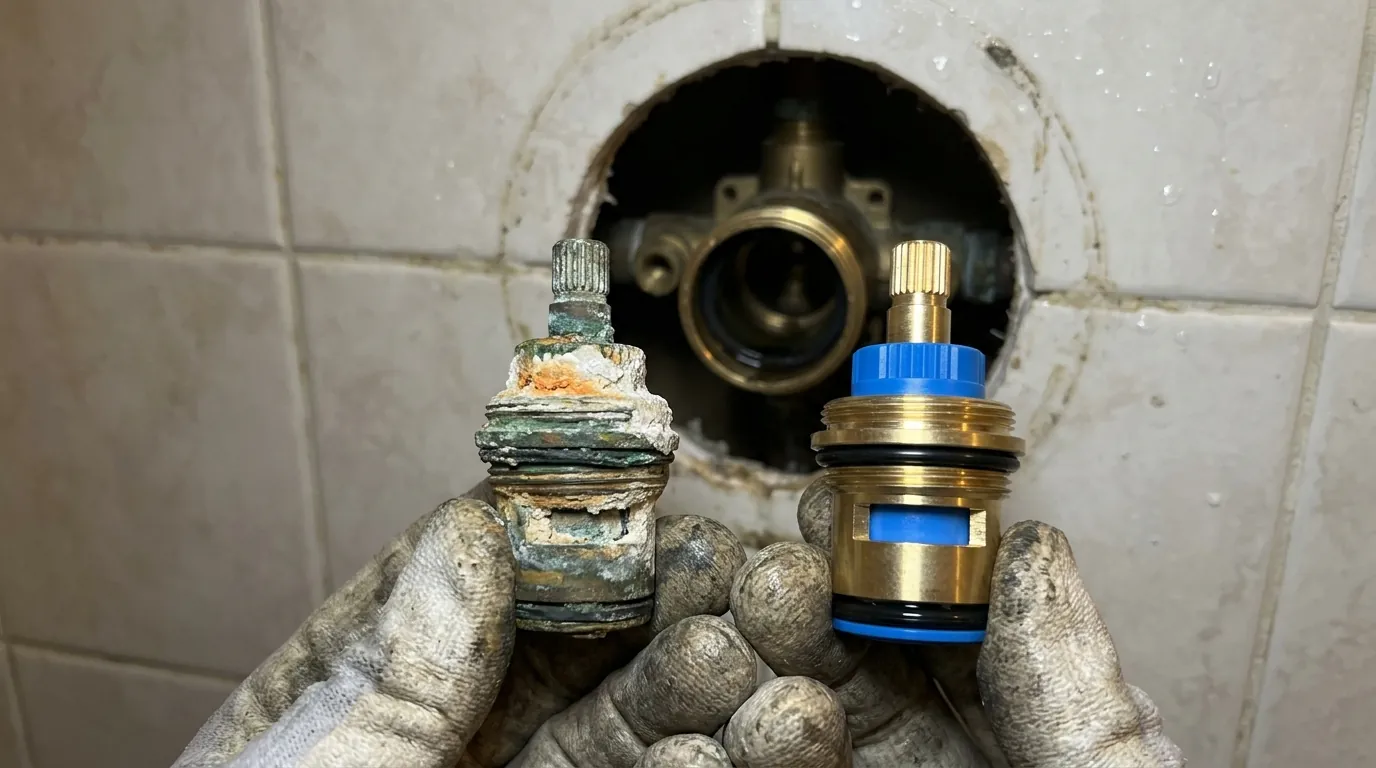
A single-handle shower that drips after shutoff, turns stiffly or will not get as hot as it used to almost always needs a new cartridge. We shut the water, pull the handle and trim, remove the retaining clip or nut and draw the old cartridge out with a puller, since twisting it out with pliers can crack the body. We clean scale from the bore so the new one seats squarely, then set the limit stop so the handle cannot reach a scalding position. What decides this repair is whether the maker still offers the cartridge and whether the body bore is clean enough to seal against.
Old Two-Handle Valve Bodies
Two- and three-handle valves drip when their washers harden and their brass seats wear. Many can be rebuilt with new stems, washers and seats, and we try that first when parts can be matched. The trouble comes when the stems are seized into the body, the threads are stripped, or the maker disappeared decades ago. These valves also lack pressure balancing, so a flushed toilet can send a burst of hot water through the head. When rebuilding no longer makes sense, we replace the body with a single-handle pressure-balancing valve and cover the old handle holes with a wide trim plate or a tile patch.
Diverter Problems
On a tub and shower, the diverter sends water up to the showerhead. When it wears, water keeps pouring from the spout during a shower, and the head runs weak. The fix depends on the type. A lift gate on the tub spout is a spout replacement, matched to whether the spout slips on or threads onto the pipe. A third handle between the hot and cold is a diverter stem with its own washer and seat. A diverter built into a single-handle valve is part of the cartridge. We identify which one you have before ordering parts.
When a shower valve is wearing out
A drip from the showerhead or tub spout
Seals in the cartridge or stem are no longer closing fully.
A hot surge when a toilet flushes
The valve has no working pressure-balance spool, or the spool is scaled.
A handle that turns past its old stop
The rotation limit stop has slipped or the cartridge is worn.
A stain or soft spot below the shower
A leak at the valve body or shower arm inside the wall often shows downstairs before it shows in the bathroom.
Repairing a shower valve without guesswork
Identify the valve
With the trim off, we read the body and cartridge markings to find the maker and model.
Shut the water
Integral stops on the valve if it has them, otherwise the fixture or main shutoff.
Pull the cartridge or stems
Stubborn cartridges come out with a puller so the body is not damaged.
Clean and rebuild
Scale removed from the body, then new cartridge, seats, springs or washers fitted.
Set temperature and test
Limit stop set to a safe maximum, then the valve run at every position and checked for drips.
How long the shower is out of use
A cartridge or stem rebuild needs the water off only while parts are swapped, and the shower works again once tested. A valve body replacement is different. The house water is off while the old valve is cut out and the new one is soldered or crimped in, and the shower stays out of use until the tile or access panel is closed and any grout or adhesive has set.
In a one-bathroom home, that difference often decides the approach: owners with a second shower replace the body now, while others rebuild and plan the valve change for a future remodel.
Old valves and hard water in Philadelphia showers
With 41 percent of Philadelphia County housing built in 1939 or earlier, plenty of showers here still run through two- and three-handle valves that predate pressure balancing. Add water that PWD reports as moderately hard to hard, averaging as high as 168 ppm at the Queen Lane plant, and scale finishes what age started: stems seize, seats pit and cartridges stick. That combination is why, on a Philadelphia shower call, we confirm parts exist for the body before recommending a rebuild over a replacement.
Questions about shower valve repair in Philadelphia
Flushing drops the cold pressure, and a valve without working pressure balancing lets hot water surge in. Modern single-handle valves include a balancing spool; older ones do not. If pressure is weak everywhere in the house, that is a separate water pressure problem.
Often, if the wall behind the shower is a closet or a room we can open instead. Otherwise we cut the smallest opening the job allows and cover it with an oversize trim plate where possible.
It may be the wrong cartridge, or scale in the body is keeping it from seating, which is why we clean the bore first.
Usually. A spout dripping with the shower off means the valve is passing water.
New trim has to match the body underneath. If the maker no longer offers trim for your body and you want a different look, a new valve is the way to get it.