Updated October 2026
Gas line installation in Philadelphia means extending your existing gas piping to a new range, dryer, grill or heater, sized for everything the system feeds. We plan the route, run black iron or flexible stainless tubing, fit a shutoff valve at the appliance and pressure test the new piping before the gas goes on. Permits are pulled when the work requires them.
Adding a gas appliance the right way
Every gas system is sized for the appliances it was built to feed. Adding a range or dryer means more gas flowing through the same pipe from the meter, so we add up the load of everything on the system before teeing in anywhere. A line too small for the new total starves the appliance furthest away.
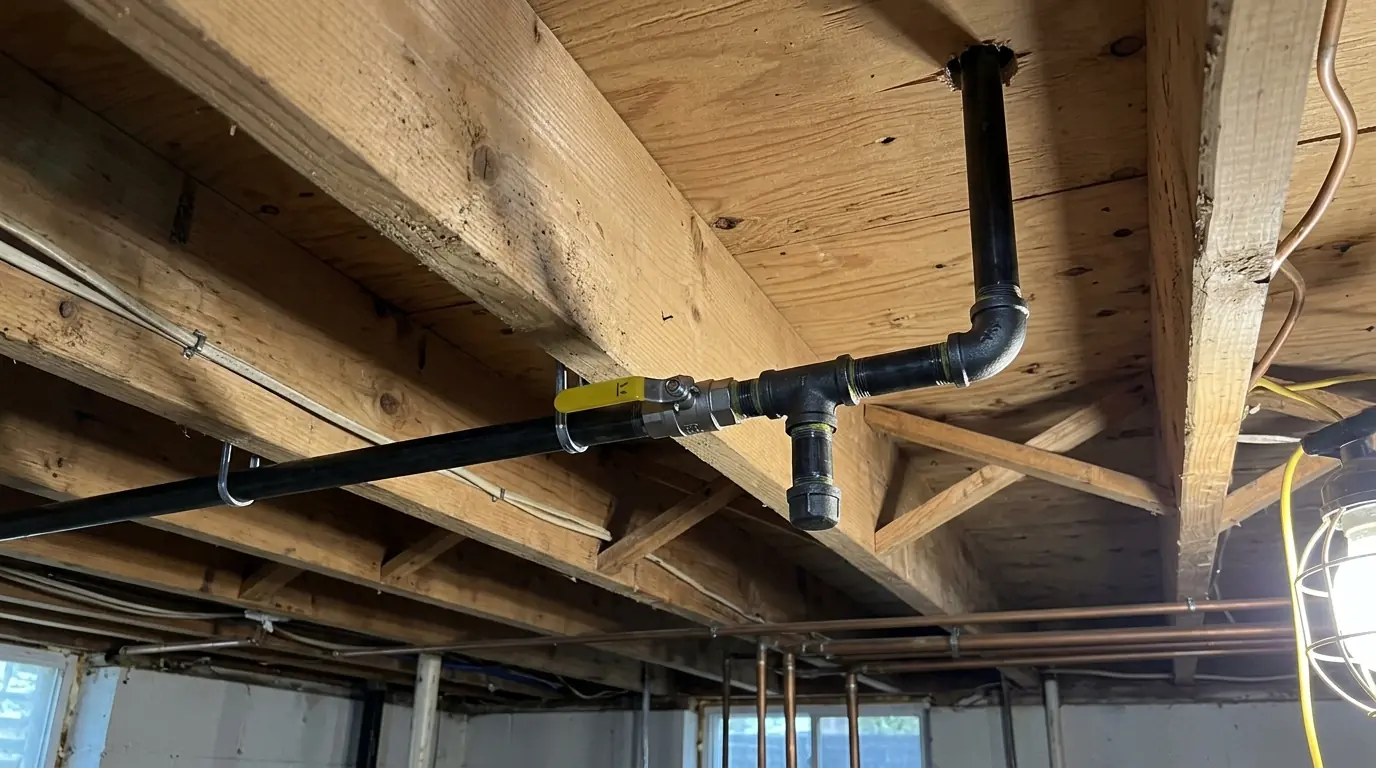
In many Philadelphia homes the gas meter and main pipe are in the basement, which makes running a new line up to a kitchen or out to a deck practical. We use black iron for exposed basement runs and flexible stainless CSST where the pipe has to snake through finished walls. If a new heater is part of the plan, tankless installs often need a larger line too.
What drives the price of a new gas line
Gas line prices depend on distance and how hard the route is. A short run across an open basement is a small job; a run through finished walls to an upper floor is not.
- Length of the runMore pipe and fittings mean more cost.
- Route and accessOpen joists are quick; finished ceilings and walls take longer.
- Pipe materialCSST runs faster through walls, while black iron is sturdy in open basements.
- System capacityIf the existing line is too small, a larger section from the meter may be needed.
- Permit and inspectionGas work often needs a permit and inspection, which adds a fee.
Gas Range Lines
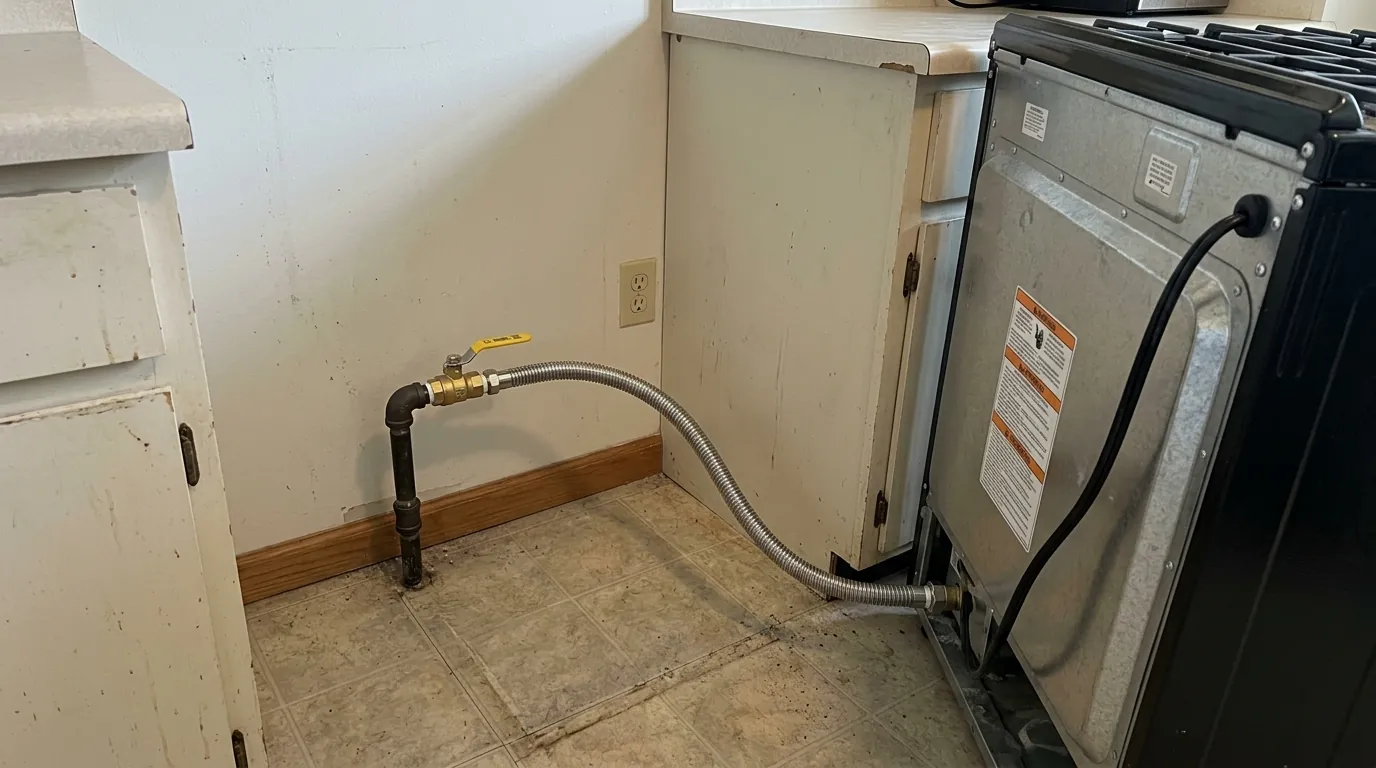
Switching from electric to gas cooking is one of the most common reasons we run a new line. The kitchen usually sits on the floor above the basement piping, so the line comes up through the floor near the range. We fit a shutoff valve behind the range where it can be reached by sliding the range out, then a new flexible connector sized for it. Professional style ranges draw more gas than standard ones, so we size the line to the range you are buying, not a generic figure. Once it is hooked up, we check every burner, the oven and the connector joints.
Dryer Lines
A gas dryer needs a gas line, a shutoff valve and a proper vent to the outside. In basements and laundry rooms we usually tee off the nearest branch, run the line to the dryer spot and finish with a valve and connector that let the dryer slide out for cleaning. The connector should not be kinked behind the machine, and the vent should not be crushed. When the dryer is on a different floor, CSST routed inside the walls, with the bonding it requires, is usually the cleanest path. For the washer side, our appliance hookups cover the water and drain.
Outdoor Grill Lines
A permanent gas line to a deck or patio grill ends the propane tank swaps. The line runs from the basement out through the rim joist or foundation wall, with a shutoff inside and a quick-disconnect outlet at the grill. Outdoor piping has to be protected from damage and corrosion, and buried runs need the right material at the right depth. We confirm the grill is a natural gas model or has been converted with the maker's kit, since propane orifices will not work on a natural gas line. The same run can be teed later for a patio heater or fire table.
What every new gas line gets
Each run is different, but the parts that make it safe are the same.
- Load check of every appliance on the system
- Route planned through the basement and walls
- Black iron or CSST sized for the full load
- Bonding for CSST where the manufacturer requires it
- Shutoff valve within reach of the appliance
- Sediment trap where the appliance needs one
- Pressure test before the gas is turned on
- Leak check at every joint once the line is live
Gas work owners should and should not take on
Almost all gas work is a job for a plumber. These are the few exceptions.
| Task | Safe to do yourself | Call a plumber |
|---|---|---|
| Close an appliance valve before moving the appliance | Yes. Turn the handle across the pipe. | If the valve is stuck or leaks. |
| Sniff for gas after a new appliance is delivered | Yes. Any smell means leave and call the utility from outside. | Always, once the utility has made it safe. |
| Swap a range connector | No. Fittings need the right sealant and a leak test. | We fit and test the connector. |
| Extend or tee into gas piping | No. | Always. New piping needs sizing and a pressure test. |
From the meter to a working burner
Plan the load and route
We list every gas appliance in the house and choose the shortest safe route.
Pull the permit
A permit is pulled whenever the work needs one.
Run the pipe
New piping goes in, supported and protected, with valves and traps at each appliance.
Pressure test
The new section is capped and pressure tested before it joins the live gas.
Hook up and light
The appliance goes on, air is purged from the line, burners are lit and every joint leak checked.
Gas piping in older Philadelphia homes
Philadelphia's housing is old: just over 40 percent of the city's homes went up before 1940, compared with about 22 percent across the region. In a house that age the gas piping is often a patchwork of original iron and later additions, and it was rarely sized with a modern range or dryer in mind. That is why every new line we run starts with a look at what is already there, and why some jobs include replacing a tired section before the new branch goes on.
Questions about gas line installation in Philadelphia
Yes, in most homes that already have gas service. We check the existing piping and load, then run a new branch up to the range location.
Many gas line jobs require one, and we pull it when the work calls for it.
Corrugated stainless steel tubing is flexible gas pipe with a yellow or black jacket. It routes through walls with fewer joints than black iron and needs the bonding its maker specifies.
Only if it is a natural gas grill or has been converted with the right kit. A propane grill cannot connect to a natural gas line as it is.
Leave the house and call your gas utility from outside. Our gas leak repair page explains what happens after that.