Updated October 2026
Finding a hidden leak in a Philadelphia house starts at the water meter. With every fixture off, a moving leak indicator proves water is escaping somewhere. From there we close valves branch by branch, pressure test lines and scan walls and floors with a thermal camera, so the leak is pinpointed before anything is opened. Drain leaks are traced separately with water tests.
How we find a leak without tearing the house apart
Hidden leaks come in two kinds. Supply leaks are under pressure and run around the clock, so they show on the meter. Drain leaks run only when a fixture is used, so the meter sits still while a stain grows under the tub. The first thing we settle is which kind you have, because the tests are different.
For supply leaks we close valves one at a time and watch the meter to find the branch, then pinpoint the spot with listening gear or a thermal camera. For drains we run one fixture at a time and watch where the water shows. Then the repair goes in through the smallest opening that reaches it.
Which test finds which leak
No single tool finds every leak. We choose the test from what the meter and the symptoms tell us.
| Test | What it finds | Where it falls short |
|---|---|---|
| Meter and isolation test | Whether a supply leak exists and which branch it is on | Says nothing about drain leaks |
| Pressure test | Leaks in a capped section of supply piping | The section has to be isolated first |
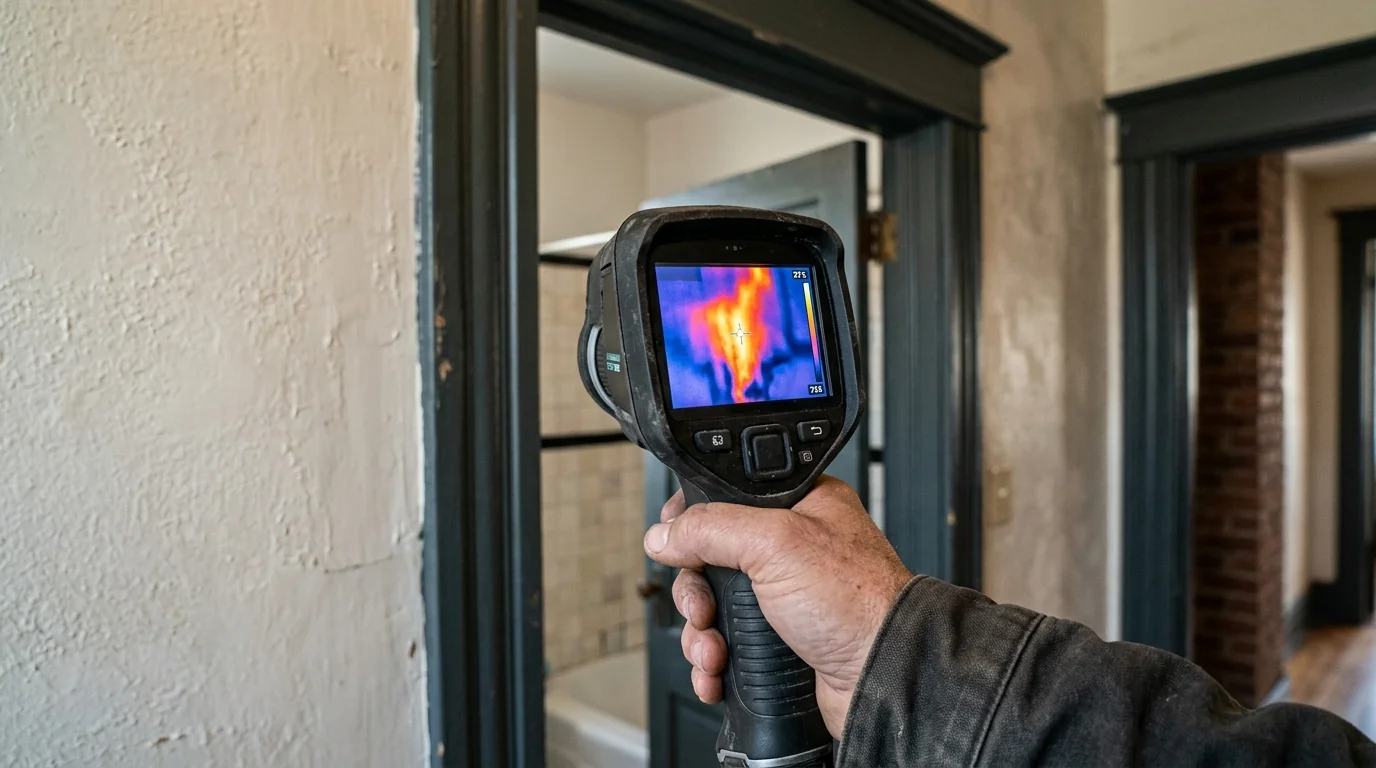
| Thermal imaging | Hot water leaks and wet areas behind surfaces | Cold water leaks show only once they wet something |
| Fixture water test | Leaks at tub overflows, shower pans and drain joints | Covers only the drain being tested |
What sets the price of finding a leak
Leak detection is priced on how much testing it takes. A dripping relief valve found in the first check costs far less than a slab leak that needs every test we have.
- Supply or drainSupply leaks show on the meter and isolate quickly; drain leaks need fixture-by-fixture water tests.
- How the house is pipedA home with valves on each branch isolates faster than one where everything runs off a single main.
- Finished surfacesTile floors, plaster ceilings and finished basements make each test slower and more careful.
- Repair on the same tripIf the leak is reachable, fixing it while we are there saves a second visit.
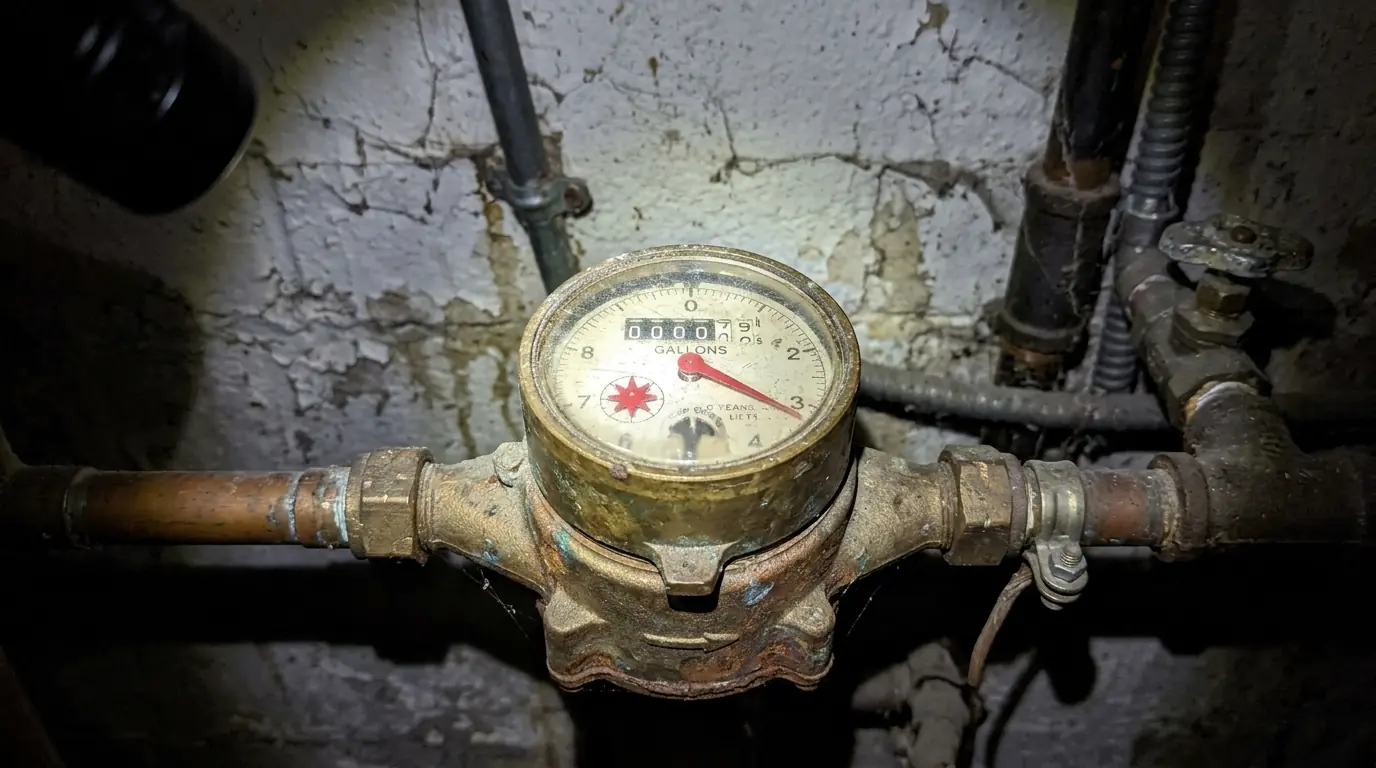
Meter Leak Indicator Spinning
Most meters have a small leak indicator, a triangle or star, that turns when even a trickle is flowing. If it moves with every fixture off, water is leaving the pipes somewhere past the meter. The usual suspects are a toilet flapper, a dripping relief valve on the water heater or a pinhole in a buried line. We check fixtures first, then close valves one branch at a time until the indicator stops. A leak on the service line ahead of the meter will not show on the dial at all; it shows as wet soil or water seeping through the front wall. Our meter test guide walks through reading yours.
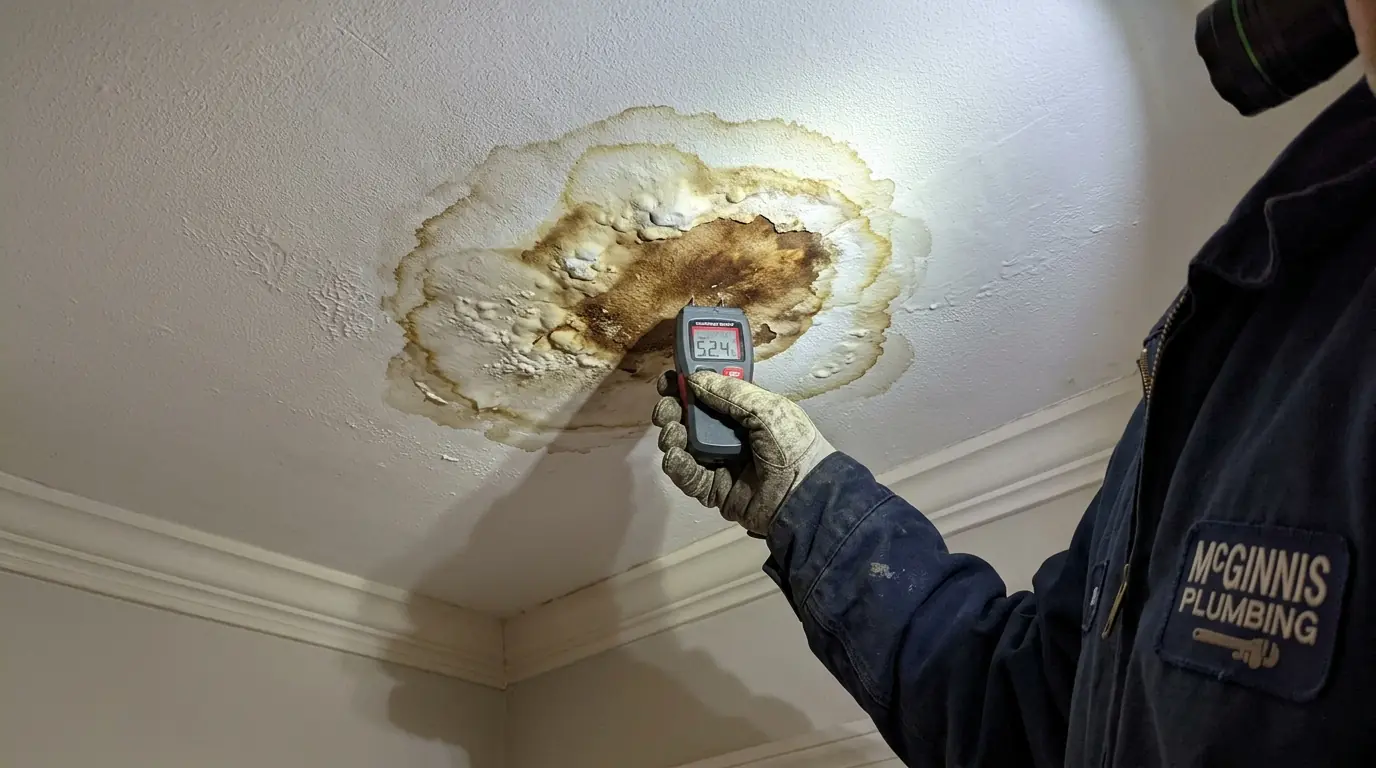
Stains Under a Bathroom
A brown ring on the ceiling below a bathroom can come from four places: the supply lines, the toilet wax ring, the tub drain and overflow, or water getting past grout and caulk. Each needs a different repair, so guessing wastes money. We run each fixture by itself, fill and drain the tub, flush the toilet and wet the shower walls, then watch the stain with a moisture meter and thermal camera. Once one test makes it wet, we know which part has failed and whether the ceiling or the floor is the better side to open.
Unexplained Water Bills
A bill that jumps with no change in the household is the most common reason people book leak detection. Sometimes the answer is quiet, like a toilet that refills on its own every so often or a hose bib dripping behind a shrub. Sometimes it is a supply line leaking into the soil under a slab or into a basement wall. We read the meter over a test period with everything off, check every fixture and appliance connection, then isolate lines until the missing water has a location. After that, you know exactly what needs fixing and nothing else gets opened.
Signs of a leak you have not found yet
A bill out of line with your usage
A jump with no change in household habits often means water is running somewhere all day.
A warm patch on the floor
A hot water line leaking under a slab or subfloor can leave one area noticeably warmer.
A musty smell in one room
Steady moisture behind a wall or under a tub feeds mold long before a stain appears.
Bubbling paint or swollen baseboards
Water wicking up drywall or soaking trim usually comes from a slow leak close by.
How a leak detection visit runs
Meter test
With everything off, we watch the meter and its leak indicator to confirm water is escaping.
Fixture check
Toilets, faucets, relief valves and appliance hoses come first, since they cause many leaks.
Isolate the branch
Valves are closed section by section until the meter stops moving.
Pinpoint the spot
Listening gear, thermal imaging and moisture readings narrow the leak to a small area.
Mark it before opening
We show you the spot and explain the repair before anything is cut.
Hidden leaks in older Philadelphia houses
Leaks hide well in Philadelphia housing. Just over 40 percent of homes here were built before 1940, and many have been replumbed piece by piece, so copper, galvanized and plastic often meet inside the same wall. Responsibility matters too. The water service line from the street to the house belongs to the property owner, so a leak on that line is the owner's repair, even when it starts under the sidewalk out front.
Questions about leak detection in Philadelphia
Yes. Turn off every fixture and appliance, then watch the meter leak indicator. If it moves, something is leaking. If it does not, the problem may be a drain or a roof leak instead of a supply line.
Usually a little, to make the repair. Testing first keeps it to one small, targeted opening.
A flapper that never seals lets water run into the bowl around the clock. It is one of the most common causes of a high bill, and a simple toilet repair stops it.
Yes. We isolate the line, pressure test it and use thermal imaging and listening gear to locate the leak before any concrete is cut.
In Philadelphia the owner is responsible for the water service line, including the stretch under the sidewalk. We locate the leak and explain the repair or replacement options.