Updated October 2026
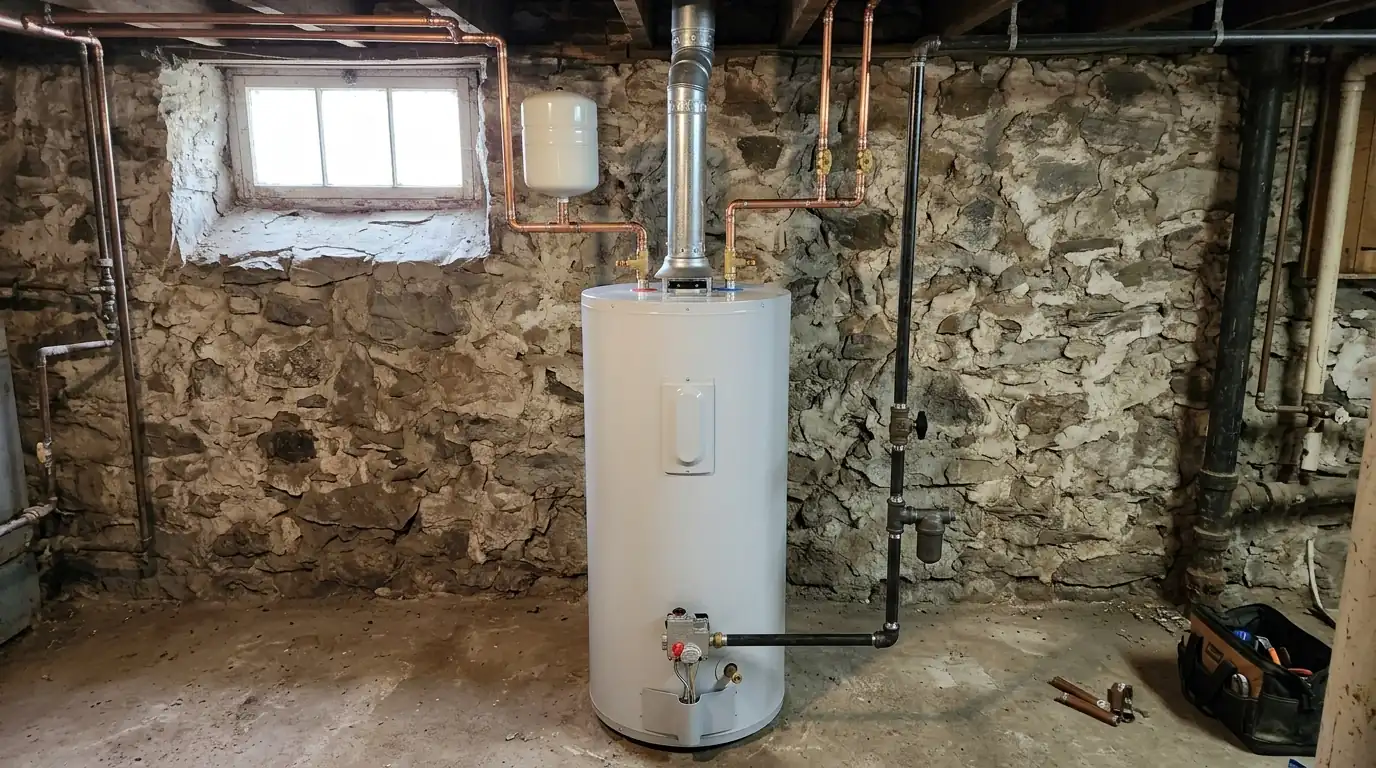
Replacing a water heater in a Philadelphia home usually means swapping a basement tank for a new one of similar size and fuel, then bringing the venting, gas or electrical connection, relief valve discharge and expansion tank up to code. Most swaps are like for like. Changing fuel or going tankless adds gas, venting or wiring work to the job.
When a new tank is the right call
A water heater needs replacing when the tank itself leaks, when rust shows at the base or around the fittings on top, or when repairs start stacking up on an old unit. We check the basement stair and doorway before the new tank arrives.
Size matters more than most owners think. We look at the number of bathrooms, whether you fill a big tub and how many people shower in the morning, then match capacity and recovery rate to that. If you are weighing a different type, our tank vs tankless guide lays out the trade-offs for rowhomes.
Gas, electric or heat pump: picking the replacement
Most owners replace like for like, and that is often the cheapest route. When the fuel and the space allow, these are the real choices.
| Type | Best fit | What to watch |
|---|---|---|
| Gas tank | Homes with gas and a chimney or wall vent that works | Venting must draft; an old chimney may need a liner |
| Electric tank | Homes without gas, or where venting is a problem | Slower recovery; the circuit must suit the elements |
| Heat pump tank | Basements with room around the tank and a drain close by | Needs space, airflow and a condensate line |
What sets the price of a new water heater
The price comes from the heater itself and from whatever has to change around it. A like-for-like swap is the simplest; moving, upsizing or changing fuel adds work.
- Tank size and typeA larger tank or a power vent model costs more than a standard atmospheric gas tank.
- Venting conditionA chimney that will not draft may need a liner or a switch to a power vent unit.
- Code updatesExpansion tanks, sediment traps, drain pans and relief lines often need bringing up to current code.
- AccessTight basement stairs, finished rooms or a heater in a closet add labor.
- PermitWater heater permits add a fee that varies by locality.
Gas Tank Replacement
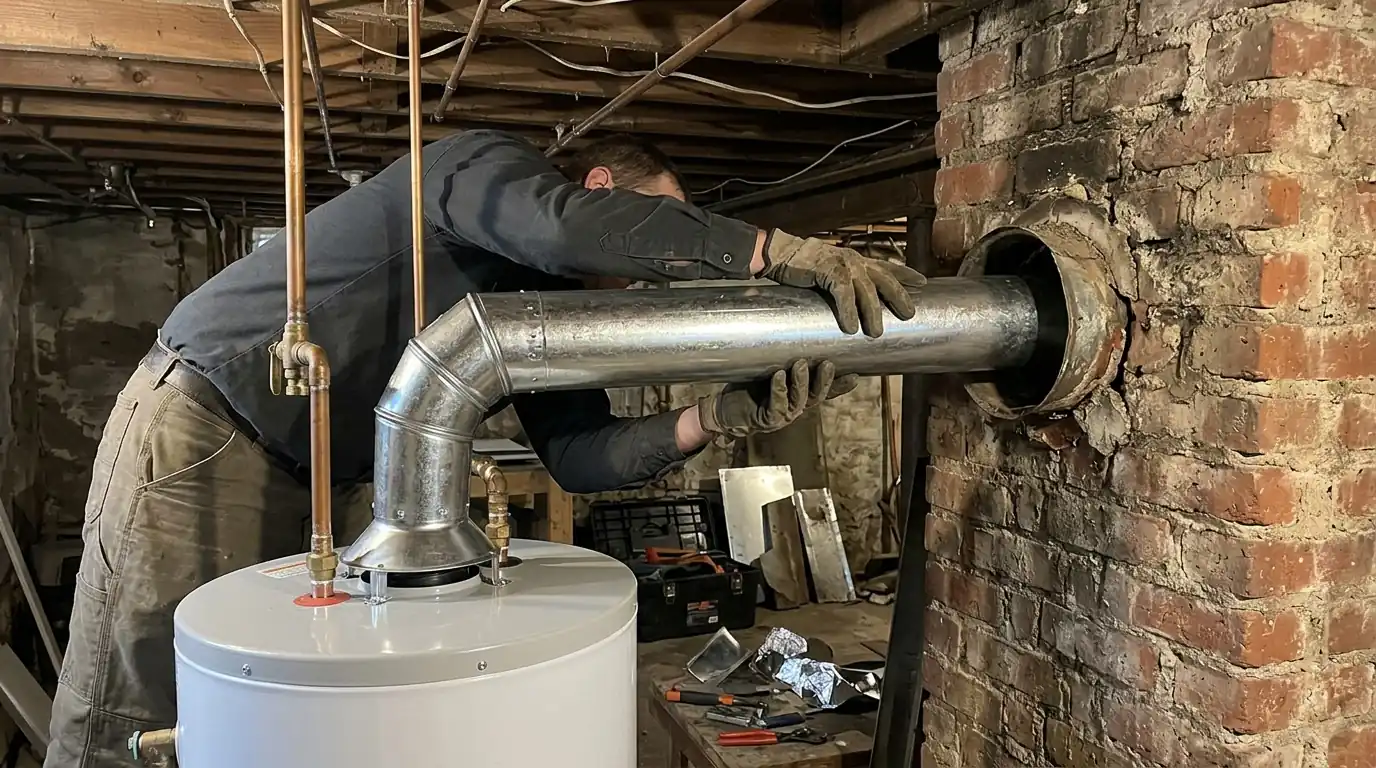
A gas tank replacement is the swap we do most. The new heater has to suit the venting: an atmospheric tank needs a sound flue connector into a chimney or vent that drafts, while a power vent model runs plastic pipe out through a wall and needs an outlet nearby. We shut the gas, disconnect the old tank, set the new one level in a pan and fit a new gas connector and sediment trap. After lighting it we check draft at the hood with a smoke test and leak test every gas joint. Tanks from makers such as Bradford White and Rheem suit most existing hookups.
Electric Tank Replacement
Electric tanks have no venting to worry about, but the wiring and breaker have to suit the new heater. We turn the power off at the panel, confirm the circuit is dead and check that the breaker and wire size match the new elements. Some of the electric tanks we pull out were too small for the household they served, and a larger tank or a heat pump water heater is worth a look before you buy. The water side gets new connectors or hard piping, a new relief valve line and a drain pan wherever a leak would reach finished space.
Expansion Tank Add-On
Water grows in volume as it heats. If the house has a check valve or pressure reducing valve at the meter, that extra volume has nowhere to go, so pressure climbs, the relief valve drips and faucets and toilet fill valves take the strain. A small thermal expansion tank on the cold line above the heater gives the water room. We measure the house pressure, set the expansion tank air charge to match it and strap the tank so it is supported rather than hanging off the pipe. It costs much less to add one during the swap than to come back for it later.
What comes with a tank swap
We price the replacement as a whole job, so you know what the visit covers.
- Draining and removing the old tank
- New gas connector and sediment trap, or the wiring checked at the heater
- Flue connector or vent pipe fitted and draft tested
- New relief valve discharge pipe run down toward the floor
- Expansion tank where the house pressure calls for one
- Permit pulled when the job needs one
- Leak check and thermostat setting before we leave
How a replacement day runs
Confirm size and path
We measure the space, stairs and doorway and confirm the fuel and venting before the new tank comes in.
Shut down and drain
Gas or power goes off, the cold supply is closed and the old tank drains to the floor drain.
Set and connect
The new heater goes in level with new water connections, relief line and gas or electrical hookup.
Vent and fire
We fit the vent and fill the tank completely, then light it or power it up and check draft or current draw.
Final checks
Every joint is checked for leaks, the thermostat set and the shutoffs pointed out to you.
Hard water and how long Philadelphia tanks last
Sediment is one of the things that wears Philadelphia tanks out. PWD's 2024 water quality report lists one-year hardness averages from 98 to 168 ppm at its three plants, which counts as moderately hard to hard, and that mineral settles on the floor of every tank it fills. On a gas heater the layer sits between flame and water, so the steel runs hotter. With each new tank we show you how to flush it, or set you up for regular maintenance.
Questions about water heater replacement in Philadelphia
Water from under the tank, rust at the base or on the top fittings, and rumbling that flushing does not cure are the clear signs. Repeated repairs on an older heater point the same way.
Not always. If you run short of hot water now, or the household has grown, a larger tank or a faster recovery model fixes that. We size it on the visit.
We check whether your replacement needs one and pull it when it does. The fee depends on the locality.
Yes. Draining and hauling it out are part of the job.
Yes, though it is a bigger job. Tankless units often need a larger gas line and new venting through a wall, which our tankless installation page explains.