Updated October 2026
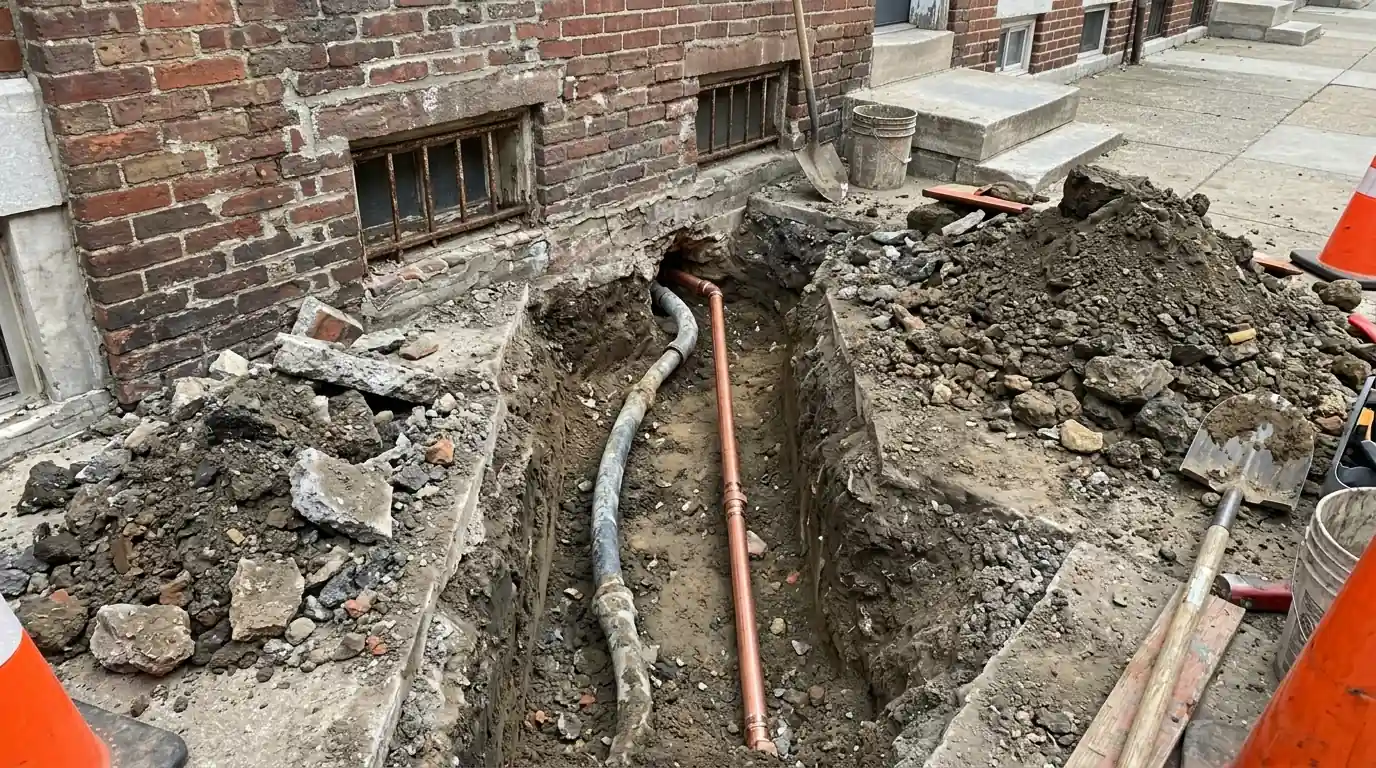
A water service line in Philadelphia belongs to the property owner, from the main in the street to the meter in the basement. When that pipe is lead, rusted galvanized or leaking copper, replacement is the fix. We open the ground at the curb and the front wall, run new pipe between them, set new meter valves and flush the line before you use it.
From the curb stop to the meter: the pipe you own
Every Philadelphia house takes its water through one pipe: out of the main under the street, past the curb stop, under the front wall and up through the basement floor to the meter. In older homes that run may still be lead or galvanized steel.
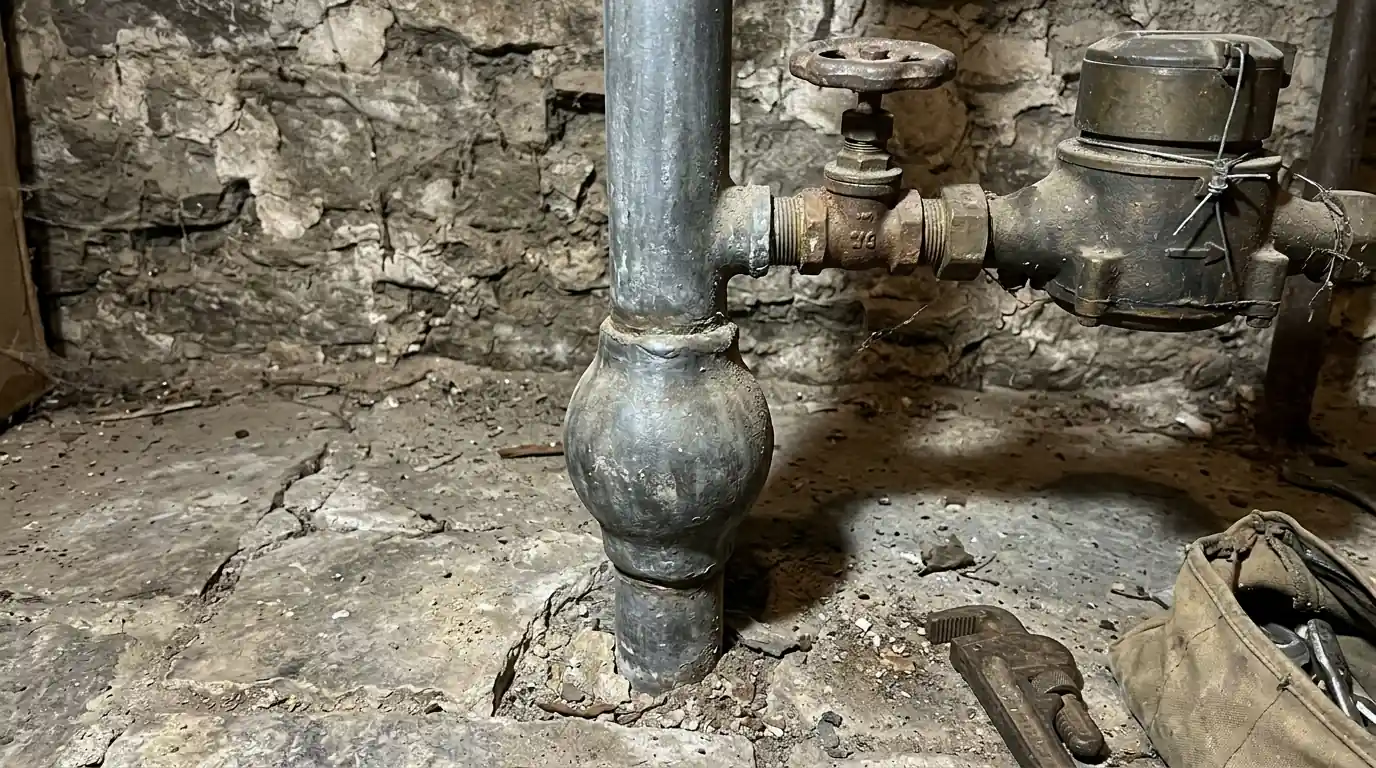
You can often tell the material at the meter. Lead is dull gray, scratches to bright silver with a key and does not hold a magnet. Galvanized is gray and magnetic. Copper scratches to a penny color. Our guide to lead lines walks through that check, and if the pipe is fine but flow is still weak, a pressure test is the next step.
Three routes to getting a lead line out
The choice comes down to timing and how you want to pay.
| Route | Who does the work | What to weigh |
|---|---|---|
| Private replacement | A plumber you hire | You set the timing. Price depends on length, depth and what covers the line. |
| HELP loan | A plumber you hire, repaid on the water bill | Zero-interest loan from PWD for lead line replacement. |
| Block main replacement | PWD | Free when PWD renews the water main on your block, on its schedule, not yours. |
What sets the price of a new service line
Rowhome service lines are often short. What sits on top of them decides most of the work.
- Sidewalk and pavingConcrete, brick pavers or a driveway over the line add cutting and restoration.
- Foundation entryThe new pipe has to pass through the front wall, which is slower through stone than block.
- Pull, bore or trenchPulling new pipe through the old path costs less than trenching the full run, when the ground allows it.
- Permit and restorationPermit fees and any required sidewalk repair are part of the job.
Lead Service Lines
A lead service line usually rises through the basement floor as a soft gray pipe with a bulging wiped joint where it meets the meter valve. Often there is no symptom at all; owners find it during a sale, a water test or after a letter from PWD. The fix is the whole run from curb stop to meter, because cutting out only part of a lead line disturbs the section that stays. We open the ground at the curb and at the foundation, pull or bore new pipe between the two, and connect it to new meter valves. Depth, the sidewalk surface and what is buried nearby decide which method we use.
Galvanized Service Lines
Galvanized service pipe rusts from the inside until its opening is a fraction of what it was. The first sign is flow that fades when two fixtures run at once, then brown water after the line sits overnight or after work in the street. Threaded joints near the meter weep and leave orange crust on the wall. No repair restores the bore, so the cure is a new line from the curb stop to the meter. We also check whether galvanized pipe carries on inside the house, because a new service feeding rusted branches only moves the bottleneck indoors.
Leaking Copper Service Lines
Copper service lines last a long time, but they fail at flare joints, at the curb stop and where the pipe rubs against stone at the foundation. Owners notice a meter that keeps turning with every tap shut, a soft or sunken patch between the sidewalk and the house, or water seeping through the front basement wall. We first confirm the leak is on the street side of the meter with leak detection. A single failed joint near the wall can often be dug out and repaired. A line that is thin throughout or leaking in more than one place is better replaced.
How we replace a service line
Confirm the material and route
We check the pipe at the meter, locate the curb stop and plan the path to the front wall.
Permit and mark-outs
We pull the permit when the job needs one and have underground utilities marked before digging.
Shut off and open up
The curb stop is closed and the ground is opened at the curb and at the foundation.
Run the new line
New pipe goes in by pulling, boring or trenching, whichever the ground allows.
Connect, test and backfill
We fit new meter valves, pressure test, flush the line and close the openings.
How long the house is without water
Water is off from the moment the curb stop closes until the new pipe is tied in, tested and flushed. Opening the ground takes most of that time, so the sidewalk and front wall matter more than the length of the run. Fill a few pots first, and run the cold kitchen tap clear afterward.
Lead and galvanized lines in Philadelphia
PWD estimates about 1 in 20 Philadelphia properties may have a lead service line, and it notes that galvanized lines need replacing too. The Homeowner's Emergency Loan Program offers a zero-interest loan for lead line replacement, repaid on the water bill over 60 months. And when PWD replaces the water main on a block, it replaces the lead and galvanized service lines on that block free. If your street is not due for new mains, the loan or a private job are the ways to move sooner.
Questions about water service line replacement in Philadelphia
Look at the pipe entering the basement before the meter. Lead is dull gray, scratches silver and will not hold a magnet. We can check it on any visit.
No. In Philadelphia the owner is responsible for the service line from the main to the house. PWD replaces lead and galvanized lines free only when it is replacing the water main on that block.
We do not recommend it. Cutting one end disturbs the lead that stays, and that pipe still carries your water.
Some digging at the curb and front wall is almost always needed. Where the ground allows, we pull or bore the new pipe between those two openings.
Flush the cold tap well and clean faucet aerators, since loosened debris collects there. Some owners also add a filter, which is a choice, not part of the job.