Updated October 2026
Water heater maintenance in Philadelphia is mostly a fight against sediment. A yearly flush clears the minerals hard water leaves on the tank floor, an anode rod check shows how much protection the steel has left, and a relief valve test confirms the safety valve still opens. Together they cut noise, hold efficiency and catch failing parts early.
Why a tank needs looking after
A tank water heater fails from the inside. Minerals settle on the bottom, the anode rod slowly dissolves to protect the steel, and once that rod is gone the tank starts to rust. Nothing shows outside until the day water seeps from under the jacket.
Regular maintenance slows all of that down. It costs a fraction of a new heater and lets us see parts that are about to fail, so a cheap valve gets replaced on a weekday instead of turning into a water heater repair call on a cold morning.
What a maintenance visit covers
The visit is much the same for gas and electric heaters, with a few checks that apply to only one.
- Tank drained and flushed until the water runs clear
- Drain valve checked and replaced if it will not seal
- Anode rod pulled and inspected
- Relief valve opened, reseated and its discharge pipe checked
- Burner, pilot and flue draft checked on gas tanks
- Elements and thermostats tested on electric tanks
- Thermostat set to a safe, comfortable temperature
Sediment Flush
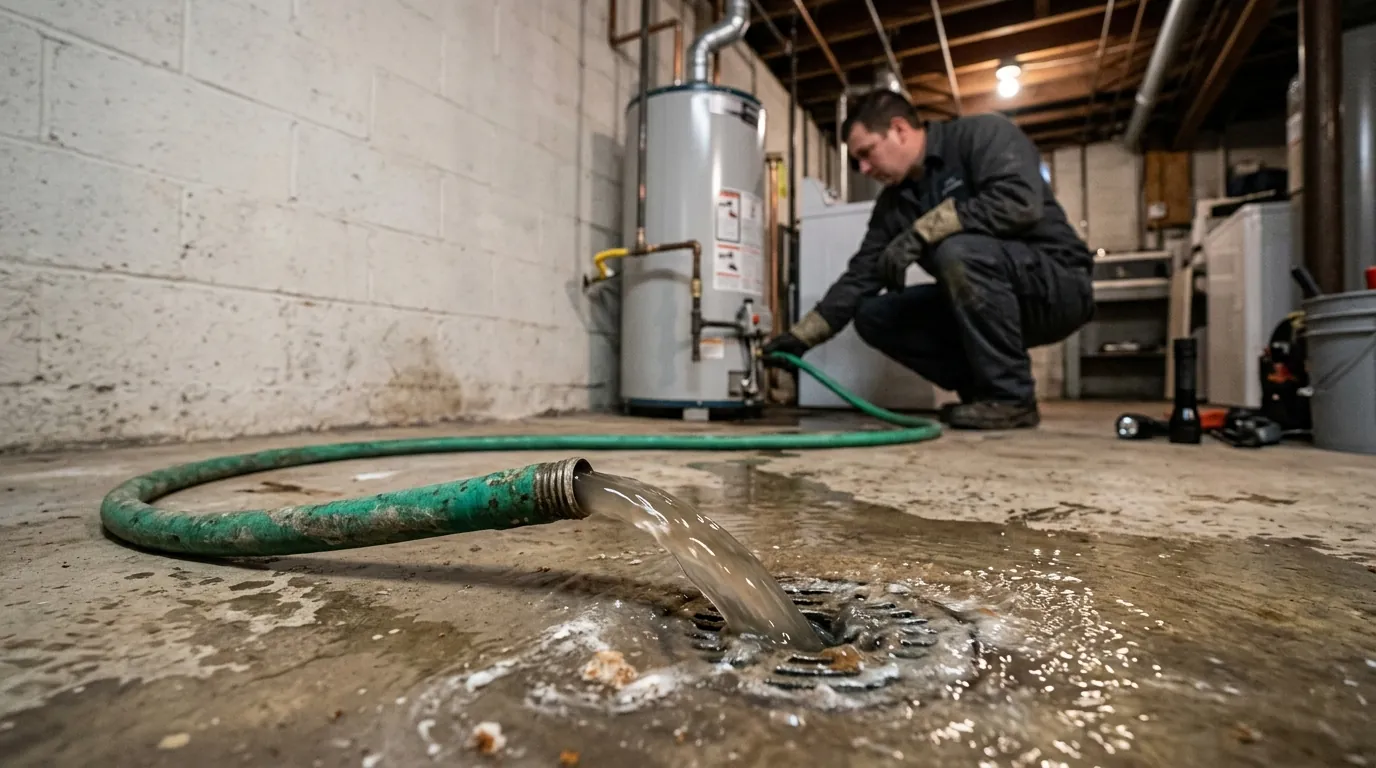
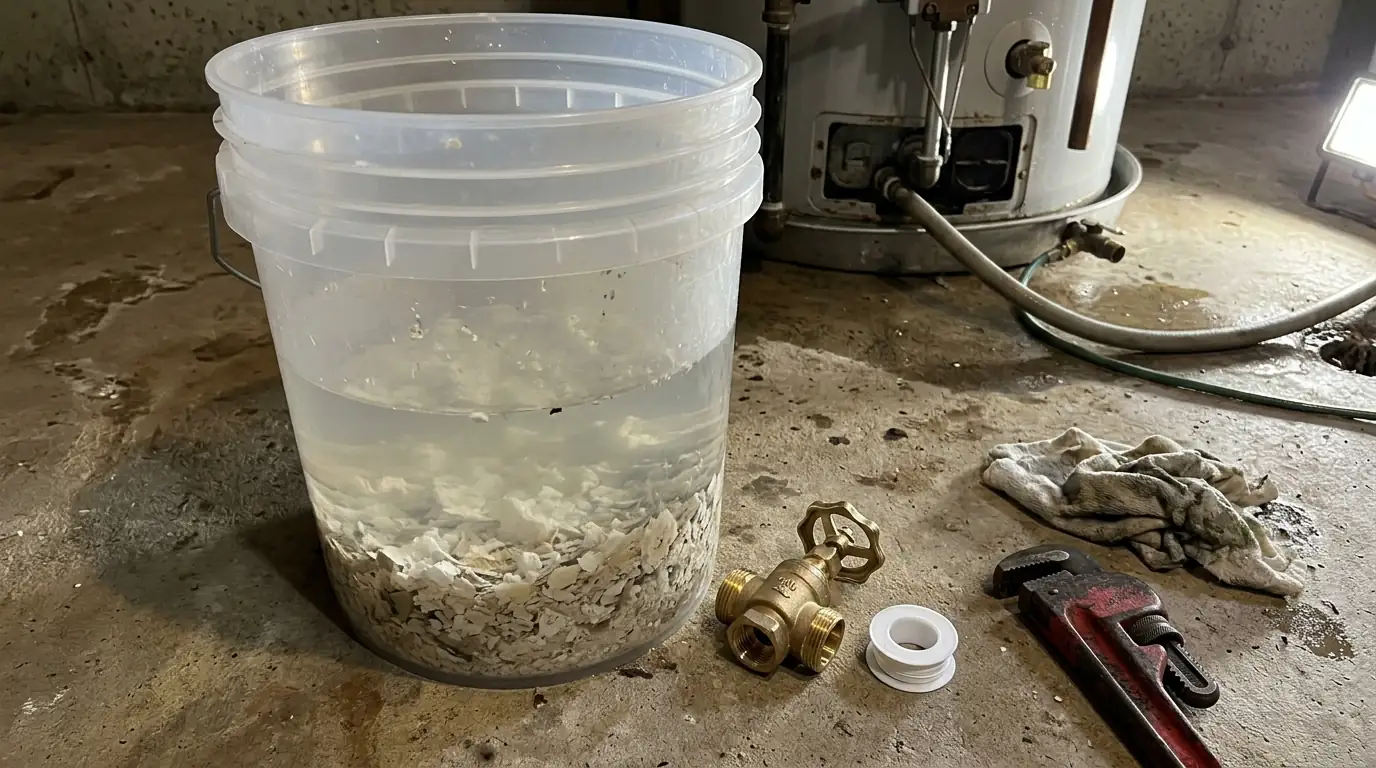
Sediment is the mineral that drops out when water is heated. On a gas tank it forms a crusty layer on the bottom, the burner has to heat through it, and water trapped underneath pops and rumbles. On an electric tank it piles up around the lower element until the element burns out. We shut the heater down, run a hose from the drain valve and push cold water through the tank in bursts until it comes out clear. If the old plastic drain valve clogs or will not shut, we swap it for a full-port brass valve so future flushes actually move the debris.
Anode Rod Replacement
The anode rod is a magnesium or aluminum rod hanging inside the tank that corrodes in place of the steel. When it is eaten down to the core wire, the tank lining is next. A rotten egg smell in the hot water is often the anode reacting with bacteria in the tank, and a different rod material can solve it. We loosen the hex head on top of the heater, pull the rod and judge what is left. Where the ceiling is low, as it is in many basements, we fit a flexible segmented rod that bends in under the joists.
Relief Valve Testing
The temperature and pressure relief valve keeps a tank from failing violently if a thermostat or gas control sticks. It sits on the top or side of the heater with a pipe running down toward the floor. We lift the lever, let water flow through the discharge pipe and make sure the valve snaps shut again. A valve that will not open, or one that keeps dripping after it closes, gets replaced. We also check that the discharge pipe is a suitable material, is not capped or threaded at the end and points where scalding water will not hurt anyone.
A maintenance visit, step by step
Shut the heater down
The gas goes to pilot or the breaker goes off, and the cold supply is closed at the top of the tank.
Flush the tank
A hose runs from the drain valve to the floor drain, and we flush until the water is clear.
Inspect the anode
The rod comes out for a look, and a new one goes in if it is worn to the wire.
Test the relief valve
We open it, watch it reseat and replace it if it sticks or drips.
Refill and restart
The tank fills completely with a hot tap open before the burner or elements come back on.
What affects the price of a tune-up
Maintenance is a small job next to a repair, and the price moves mainly with what we find once the tank is open.
- Sediment loadA tank that has never been flushed takes longer to clear, especially if the drain valve keeps clogging.
- Drain valve swapReplacing a plastic drain valve with a brass one adds a part and a little time.
- Anode rodA new rod adds parts cost, and a seized rod takes more labor to remove.
- Relief valveA valve that fails the test is replaced on the spot.
Philadelphia water and the sediment in your tank
Philadelphia water is not soft. The 2024 PWD water quality report gives one-year hardness averages of 98, 152 and 168 ppm at the three treatment plants, moderately hard to hard. Each time a tank heats, some of that hardness drops out and sinks, so a heater in a busy household builds sediment steadily, month after month. That is why the flush is the center of every maintenance visit we make, and why we look at the drain valve as closely as the tank.
Which upkeep jobs owners can handle
Some upkeep is easy and safe between visits. Other parts are best left alone because they can leave you with a leak.
| Task | Safe to do yourself | Call a plumber |
|---|---|---|
| Draw a bucket from the drain valve to check for sediment | Yes, with the burner on pilot or the power off. | If the valve will not close fully afterward. |
| Look around the tank for water or rust | Yes, every few months. | If you see rust at the base or a drip you cannot trace. |
| Pull the anode rod | Rarely. It is often seized and needs a breaker bar and someone holding the tank. | When it will not budge or the tank twists as you try. |
| Test the relief valve on an older tank | Not on a valve that has never been opened. | We test it with a new valve ready. |
Questions about water heater maintenance in Philadelphia
Once a year suits most tanks. In a large household, or if the tank already rumbles, more often helps.
Sometimes. On a tank that has never been flushed, moving the sediment can expose a weak spot the scale was sealing. If the tank looks near the end, we tell you before we start.
Usually a reaction between the anode rod and bacteria in the tank. A different anode material and a flush often clear it. If the cold water smells too, the cause is elsewhere.
They need descaling rather than flushing, since there is no tank floor for sediment to settle on. Our tankless service page covers that work.
It can. Sediment takes up room and slows heating, and a flush often brings some capacity back. If it does not, a failed element or dip tube is next on the list.