In Philadelphia, a sump pump removes groundwater that seeps into a basement through walls and the slab, while a backwater valve stops sewage from flowing backward up the drain into basement fixtures. Clear water along the walls points to a sump pump. Dirty, smelly water rising through a floor drain or basement toilet points to a backwater valve.
Look at the water before choosing anything
The water itself tells you where it came from. Groundwater is usually clear or a little muddy, shows up along the base of the walls or through cracks in the floor, and arrives slowly, sometimes a day after the rain. It has no sewer smell.
Sewer backflow is different. It comes up through the lowest drain openings, most often the floor drain, a basement toilet, a shower or the laundry tub. It is gray or brown, it smells, and it can carry paper and debris. It tends to arrive during the heaviest part of a storm, not afterward. If you have both kinds at different times, you may need both fixes.
What a sump pump does and does not do
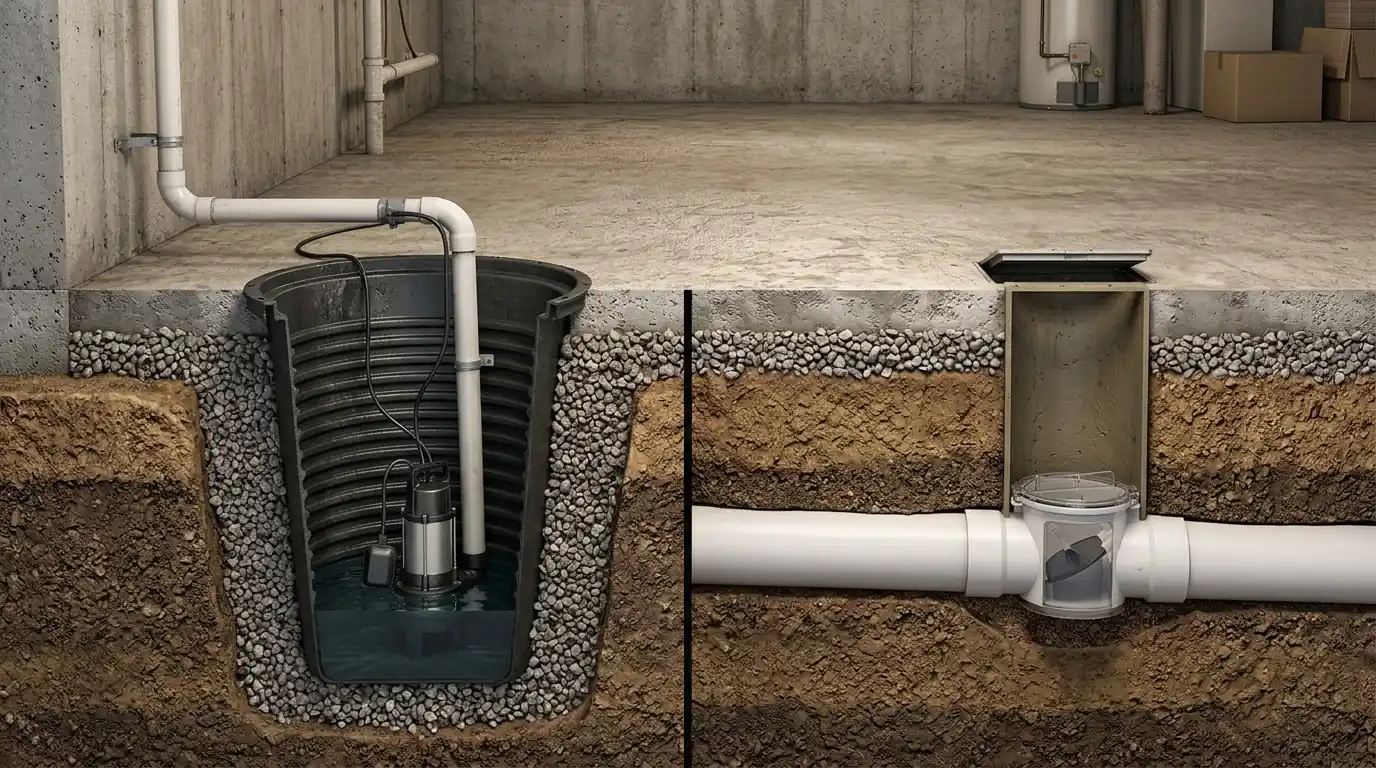
A sump pump sits in a pit set below the basement floor. Groundwater collects in the pit, either on its own or through a drain tile along the walls, and a float switch turns the pump on when the water rises. The pump pushes the water up through a discharge pipe and out of the house, with a check valve that keeps it from falling back into the pit.
What a sump pump cannot do is stop sewage coming up a floor drain. It is not connected to your sewer line at all. Pumping groundwater also depends on electricity, and the storms that raise groundwater are the same ones that knock out power, which is why many owners add a battery backup pump. Where the discharge ends up matters too; we route it where the inspector will accept it and where it will not run back against the foundation.
What a backwater valve does and does not do
A backwater valve sits on the main sanitary drain, usually near the front wall where the line leaves the house. Inside is a flap that lets wastewater flow out to the street but swings shut when sewage pushes back toward the house. It has an access cover so it can be inspected and cleaned.
About 60 percent of Philadelphia is served by combined sewers that carry both sewage and stormwater in one pipe. In a heavy storm that pipe can fill, and the lowest openings connected to it, often basement fixtures, are where it pushes back. A backwater valve is the device built for that moment. It does nothing about groundwater seeping through a wall. And while it is closed, the drains in the house cannot empty either, so avoid running water upstairs until the storm passes.
Rather have a plumber look at it?
We answer around the clock for Philadelphia, Montgomery County and lower Bucks County.
Call (267) 394-6446Why Northeast Philadelphia often sees both
Northeast Philadelphia residents have reported sealed street drains and basement flooding as the century-old sewer and stormwater system struggles with heavier rain, and the Delaware River has risen about a foot since those sewers were built. Many homes there also have two laterals and two vents, one for the storm sewer and one for the sanitary sewer, based on a PWD investigation of two Northeast blocks.
In practice that means a basement can take backflow through a sanitary line and seepage through the walls in the same storm. Before recommending anything, we figure out which line each basement opening drains into and where the water actually entered. Our guide to basement backups and backwater valves covers the backflow side in more depth.
The city program for backwater valves
PWD's Basement Backup Protection Program offers free backwater valve installation to eligible owners whose basements take sewer backups through basement fixtures in heavy rain. It is worth checking before you pay for a valve.
To qualify, the water bill must be current, PWD violations must be addressed, and the contractor must be able to reach the plumbing where the valve goes. Broken pipes must be fixed first, through a HELP loan or a private plumber. If a cracked lateral or a collapsed trap is standing in the way, that repair is work we can do so the line is ready for the program.
Matching the fix to your basement
Most basements fall into one of a few patterns. Find yours here:
- Clear water along the walls after rain, nothing from the drains: sump pump
- Dirty water from the floor drain or basement toilet during storms: backwater valve
- Both, at different times or in the same storm: both, sized and placed separately
- Basement bathroom below the sewer line: an ejector pump, plus a valve where it fits
- Water only after a pipe burst or appliance leak: neither; fix the leak
- Not sure where it came from: have the drains and walls checked before buying
Questions owners ask
No. A sump pump only removes groundwater from its pit. Sewage coming up a floor drain travels through the sanitary line, and only a backwater valve on that line stops it.
Plugging can push backflow to the next lowest opening, such as a basement toilet or laundry tub. It also leaves the basement without a drain if a heater or pipe leaks. A backwater valve on the main line protects all the basement fixtures at once.
Work on the main drain usually needs a permit and inspection, and the sump discharge route has to meet code. We pull the permit when the job needs one.
Look at it through the access cover from time to time, and especially before storm season and after any backup. Debris caught under the flap can hold it open. We check the flap, the seal and the cover whenever we are in the basement.
PWD's Basement Backup Protection Program offers free backwater valve installation to eligible owners. The bill must be current, violations addressed, the plumbing reachable and any broken pipes fixed first.
One wet day after an unusual storm may not justify a pit or a valve. Note where the water came in and what it looked like, then decide. If it came up through a drain, a valve is still worth considering, since backflow tends to return in the next big storm.