In Philadelphia, a tank water heater replacement is best budgeted against national figures: HomeAdvisor puts the average tank replacement at about 1,333 dollars, with tankless running about 1,400 to 3,900 dollars for unit and installation. Permits nationally run 25 to 300 dollars depending on locality. Venting, gas or electric hookup, basement access and code upgrades decide where your house lands.
The national planning numbers
These figures come from national cost guides, not from our price list. They are useful for sanity-checking a quote and for setting a budget before you call anyone.
- Tank replacement averages about 1,333 dollars (HomeAdvisor).
- Tankless water heaters run about 1,400 to 3,900 dollars for unit and installation (HomeAdvisor).
- Permits run 25 to 300 dollars depending on locality.
- A typical water heater repair is about 500 dollars, for comparison.
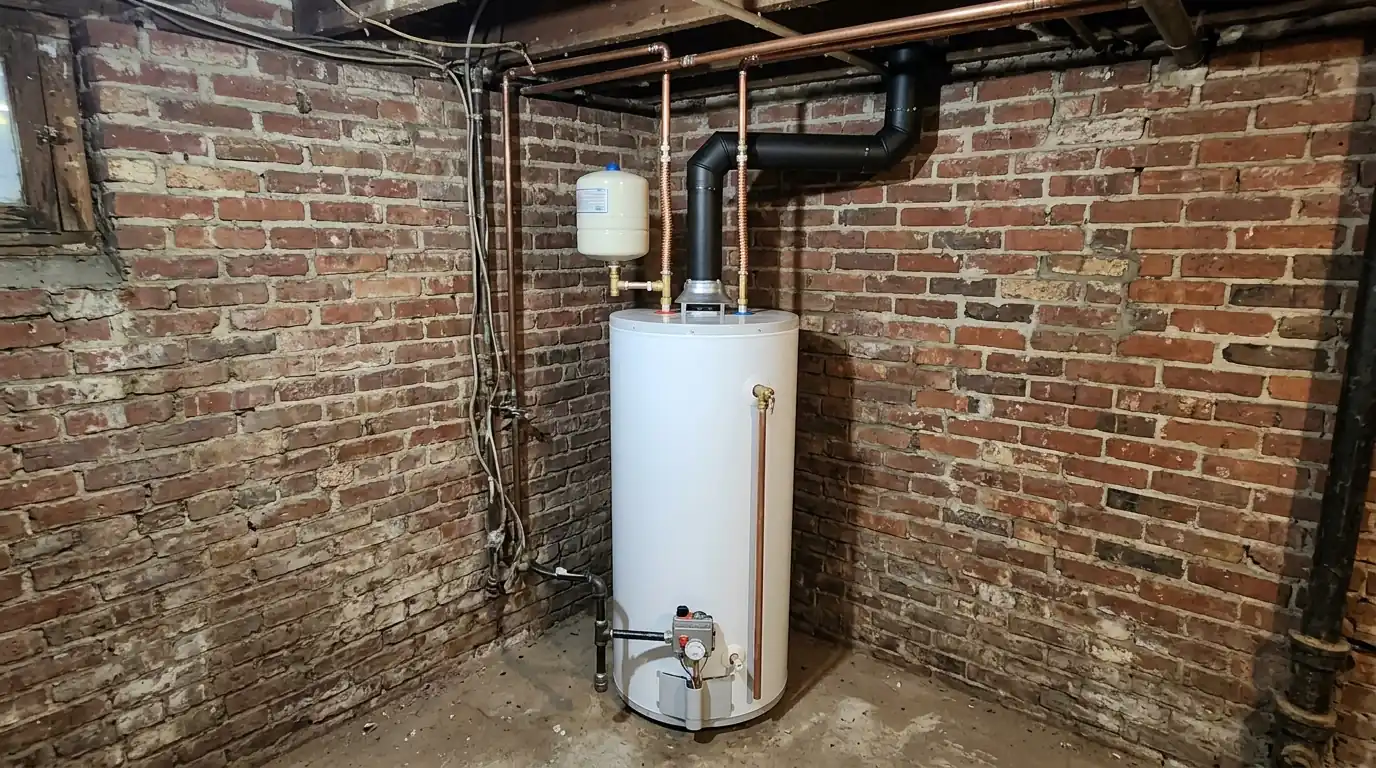
Repair or replace: the honest test
A heater that has lost hot water is not always finished. A failed thermocouple, a bad element or a loose gas control can come back with a part. Those are repair calls, and they cost a fraction of a new unit.
A tank leaking from the body is a different story. Once the steel inside has rusted through, nothing stops it, and the water is coming from the tank itself, not a fitting. Rust in the hot water, a tank that rumbles and pops from heavy sediment, or a heater that needs a second major repair within a short time all lean toward replacement.
Age matters too, but it is a guide rather than a deadline. A heater flushed regularly in a dry basement can outlast one that has never been touched and sits on a damp floor. When we look at an old heater, we check the burner or elements, the relief valve, the flue and the bottom of the tank before giving an opinion.
What pushes a Philadelphia install above or below average
The unit price is fairly predictable. The installation is where houses differ, and older rowhomes and twins have their own quirks.
- Venting: a gas tank on a chimney liner, a corroded flue connector or a power vent changes the parts and labor.
- Fuel and hookup: swapping gas for gas or electric for electric is simplest; changing fuel adds a gas line or a new circuit.
- Access: narrow basement stairs, a tight utility closet or a unit boxed in by finished walls add time to get the old tank out and the new one in.
- Size: matching the old gallon rating is cheapest; going bigger can mean a different footprint and vent.
- Expansion and relief: an expansion tank, a properly piped relief valve discharge and a drain pan where the heater sits over finished space.
- Haul-away and permit: removing the old tank and the permit fee are real line items.
Rather have a plumber look at it?
We answer around the clock for Philadelphia, Montgomery County and lower Bucks County.
Call (267) 394-6446Hard water shortens the job a tank can do
PWD's 2024 water quality report lists one-year hardness averages of 98 ppm at the Baxter plant, 152 ppm at Belmont and 168 ppm at Queen Lane, moderately hard to hard. Hard water leaves mineral sediment in the bottom of a tank, which insulates the water from the burner, wastes fuel and makes the tank rumble.
That matters for cost in two ways. Regular flushing and an anode rod check stretch the life of whatever you install. And for tankless units, scale inside the heat exchanger means descaling should be part of the plan from day one.
Tank, tankless or heat pump
A like-for-like tank swap is the least disruptive option and usually the cheapest. Tankless costs more up front, by the national figures above, and in an older house may also need a larger gas line and new venting through a wall. In return you get endless hot water and a unit off the floor. Our guide to tank versus tankless in a rowhome goes through that decision in detail.
Heat pump water heaters are a third route for electric households with enough basement room and air around the unit. They need a condensate drain and a space that does not get too cold, so the basement has to suit them.
Reading a replacement quote
A clear quote names the heater by brand, capacity and fuel, and lists the installation items separately. Ask whether it includes the permit, the expansion tank, new gas or water connectors, the relief valve discharge piping, the drain pan if needed, and hauling away the old unit. If a quote looks far below the national average, check which of those items are missing.
On our side, we look at the existing heater, the vent and the basement before giving a price, and we pull the permit when the job needs one. Details on what the install covers are on our water heater replacement page.
Budgeting before the old tank gives out
The most expensive water heater is the one that fails on a holiday weekend and floods a finished basement. Replacing on your schedule lets you choose the unit, compare quotes and plan for any venting or gas work, instead of taking whatever is on hand.
Look at the label on your current heater for the manufacture date, which is often coded into the serial number. Then watch for the warning signs: a damp ring under the tank, rust-colored hot water, popping and rumbling as it heats, or hot water that runs out sooner than it used to. If two or more show up together, start setting money aside and get a quote while the heater still works.
Put a drain pan under any heater that sits above finished space, and make sure everyone in the house knows where its cold water valve is. Those two small things limit the damage if the tank goes before you are ready.
Questions owners ask
Not necessarily. The national figures are planning ranges. Venting, access, fuel type, size and permit fees in your house can move the final price above or below them.
Many localities require one, and nationally permit fees run 25 to 300 dollars depending on where you live. We pull the permit when the job needs one.
The unit costs more, and in older homes the install often needs a larger gas line and new venting. Nationally, unit and installation run about 1,400 to 3,900 dollars.
If the leak is from a valve or fitting, often yes. If water is coming from the tank body itself, the tank has rusted through and replacement is the only real fix.
Yes. PWD reports moderately hard to hard water from its plants, which builds sediment in tanks and scale in tankless units. Regular flushing or descaling helps any heater last.
Usually, if there is room for the larger footprint and the venting and gas supply can handle it. We check those before recommending a size.